Menu
Store
Blog
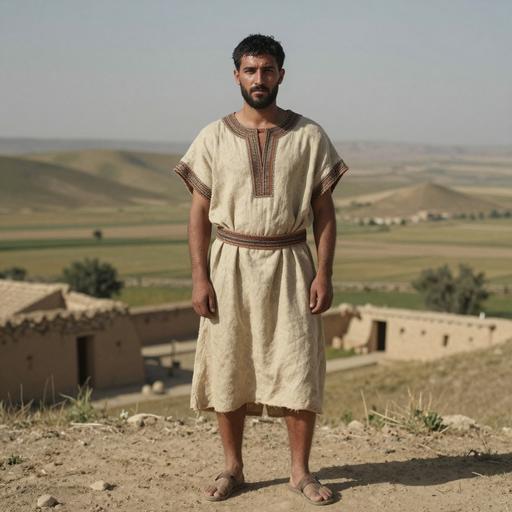
Portrait reconstruction of I4622
Ancient Individual

A man buried in Turkey in the Copper Age era

I4622
3636 BCE - 3525 BCE
Male
Late Chalcolithic Turkey
Turkey
Scroll to begin
Chapter I

Identity

The biological and cultural markers that define this ancient individual

Sample ID

I4622

Date Range

3636 BCE - 3525 BCE

Biological Sex

Male

mtDNA Haplogroup

Not available

Y-DNA Haplogroup

Not available

Cultural Period

Late Chalcolithic Turkey

Chapter II

Place

Where this individual was discovered

Country Turkey
Locality Tatika (Southeast. Şırnak. Güçlükonak. Koçtepe köyü)
Coordinates 37.5432, 41.8662
Chapter III

Time

When this individual lived in the broader context of human history

I4622 3636 BCE - 3525 BCE
Chapter IV

Story

The narrative of this ancient life

The Late Chalcolithic period in Turkey, a crucial phase of the Ancient Near Eastern civilization, roughly spans from 4500 to 3000 BCE. This era marks a significant transitional period characterized by the widespread use of copper, alongside stone tools, before the full onset of the Bronze Age. This period is crucial for understanding the development of complex societies, urbanization, and early state formation in the region.

Geographical Context

Late Chalcolithic Turkey comprises diverse geographical landscapes including the fertile plains of Anatolia, coastal zones, river valleys, and the rugged terrains of the highlands. These diverse environments played a critical role in shaping the economic activities and cultural developments of the people.

Settlements and Urbanization

During the Late Chalcolithic period, there is evident growth in the size and complexity of settlements. Major archaeological sites such as Çatalhöyük, Arslantepe, and Hacilar provide insights into the nature of urbanization during this time. Settlements often featured well-planned layouts with defined residential, administrative, and religious areas.

Arslantepe, for example, indicates early urban characteristics with monumental architecture, administrative buildings, and possibly early forms of palatial structures, suggesting an emerging sociopolitical hierarchy.

Social Structure and Political Organization

The increasing complexity of society is marked by the emergence of social stratification. This is evidenced by variations in dwelling sizes, elaborate burial practices for elite classes, and the presence of prestige goods. Political organization likely evolved into chiefdoms with hereditary leaders or ruling elites who controlled resources and trade networks.

The role of religious or ritual leaders may have been significant, with evidence from sites like Çatalhöyük showing elaborate shrines and religious iconography that hint at a theocratic influence in governance.

Economy and Trade

The economy during the Late Chalcolithic period was largely agrarian, supported by the cultivation of cereals, legumes, and fruits, alongside animal husbandry including cattle, sheep, and goats. Technological advancements in agriculture, such as the use of plows, improved yields and supported population growth.

Trade networks expanded significantly during this period. Obsidian from Cappadocia, copper from various Anatolian sources, and luxury items such as pottery and textiles moved across regions, connecting Turkey with the broader Near East, including Mesopotamia and the Levant. These trade interactions facilitated cultural exchange and technological diffusion.

Technological and Artistic Developments

The hallmark of the Late Chalcolithic period is the development and use of metallurgy, particularly copper. The advancement of metalworking techniques, including smelting and alloying, set the stage for the upcoming Bronze Age. Pottery-making techniques also improved, with the introduction of the potter's wheel in some regions leading to more sophisticated and diverse ceramic styles.

Artefacts from this period, such as intricately designed pottery and figurines, demonstrate advances in artistic techniques and suggest a rich cultural tapestry. The use of symbolic motifs indicates complex belief systems and social norms.

Religion and Cultural Beliefs

Religious practices during the Late Chalcolithic period were diverse and likely involved a pantheon of deities associated with natural elements and fertility. Archaeological findings, including altars, votive offerings, and religious iconography, suggest that rituals played an integral role in community life, possibly conducted by priestly classes or leaders.

The art and architecture of the period often reflect religious or cosmological themes, emphasizing the role of religion in Late Chalcolithic society.

Conclusion

The Late Chalcolithic era in Turkey represents a dynamic and transformative period that laid the foundational structures for future civilizations in the region. Through advancements in technology, socio-political organization, and culture, this era set the stage for the Bronze Age and the emergence of more complex state-level societies in the Ancient Near East. The archaeological legacy of this period provides invaluable insights into the roots of early civilization and urban development in Anatolia and beyond.

Chapter V

Genetics

The genetic ancestry of this ancient individual

Ancient Genetic Admixture

This analysis compares the DNA profile of I4622 with ancient reference populations, showing the genetic composition in terms of prehistoric ancestral groups.

Neolithic Farmers 86.7%
European Hunter-Gatherers 7.1%
Ancient Native Americans 3.2%
Western Steppe Pastoralists 3.0%

Modern Genetic Admixture

This analysis compares the DNA profile with present-day reference populations, showing what percentage of genetic makeup resembles modern populations from different regions.

Asia 71.7%
Arab, Egyptian & Levantine 43.1%
Levantine 32.8%
Arabian 10.3%
Northern West Asian 25.6%
Mesopotamian 19.2%
Cypriot 6.4%
Central Asian, Northern Indian & Pakistani 3.0%
Indian 3.0%
Europe 25.7%
Southern European 25.7%
Balkan 13.7%
Italian 8.8%
Sardinian 3.3%
Africa 2.5%
North African 2.5%
Egyptian 2.5%

Closest Modern Populations

These are the modern populations showing the closest statistical alignment to A man buried in Turkey in the Copper Age era, ranked by genetic distance. Lower distance values indicate closer statistical similarity.

1
Samaritan
1.9291
2
Lebanese Christian
2.4710
3
Lebanese Druze
2.9572
4
Druze
3.0603
5
Karaite Iraq
3.0711
6
Cochin Jews Paradesi
3.1279
7
Palestinian Beit Sahour
3.1444
8
Karaite Egypt
3.2110
9
Alawite
3.3202
10
Lebanese Muslim
3.4314
Chapter VI

Context

Other ancient individuals connected to this sample

Sources

References

Scientific publications and genetic data

Scientific Publication

The genetic history of the Southern Arc: A bridge between West Asia and Europe | Science

Authors Lazaridis I, Alpaslan-Roodenberg S, Acar A
Abstract

The period from the Copper Age to the Bronze Age marked major social and economic transformations in West Eurasia. To better understand these changes and their genetic impacts, we generated genome-wide data from 727 individuals who lived between 5000 and 1000 BCE in southeastern Europe and southwestern Asia.

G25 Coordinates

The G25 coordinates for sample I4622 can be used for detailed admixture analysis in our G25 Studio tool.

I4622,0.08592656,0.14785736,-0.05791784,-0.08340314,-0.01444852,-0.03182792,-0.00109464,-0.01075062,0.01008986,0.0034298,0.00225562,-0.0093845,0.01971566,0.01150072,-0.00445408,0.00473086,-0.00357382,0.00030506,0.00502158,0.00210892,0.00041764,0.00506356,-0.00245018,-0.00223462,0.00109731
Analyze in G25 Studio
Use code for 40% off Expires Feb 26