Menu
Store
Blog
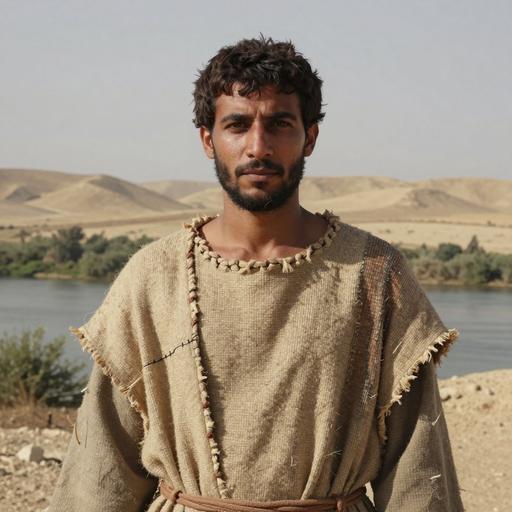
Portrait reconstruction of I6457
Ancient Individual

A man buried in Iraq in the Neolithic era

I6457
9500 BCE - 8000 BCE
Male
Pre-Pottery Neolithic Iraq
Iraq
Scroll to begin
Chapter I

Identity

The biological and cultural markers that define this ancient individual

Sample ID

I6457

Date Range

9500 BCE - 8000 BCE

Biological Sex

Male

mtDNA Haplogroup

U1a1

Y-DNA Haplogroup

Not available

Cultural Period

Pre-Pottery Neolithic Iraq

Chapter II

Place

Where this individual was discovered

Country Iraq
Locality Nemrik 9
Coordinates 36.7167, 42.8500
Chapter III

Time

When this individual lived in the broader context of human history

I6457 9500 BCE - 8000 BCE
Chapter IV

Story

The narrative of this ancient life

The Pre-Pottery Neolithic Age (PPNA) in Iraq is a significant period in the prehistoric era of the Fertile Crescent civilization, which spans approximately from 10,000 to 8,500 BCE. This era marks a time of considerable transformation, where societies transitioned from nomadic hunter-gatherer lifestyles to more settled agrarian communities, laying the foundation for the development of complex civilizations.

Geographical Context

The region of the Fertile Crescent, often referred to as the \Cradle of Civilization," includes parts of modern-day Iraq, Syria, and Turkey. In Iraq, the PPNA sites are primarily located in the southern plains and the eastern uplands, areas with fertile soils and abundant water resources, attributed to the Tigris and Euphrates rivers. These rich environmental conditions were conducive to early agricultural experiments, which were pivotal to the development of neolithic societies.

Cultural and Technological Characteristics

Settlements

During the PPNA in Iraq, communities became more sedentary, establishing permanent or semi-permanent settlements. Archaeological evidence from sites like Jarmo, situated in the Zagros Mountains, indicates the presence of early village structures. These settlements typically comprised small, rounded or oval-shaped huts built from mud bricks or stones, which showcase the initial attempts at architectural development.

Agriculture and Domestication

One of the defining features of the PPNA is the inception of agriculture. In Iraq, this period witnessed the domestication of plants and animals. Key crops included barley, wheat, and legumes, while animals such as sheep, goats, and pigs were among the first to be domesticated. This shift allowed for a more stable food supply, leading to population growth and the establishment of more complex societies.

Tool and Pottery Development

Although termed "Pre-Pottery," this era saw significant advancements in tool-making. The inhabitants of PPNA Iraq fashioned a variety of stone tools, including sickles, grinding stones, and projectile points, which were essential for agricultural practices. The eventual development of pottery, which is more characteristic of the succeeding Neolithic phases, was in its nascent stages during this time, with early attempts noted in some areas.

Social and Cultural Practices

Social Organization

The development of agriculture led to changes in social structures. Communities began to exhibit more complex organizational systems with evidence of more defined roles and perhaps social hierarchies. The accumulation of surplus food and resources necessitated new forms of governance and social cooperation.

Religion and Rituals

Religious beliefs and practices were integral to PPNA society. Although specific details about religious practices in Iraq during this period are limited, analogous findings from nearby regions suggest the presence of ritualistic structures and figurines. These artifacts likely played a role in community rituals and spiritual life, offering insights into the belief systems of the time.

Environmental and Climatic Conditions

The end of the Pleistocene epoch and the onset of the Holocene epoch brought about significant climatic changes. A warmer and more stable climate allowed for the expansion of habitable areas and enhanced agricultural productivity. These environmental shifts were crucial in encouraging the establishment of sedentary lifestyles.

Legacy and Impact

The Pre-Pottery Neolithic Age in Iraq represents a transformative period that set the stage for future advancements in human civilization. The innovations in agriculture, technology, and social organization during this era laid the groundwork for the development of complex societies, urbanization, and eventually, the rise of Mesopotamian civilizations such as Sumer, Akkad, and Babylon.

In summary, the Pre-Pottery Neolithic Age in Iraq was a foundational period that encapsulated the early steps toward organized agriculture and permanent settlement. This era was crucial in shaping the trajectory of human history and culture in the region and beyond."

Chapter V

Genetics

The genetic ancestry of this ancient individual

Ancient Genetic Admixture

This analysis compares the DNA profile of I6457 with ancient reference populations, showing the genetic composition in terms of prehistoric ancestral groups.

Neolithic Farmers 72.6%
Ancient Asians 11.4%
European Hunter-Gatherers 8.4%
Western Steppe Pastoralists 4.3%
Ancient Africans 3.3%

Modern Genetic Admixture

This analysis compares the DNA profile with present-day reference populations, showing what percentage of genetic makeup resembles modern populations from different regions.

Asia 90.6%
Northern West Asian 43.4%
Mesopotamian 33.2%
Cypriot 5.7%
Caucasian 4.4%
Arab, Egyptian & Levantine 32.3%
Arabian 22.3%
Levantine 9.9%
Central Asian, Northern Indian & Pakistani 14.2%
Pakistan 14.2%
Chinese & Southeast Asian 0.7%
Chinese 0.7%
Africa 6.0%
North African 6.0%
Egyptian 6.0%
Europe 3.4%
Southern European 3.4%
Balkan 3.4%

Closest Modern Populations

These are the modern populations showing the closest statistical alignment to A man buried in Iraq in the Neolithic era, ranked by genetic distance. Lower distance values indicate closer statistical similarity.

1
Mountain Jew Dagestan
2.7716
2
Kurdish Jew
2.9818
3
Iranian Jew
2.9932
4
Georgian Jew
3.0050
5
Mountain Jew Azerbaijan
3.1680
6
Assyrian
3.2136
7
Syrian
3.3097
8
Mandaean Iraq
3.4000
9
Nash Didan Jew Urmia
3.4915
10
Iraqi Jew
3.6067
Chapter VI

Context

Other ancient individuals connected to this sample

Sources

References

Scientific publications and genetic data

Scientific Publication

The genetic history of the Southern Arc: A bridge between West Asia and Europe | Science

Authors Lazaridis I, Alpaslan-Roodenberg S, Acar A
Abstract

The period from the Copper Age to the Bronze Age marked major social and economic transformations in West Eurasia. To better understand these changes and their genetic impacts, we generated genome-wide data from 727 individuals who lived between 5000 and 1000 BCE in southeastern Europe and southwestern Asia.

G25 Coordinates

The G25 coordinates for sample I6457 can be used for detailed admixture analysis in our G25 Studio tool.

I6457,0.0827572,0.11963286,-0.06145248,-0.06433526,-0.03144238,-0.01884746,0.00211896,-0.00362648,-0.01149028,-0.0108712,0.00723758,-0.00472466,0.01131364,0.00249218,-0.00155696,0.00166664,-0.00725368,-0.000253,-0.00072372,0.00614202,0.00764134,0.00595498,-0.0025538,-0.00425386,-0.00447821
Analyze in G25 Studio
Use code for 40% off Expires Feb 26