Menu
Store
Blog
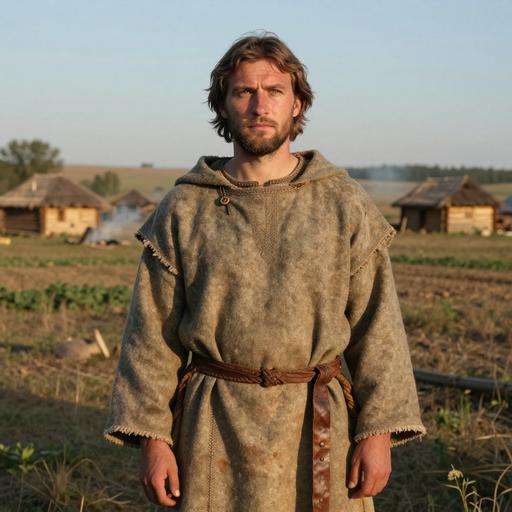
Portrait reconstruction of I6561
Ancient Individual

A man buried in Ukraine in the Middle Bronze Age era

I6561
2134 BCE - 1950 BCE
Male
Middle Bronze Age Ukraine
Ukraine
Scroll to begin
Chapter I

Identity

The biological and cultural markers that define this ancient individual

Sample ID

I6561

Date Range

2134 BCE - 1950 BCE

Biological Sex

Male

mtDNA Haplogroup

H2a1a

Y-DNA Haplogroup

R-F2597

Cultural Period

Middle Bronze Age Ukraine

Chapter II

Place

Where this individual was discovered

Country Ukraine
Locality Alexandria
Coordinates 49.5407, 37.6980
Chapter III

Time

When this individual lived in the broader context of human history

I6561 2134 BCE - 1950 BCE
Chapter IV

Story

The narrative of this ancient life

The Middle Bronze Age in Ukraine, stretching approximately from 2000 to 1500 BCE, marks a dynamic period of cultural evolution, trade expansion, and social stratification within the broader Indo-European context. This era in Ukraine is primarily characterized by the presence of the Catacomb culture, a successor to the Yamnaya and preceding cultures that were crucial in the spread of Indo-European languages across Europe and Asia.

Geography and Environment: Bronze Age Ukraine was part of the expansive Pontic-Caspian steppe, a wide, flat region of grasslands. The area was well-suited for grazing livestock and was marked by river systems such as the Dnieper, Don, and Dniester. These rivers facilitated trade and movement across the region and beyond. The region's relatively moderate climate allowed for agricultural activities but was predominantly used for pastoralism.

Society and Culture: Middle Bronze Age societies in Ukraine were primarily tribal and pastoral. The Catacomb culture, one of the predominant groups of this period, demonstrated advanced social structures with clear leadership hierarchies. The culture is named after its distinctive burial practices, where chambers, or catacombs, were dug for the deceased, often accompanied by grave goods indicating social status.

Socially, these tribes were organized into clans or extended families, with a strong emphasis on kinship and lineage. Leadership roles were held by chieftains or tribal leaders, who were usually the most successful warriors or elders. The role of warriors was significant, given the martial culture and the emphasis on horse domestication, which was critical for mobility and warfare.

Economy and Trade: The economy of Middle Bronze Age Ukraine was heavily reliant on pastoralism, particularly cattle, sheep, and horses. While agriculture was practiced, it was secondary to livestock breeding. The presence of bronze tools and weapons indicates a developed understanding of metallurgy, although metal resources were typically procured through extensive trade networks rather than local mining.

Trade during this period expanded significantly due to the mobility provided by domesticated horses. Ukrainian tribes traded with neighboring cultures, exchanging goods such as furs, hides, and livestock in return for metal tools, ornaments, and other commodities. This trade aided cultural exchange and technological advancement.

Technology and Innovations: The Middle Bronze Age saw significant technological innovations, primarily in metallurgy. The development and refinement of bronze-working techniques were pivotal, allowing for the production of more effective tools and weapons. This era also witnessed advancements in pottery, with more complex and decorated ceramics that indicate both utilitarian and ceremonial uses.

The domestication and use of horses revolutionized transport and warfare. Chariots, a notable technological advancement associated with the Indo-Europeans, began appearing in this period, enhancing mobility and military capability.

Religious and Funerary Practices: Religion in Middle Bronze Age Ukraine was polytheistic, with an emphasis on natural elements and ancestor worship. The intricate burial practices of the Catacomb culture underscore the importance of the afterlife and reverence for ancestors. Graves often contained tools, weapons, ornaments, and pottery, suggesting a belief in an afterlife where such items would be needed.

Cultural rituals likely included offerings and sacrifices, as inferred from archaeological findings of animal remains and other votive deposits. These practices highlight the spiritual connection between the living and the deceased, as well as the perceived importance of maintaining favor with the deities or spirits that governed their world.

Legacy and Influence: The Middle Bronze Age in Ukraine contributed significantly to the dissemination of Indo-European cultures across Europe and Asia. The technological, social, and cultural advancements of this period laid the groundwork for the succeeding Late Bronze Age and set the stage for future developments in Eurasian history.

In summary, Middle Bronze Age Ukraine was a period characterized by dynamic social structures, extensive trade networks, technological innovations, and rich cultural practices. The interactions within and beyond its borders had lasting impacts on the cultural and historical landscapes of Europe and Asia, marking it as a critical era in the broader Indo-European narrative.

Chapter V

Genetics

The genetic ancestry of this ancient individual

Ancient Genetic Admixture

This analysis compares the DNA profile of I6561 with ancient reference populations, showing the genetic composition in terms of prehistoric ancestral groups.

Western Steppe Pastoralists 41.5%
European Hunter-Gatherers 34.2%
Neolithic Farmers 17.8%
Ancient Asians 3.8%
Ancient Oceanians 2.7%

Modern Genetic Admixture

This analysis compares the DNA profile with present-day reference populations, showing what percentage of genetic makeup resembles modern populations from different regions.

Europe 79.3%
Northwestern European 55.3%
English 35.0%
Northwestern European 10.8%
Scandinavian 8.3%
Finnish 1.2%
Eastern European 22.0%
Southern European 2.0%
Balkan 2.0%
Asia 20.7%
Northern West Asian 14.0%
Caucasian 14.0%
Central Asian, Northern Indian & Pakistani 6.7%
Pakistan 6.7%

Closest Modern Populations

These are the modern populations showing the closest statistical alignment to A man buried in Ukraine in the Middle Bronze Age era, ranked by genetic distance. Lower distance values indicate closer statistical similarity.

1
Moksha
5.4469
2
Mordovian
5.7589
3
Erzya
5.8854
4
Finnish Southwest
5.9858
5
Russian Kostroma
6.0387
6
Afrikaner
6.1001
7
Hungarian
6.1536
8
Moldovan O
6.1735
9
Swedish
6.2300
10
German Hamburg
6.2855
Chapter VI

Context

Other ancient individuals connected to this sample

Sources

References

Scientific publications and genetic data

Scientific Publication

The genomic history of southeastern Europe

Authors Mathieson I, Alpaslan-Roodenberg S, Posth C
Abstract

Farming was first introduced to Europe in the mid-seventh millennium bc, and was associated with migrants from Anatolia who settled in the southeast before spreading throughout Europe. Here, to understand the dynamics of this process, we analysed genome-wide ancient DNA data from 225 individuals who lived in southeastern Europe and surrounding regions between 12000 and 500 bc. We document a west-east cline of ancestry in indigenous hunter-gatherers and, in eastern Europe, the early stages in the formation of Bronze Age steppe ancestry. We show that the first farmers of northern and western Europe dispersed through southeastern Europe with limited hunter-gatherer admixture, but that some early groups in the southeast mixed extensively with hunter-gatherers without the sex-biased admixture that prevailed later in the north and west. We also show that southeastern Europe continued to be a nexus between east and west after the arrival of farmers, with intermittent genetic contact with steppe populations occurring up to 2,000 years earlier than the migrations from the steppe that ultimately replaced much of the population of northern Europe.

G25 Coordinates

The G25 coordinates for sample I6561 can be used for detailed admixture analysis in our G25 Studio tool.

I6561,0.1204161,0.08829334,0.04836888,0.04884506,0.01216448,0.0177219,0.00543864,0.00795646,-0.00759144,-0.01755624,0.0010982,-0.00201394,-0.0012684,-0.0059975,0.00799162,-0.0043642,-0.01525322,0.00116752,-0.0039561,-0.00712404,-0.00028802,0.00406358,-0.00560194,0.01140698,-8.311E-05
Analyze in G25 Studio
Use code for 40% off Expires Feb 27