Menu
Store
Blog
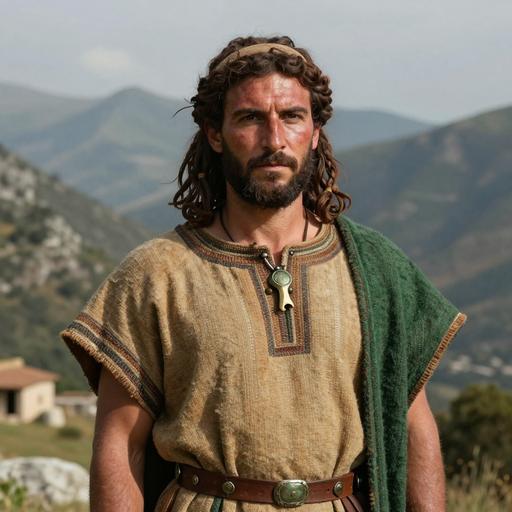
Portrait reconstruction of I8471
Ancient Individual

A man buried in Albania in the Middle Bronze Age era

I8471
1880 BCE - 1695 BCE
Male
Middle Bronze Age Albania
Albania
Scroll to begin
Chapter I

Identity

The biological and cultural markers that define this ancient individual

Sample ID

I8471

Date Range

1880 BCE - 1695 BCE

Biological Sex

Male

mtDNA Haplogroup

H1h1

Y-DNA Haplogroup

Not available

Cultural Period

Middle Bronze Age Albania

Chapter II

Place

Where this individual was discovered

Country Albania
Locality Shkrel
Coordinates 42.1500, 19.2900
Chapter III

Time

When this individual lived in the broader context of human history

I8471 1880 BCE - 1695 BCE
Chapter IV

Story

The narrative of this ancient life

The Middle Bronze Age in Albania is a fascinating period marked by significant developments in technology, culture, and societal organization. During this epoch, which roughly spans from 2000 to 1600 BCE, Albania found itself as part of the larger context of the Balkan Bronze Age, interacting with neighboring regions.

Geographical Context

Albania in the Middle Bronze Age was characterized by a diverse landscape, featuring coastal areas along the Adriatic and Ionian Seas, rolling plains, hills, and mountainous interiors. This diverse geography influenced the settlement patterns, economy, and cultural exchanges of the region.

Archaeological Evidence and Settlements

Archaeological evidence from this period has been unearthed from various settlement sites, including fortified hilltop settlements and open plains. Notable sites include Maliq, where extensive excavations have revealed insights into the architectural practices of the era, and the region around Shkodra, showcasing signs of early urbanization.

Settlements were typically fortified, often located on elevated positions, offering strategic advantages and protection. The architecture included rectangular or circular stone structures, suggesting an increased emphasis on permanent dwellings, indicative of more complex societal structures.

Material Culture and Technology

The Middle Bronze Age saw advancements in metallurgy and ceramics, with bronze tools and weapons becoming more widespread. The use of bronze was not only limited to utilitarian items but also extended to personal adornments, such as jewelry, indicating increasing artisanship and trade.

Pottery from this period evolves from the earlier Neolithic and Early Bronze Age styles, displaying more intricate designs, often featuring geometric patterns. The improvements in pottery technology suggest a higher level of skill and possibly specialized production.

Economy and Subsistence

The economy of Middle Bronze Age Albania was primarily agrarian, with an emphasis on farming and animal husbandry. The fertile plains allowed the cultivation of various crops, including grains, while pastoralism leveraged the rugged terrain for grazing sheep and goats.

Trade played a crucial role in the economy, facilitated by Albania's strategic position along the Adriatic coast. Evidence suggests the exchange of goods with neighboring regions, including the Aegean and other parts of the Balkans, which would lay the foundation for future cultural exchanges in later periods.

Social Structure and Culture

The society during the Middle Bronze Age was likely organized into tribal or clan-based structures. The presence of fortified settlements and communal structures indicates a complex social hierarchy, possibly led by chieftains or ruling elites.

Burial practices from this era provide insights into social stratification. Tombs unearthed from the period often contain grave goods, varying in richness, which suggests differential status. Some graves feature bronze items and other materials that signify wealth and connections.

Religion and Beliefs

While direct evidence of religious practices is sparse, the presence of certain artifacts and burial customs implies a set of spiritual beliefs or rituals. The use of specific grave goods and the orientation of burials suggest an early form of ancestor worship or a belief in an afterlife.

Interaction with Neighboring Cultures

Albania during the Middle Bronze Age maintained active interactions with other Balkan cultures and further afield. These connections facilitated the flow of ideas, technologies, and goods, contributing to the cultural dynamism of the region. Notably, the Mycenaean influence from the southern Aegean began to be felt towards the end of this period, setting the stage for further cultural transformations in the Late Bronze Age.

Conclusion

The Middle Bronze Age in Albania represents a time of significant transformation and growth, marked by advancements in technology, changes in social structure, and increased cultural interactions. This period laid much of the groundwork for the subsequent cultural developments that would shape the region throughout the Bronze Age and into the Iron Age. The archaeological findings from this era continue to shed light on the dynamic and interconnected nature of ancient Albanian societies within the broader Balkan context.

Chapter V

Genetics

The genetic ancestry of this ancient individual

Ancient Genetic Admixture

This analysis compares the DNA profile of I8471 with ancient reference populations, showing the genetic composition in terms of prehistoric ancestral groups.

Neolithic Farmers 44.6%
European Hunter-Gatherers 27.9%
Western Steppe Pastoralists 27.4%

Modern Genetic Admixture

This analysis compares the DNA profile with present-day reference populations, showing what percentage of genetic makeup resembles modern populations from different regions.

Europe 88.1%
Southern European 74.5%
Balkan 31.1%
Iberian 25.0%
Italian 15.8%
Sardinian 2.6%
Northwestern European 13.6%
Northwestern European 9.2%
English 4.4%
Asia 8.4%
Arab, Egyptian & Levantine 8.4%
Levantine 8.4%
Africa 2.1%
North African 2.1%
North African 2.1%
America 0.8%
America 0.8%
Native American 0.8%
Oceania 0.7%
Melanesian 0.7%
Papuan 0.7%

Closest Modern Populations

These are the modern populations showing the closest statistical alignment to A man buried in Albania in the Middle Bronze Age era, ranked by genetic distance. Lower distance values indicate closer statistical similarity.

1
Italian Piedmont
3.3920
2
Italian Emilia
3.4155
3
Swiss Italian
3.5572
4
Italian Liguria
3.6065
5
French Provence
3.6979
6
Italian Tuscany
3.7737
7
Italian Lombardy
3.9752
8
Italian Trentino Alto Adige
3.9881
9
Italian Veneto
3.9912
10
Italian Northeast
4.0280
Chapter VI

Context

Other ancient individuals connected to this sample

Sources

References

Scientific publications and genetic data

Scientific Publication

The genetic history of the Southern Arc: A bridge between West Asia and Europe | Science

Authors Lazaridis I, Alpaslan-Roodenberg S, Acar A
Abstract

The period from the Copper Age to the Bronze Age marked major social and economic transformations in West Eurasia. To better understand these changes and their genetic impacts, we generated genome-wide data from 727 individuals who lived between 5000 and 1000 BCE in southeastern Europe and southwestern Asia.

G25 Coordinates

The G25 coordinates for sample I8471 can be used for detailed admixture analysis in our G25 Studio tool.

I8471,0.10942978,0.12786512,0.0169382,0.00064838,0.02916474,-0.01023518,-0.0012346,-0.0029432,0.00600618,0.01356618,-0.00533778,0.00829006,-0.01164668,-0.00836614,0.00885542,-0.00428364,-0.00726052,0.00032748,0.0007736,-0.00227456,0.00495492,0.0019703,-0.00466142,0.00269034,-0.00146384
Analyze in G25 Studio
Use code for 40% off Expires Feb 26