Menu
Store
Blog
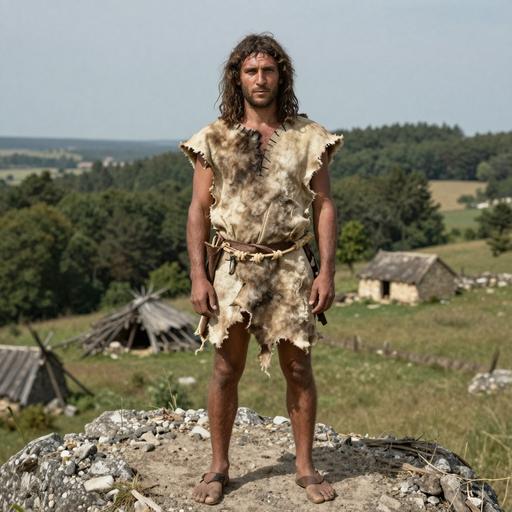
Portrait reconstruction of Iboussieres25-1
Ancient Individual

A man buried in France in the Pleistocene era

Iboussieres25-1
10050 BCE - 9400 BCE
Male
Iboussieres 25-1 Site, France
France
Scroll to begin
Chapter I

Identity

The biological and cultural markers that define this ancient individual

Sample ID

Iboussieres25-1

Date Range

10050 BCE - 9400 BCE

Biological Sex

Male

mtDNA Haplogroup

U5b2a

Y-DNA Haplogroup

I-P215

Cultural Period

Iboussieres 25-1 Site, France

Chapter II

Place

Where this individual was discovered

Country France
Locality Aven des Iboussières à Malataverne. Rhône-Alpes
Coordinates 44.2900, 4.4600
Chapter III

Time

When this individual lived in the broader context of human history

Iboussieres25-1 10050 BCE - 9400 BCE
Chapter IV

Story

The narrative of this ancient life

The Iboussieres 25-1 Site in France is an archaeological locale that provides a rich glimpse into prehistoric life, particularly reflecting the Magdalenian culture of the Upper Paleolithic period. This site is situated in the Grotte d'Iboussieres in the Vaucluse region, an area known for its profusion of prehistoric caves and shelters, which served as both living quarters and ritual sites for ancient peoples.

Geographical Context: The Vaucluse region, where the Iboussieres 25-1 Site is found, is characterized by its limestone plateau, conducive to the formation of caves and rock shelters. This geographical setting played a crucial role in the preservation of archaeological artifacts and remains, making it an invaluable area for the study of prehistoric cultures in Europe.

Cultural Context: The Magdalenian culture, dating from approximately 17,000 to 12,000 years ago, is noted for its sophisticated tool-making techniques and remarkable art, which includes cave paintings, carvings, and portable art objects. Within this context, the Iboussieres 25-1 Site holds significance as a representative of these enduring human achievements.

Archaeological Findings: Extensive excavations at the site have uncovered layers of occupation that reveal a wealth of information about the adaptive strategies and daily life of Magdalenian hunter-gatherers. The finds include:

  1. Stone Tools and Weapons: The site has yielded a variety of lithic implements, such as blades, burins, scrapers, and projectile points. These tools were expertly crafted from flint and other local stones, reflecting the Magdalenian people's advanced understanding of materials and their capabilities in hunting and processing food.

  2. Faunal Remains: Among the remains are bones of reindeer, wild horses, and bison, indicating the inhabitants' reliance on hunting large game. The presence of these remains suggests knowledge of animal migration patterns and adaptation to cold environments at the end of the last Ice Age.

  3. Artistic Elements: Although not as prominent as other Magdalenian sites known for mural artworks, the Iboussieres 25-1 Site has provided some insights into the symbolic and artistic endeavors of its inhabitants. Carved bones and antlers, as well as personal ornaments such as beads, imply a cultural appreciation for art and possibly a system of social signaling or ritual conduct.

Living Habits: The layout of the site, with evidence of hearths and designated tool-making areas, suggests a structured use of space for communal living. The organization and spatial arrangement of these living areas indicate a complex social structure, possibly including designated roles or task specialization within groups.

Environmental Adaptation: The Magdalenian inhabitants of Iboussieres 25-1 were adept at adapting to the harsh climatic conditions of the late Pleistocene. Their occupation of the site demonstrates strategic use of natural shelters, efficient hunting techniques, and the utilization of available resources for shelter, tools, and sustenance, showcasing their resilience and ingenuity.

Research and Interpretation: Ongoing research at Iboussieres 25-1 continues to enhance our understanding of the cultural and environmental dynamics of the Magdalenian period. Scholars employ interdisciplinary approaches, including paleobotany, geology, and advanced dating techniques, to construct a comprehensive picture of this era.

In summary, the Iboussieres 25-1 Site serves as a microcosm of Magdalenian culture, highlighting the adaptability and artistic spirit of its people. It remains a pivotal site for archaeologists seeking to unravel the complexities of human evolution and cultural development during a time of significant climatic and environmental transformation.

Chapter V

Genetics

The genetic ancestry of this ancient individual

Ancient Genetic Admixture

This analysis compares the DNA profile of Iboussieres25-1 with ancient reference populations, showing the genetic composition in terms of prehistoric ancestral groups.

Western Steppe Pastoralists 58.0%
European Hunter-Gatherers 27.5%
Ancient Asians 7.3%
Neolithic Farmers 4.8%
Ancient Oceanians 2.4%

Modern Genetic Admixture

This analysis compares the DNA profile with present-day reference populations, showing what percentage of genetic makeup resembles modern populations from different regions.

Europe 91.3%
Northwestern European 87.5%
English 33.8%
Finnish 31.0%
Scandinavian 22.7%
Southern European 3.9%
Iberian 3.9%
Asia 6.6%
Chinese & Southeast Asian 6.6%
Chinese 6.6%
Oceania 1.9%
Melanesian 1.9%
Papuan 1.9%

Closest Modern Populations

These are the modern populations showing the closest statistical alignment to A man buried in France in the Pleistocene era, ranked by genetic distance. Lower distance values indicate closer statistical similarity.

1
Swedish
3.1580
2
Norwegian
3.5458
3
German Hamburg
3.6407
4
Icelandic
3.8290
5
Danish
3.8409
6
Shetlandic
3.9622
7
Dutch
4.0391
8
Orcadian
4.1180
9
Scottish
4.1652
10
Czech
4.1831
Chapter VI

Context

Other ancient individuals connected to this sample

Sources

References

Scientific publications and genetic data

Scientific Publication

The genomic history of southeastern Europe

Authors Mathieson I, Alpaslan-Roodenberg S, Posth C
Abstract

Farming was first introduced to Europe in the mid-seventh millennium bc, and was associated with migrants from Anatolia who settled in the southeast before spreading throughout Europe. Here, to understand the dynamics of this process, we analysed genome-wide ancient DNA data from 225 individuals who lived in southeastern Europe and surrounding regions between 12000 and 500 bc. We document a west-east cline of ancestry in indigenous hunter-gatherers and, in eastern Europe, the early stages in the formation of Bronze Age steppe ancestry. We show that the first farmers of northern and western Europe dispersed through southeastern Europe with limited hunter-gatherer admixture, but that some early groups in the southeast mixed extensively with hunter-gatherers without the sex-biased admixture that prevailed later in the north and west. We also show that southeastern Europe continued to be a nexus between east and west after the arrival of farmers, with intermittent genetic contact with steppe populations occurring up to 2,000 years earlier than the migrations from the steppe that ultimately replaced much of the population of northern Europe.

G25 Coordinates

The G25 coordinates for sample Iboussieres25-1 can be used for detailed admixture analysis in our G25 Studio tool.

Iboussieres25-1,0.13198872,0.1035565,0.05832502,0.05313808,0.04407018,0.02863276,0.00394986,0.00751188,0.00306286,-0.00976872,-0.0065714,0.00536134,0.00268532,-0.00604806,0.01214618,0.00098706,-0.00829864,0.0004814,-0.00124982,-0.0003249,0.00633352,0.003662,0.00116314,0.00929188,-0.00077389
Analyze in G25 Studio
Use code for 40% off Expires Feb 27