Menu
Store
Blog
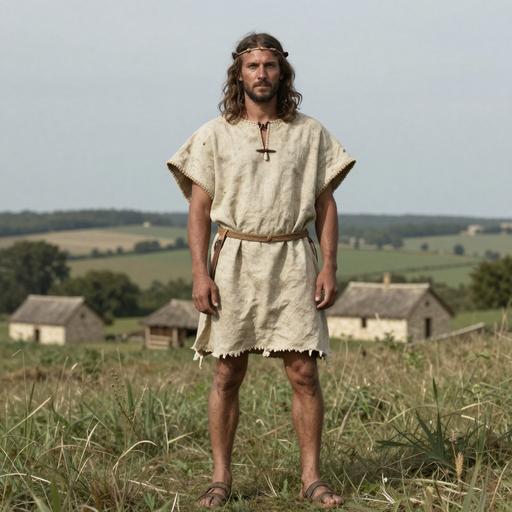
Portrait reconstruction of MDV248
Ancient Individual

A man buried in France in the Early Neolithic era

MDV248
5206 BCE - 4853 BCE
Male
Early Neolithic Hauts-de-France, France
France
Scroll to begin
Chapter I

Identity

The biological and cultural markers that define this ancient individual

Sample ID

MDV248

Date Range

5206 BCE - 4853 BCE

Biological Sex

Male

mtDNA Haplogroup

K1a2

Y-DNA Haplogroup

H2a1

Cultural Period

Early Neolithic Hauts-de-France, France

Chapter II

Place

Where this individual was discovered

Country France
Locality Hauts-de-France (North). Menneville. Derrière le village
Coordinates 49.4191, 4.0077
Chapter III

Time

When this individual lived in the broader context of human history

MDV248 5206 BCE - 4853 BCE
Chapter IV

Story

The narrative of this ancient life

The Early Neolithic period in the region known today as Hauts-de-France in northern France is a significant chapter in the broader tapestry of Western European Neolithic culture. This era marks a crucial transition from hunter-gatherer societies of the Mesolithic to settled agricultural communities. The profound changes during this period—approximately 6,000 to 4,500 BC—laid the foundations for significant developments in human society, including agriculture, sedentism, and new social configurations.

Geographical and Environmental Context

Hauts-de-France is characterized by a diverse landscape featuring fertile plains, forests, and river valleys, making it an ideal environment for early agriculture. The region's river systems, such as the Somme and the Oise, provided water resources and fertile alluvial soils conducive to farming. The climate during the Early Neolithic was relatively stable, with warmer temperatures compared to the preceding millennia, which further supported the growth of agriculture.

Arrival of Farming and Domestication

The Neolithic era in Hauts-de-France, and Western Europe more broadly, is primarily defined by the introduction and development of agriculture. This period saw the domestication of plants such as emmer wheat, barley, and legumes, as well as the introduction of domesticated animals including cattle, sheep, goats, and pigs. These domesticated species were crucial for the sustenance of increasingly sedentary communities.

The spread of agriculture into the region is attributed to migratory movements from the Near East via the Danube River and Mediterranean coastal pathways, bringing with them knowledge of farming techniques and domesticated species. This agricultural knowledge facilitated a shift from reliance on foraging to the controlled production of food.

Settlements and Architecture

With the advent of agriculture, permanent settlements began to form. The Early Neolithic communities in Hauts-de-France were characterized by small villages with structures built predominantly from wood, wattle, and daub. Excavations have revealed rectangular longhouses, which served as multi-functional living spaces accommodating families and their livestock.

These settlements were often located strategically near water sources and fertile land while being elevated enough to avoid flooding. Such positioning indicates a sophisticated understanding of the local environment and resource management.

Material Culture and Tools

The Early Neolithic era was marked by significant advancements in tool production, particularly in the use of polished stone tools. Axes, chisels, and adzes were crafted from durable materials such as flint, extracted from local sources such as the abundant flint deposits found in northern France. These tools were essential for clearing forests, woodworking, and various other agricultural activities.

Pottery also emerged during this period, reflecting both utilitarian and cultural dimensions. Early Neolithic pottery in Hauts-de-France featured simple shapes and functional designs, evolving over time to include decorative elements that offer insights into aesthetic preferences and social identity.

Social Structures and Beliefs

The transition to sedentary farming communities brought changes to social structures. Settlements were likely organized around extended family units or small kin groups, with evidence suggesting some degree of social stratification or leadership roles determined by agricultural success, craft specialization, or control over resources.

Burial practices and funerary sites from this period provide insights into the spiritual and cultural life of Early Neolithic people. Megalithic structures, such as dolmens and passage graves, began to appear, indicating complex ritual practices and beliefs in an afterlife. These structures required communal effort, pointing to well-organized societies capable of large-scale projects.

Interaction and Exchange

While the Early Neolithic communities were largely self-sufficient, there is evidence of interaction and trade with neighboring regions. The exchange of raw materials, such as obsidian and high-quality flint, and cultural practices suggests a network of communication and exchange that facilitated the spread of innovations and ideas.

Conclusion

The Early Neolithic period in Hauts-de-France represents a transformative era that set the stage for the development of complex societies. The transition from foraging to farming, the establishment of permanent settlements, the evolution of material culture, and the rise of new social structures were integral to shaping the region's subsequent cultural and historical trajectory. The archaeological remnants from this time provide a window into the lives of early agricultural communities in northern France, illustrating their adaptability, ingenuity, and the profound impact of agriculture on human society.

Chapter V

Genetics

The genetic ancestry of this ancient individual

Ancient Genetic Admixture

This analysis compares the DNA profile of MDV248 with ancient reference populations, showing the genetic composition in terms of prehistoric ancestral groups.

Neolithic Farmers 62.9%
European Hunter-Gatherers 31.5%
Western Steppe Pastoralists 2.9%
Ancient Oceanians 2.8%

Modern Genetic Admixture

This analysis compares the DNA profile with present-day reference populations, showing what percentage of genetic makeup resembles modern populations from different regions.

Europe 83.2%
Southern European 83.2%
Italian 58.6%
Sardinian 24.6%
Asia 13.3%
Arab, Egyptian & Levantine 11.1%
Levantine 11.1%
Northern West Asian 2.2%
Cypriot 2.2%
Africa 3.1%
North African 3.1%
North African 3.1%

Closest Modern Populations

These are the modern populations showing the closest statistical alignment to A man buried in France in the Early Neolithic era, ranked by genetic distance. Lower distance values indicate closer statistical similarity.

1
Sardinian
4.5441
2
Belmonte Jew
6.4489
3
French Corsica
6.7726
4
Italian Lazio
7.4120
5
Sicilian West
7.5392
6
Italian Umbria
7.7291
7
Sicilian East
7.7914
8
Italian Campania
7.7953
9
Maltese
7.8483
10
Italian Calabria
7.8623
Chapter VI

Context

Other ancient individuals connected to this sample

Sources

References

Scientific publications and genetic data

Scientific Publication

Ancient genomes from present-day France unveil 7,000 years of its demographic history

Authors Brunel S, Bennett EA, Cardin L
Abstract

Genomic studies conducted on ancient individuals across Europe have revealed how migrations have contributed to its present genetic landscape, but the territory of present-day France has yet to be connected to the broader European picture. We generated a large dataset comprising the complete mitochondrial genomes, Y-chromosome markers, and genotypes of a number of nuclear loci of interest of 243 individuals sampled across present-day France over a period spanning 7,000 y, complemented with a partially overlapping dataset of 58 low-coverage genomes. This panel provides a high-resolution transect of the dynamics of maternal and paternal lineages in France as well as of autosomal genotypes. Parental lineages and genomic data both revealed demographic patterns in France for the Neolithic and Bronze Age transitions consistent with neighboring regions, first with a migration wave of Anatolian farmers followed by varying degrees of admixture with autochthonous hunter-gatherers, and then substantial gene flow from individuals deriving part of their ancestry from the Pontic steppe at the onset of the Bronze Age. Our data have also highlighted the persistence of Magdalenian-associated ancestry in hunter-gatherer populations outside of Spain and thus provide arguments for an expansion of these populations at the end of the Paleolithic Period more northerly than what has been described so far. Finally, no major demographic changes were detected during the transition between the Bronze and Iron Ages.

G25 Coordinates

The G25 coordinates for sample MDV248 can be used for detailed admixture analysis in our G25 Studio tool.

MDV248,0.10631912,0.1564482,0.00515454,-0.05949658,0.04826392,-0.03260748,-0.00385474,0.00348742,0.04229924,0.06230436,-0.00071392,0.00921258,-0.0144908,-0.01217102,-0.01248032,0.00742628,0.01048372,0.00097092,0.00159918,-0.00135516,0.00212946,0.00640514,-0.01198434,-0.01743848,0.00299685
Analyze in G25 Studio
Use code for 40% off Expires Feb 27