Menu
Store
Blog
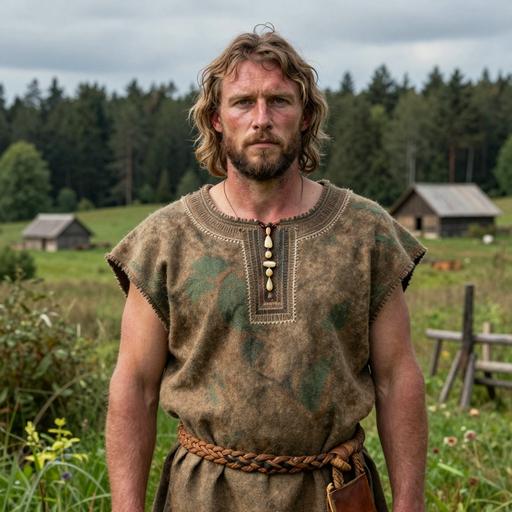
Portrait reconstruction of RISE98
Ancient Individual

A man buried in Sweden in the Late Neolithic era

RISE98
2278 BCE - 2032 BCE
Male
Late Neolithic Sweden
Sweden
Scroll to begin
Chapter I

Identity

The biological and cultural markers that define this ancient individual

Sample ID

RISE98

Date Range

2278 BCE - 2032 BCE

Biological Sex

Male

mtDNA Haplogroup

K1b1a1*

Y-DNA Haplogroup

R-Z2265

Cultural Period

Late Neolithic Sweden

Chapter II

Place

Where this individual was discovered

Country Sweden
Locality L Beddinge 56
Coordinates 55.3810, 13.4450
Chapter III

Time

When this individual lived in the broader context of human history

RISE98 2278 BCE - 2032 BCE
Chapter IV

Story

The narrative of this ancient life

The Late Neolithic period in Sweden, approximately spanning from 2350 to 1700 BCE, marks a fascinating era in proto-cultural development that paved the way for the advent of the Proto-Germanic culture. This period is characterized by significant transitions in societal structures, technological advancements, and environmental adaptations.

Societal Structure

During the Late Neolithic in Sweden, communities were primarily organized into small tribal units or extended family groups. There was a gradual evolution from isolated settlements to more complex social structures. This period was marked by increasing social stratification, as evidenced by the variation in grave goods and burial practices. Some individuals were buried with wealthier grave accessories, indicating an emerging hierarchy and possibly even proto-chiefdoms.

The people of Late Neolithic Sweden were likely organized into a clan-based society, where kinship and lineage played critical roles in social organization. The communities were largely agrarian, supplemented by hunting, fishing, and foraging. This was a time when trade networks started to emerge, linking different groups across the region and facilitating the exchange of goods like amber, flint, and pottery.

Cultural and Religious Practices

Religious practices during this era were deeply intertwined with the natural world. The people of Late Neolithic Sweden practiced animism, where natural elements and landscapes were imbued with spiritual significance. Archaeological evidence, such as the presence of megalithic sites and stone circles, suggests these were likely used for ritualistic purposes, possibly related to the worship of ancestors or celestial events.

Burial customs during this period are also noteworthy. Megalithic tombs, such as passage graves and dolmens, were constructed, signifying beliefs surrounding death and the afterlife. The inclusion of grave goods like pottery, tools, and animal offerings indicates a belief in an existence beyond death that mirrored the living world.

Technological Advancements

The Late Neolithic period in Sweden saw notable advancements in toolmaking, particularly with the introduction of new materials and techniques. The prevalence of polished stone tools and the nascent use of metals such as copper signify the technological innovations of the time. Tools and weapons such as axes, chisels, and sickles became more efficient and refined.

Pottery also evolved during this era, becoming both more decorative and functional. The Corded Ware culture, which influenced much of northern Europe, introduced pottery with characteristic cord-like impressions. This pottery style indicates a fusion of cultural influences and local adaptations.

Agricultural Developments

Agriculture during the Late Neolithic era in Sweden became increasingly sophisticated. Communities practiced mixed farming, growing crops such as barley, wheat, and flax. There was a significant shift from slash-and-burn agriculture to more sustainable farming practices, allowing for permanent settlements rather than nomadic lifestyles.

Animal husbandry was also a vital component of their subsistence strategy, with evidence of domesticated animals like cattle, sheep, pigs, and goats. These practices not only supplemented their diets but also contributed to the development of trade and societal wealth accumulation.

Environmental Adaptation

The Late Neolithic inhabitants of Sweden were adept at adapting to their environment, which was predominantly characterized by dense forests and numerous waterways. The use of boats and efficient navigation along the Baltic Sea and inland rivers facilitated trade, fishing, and communication between different groups.

The clearing of forests for agricultural expansion marked significant environmental interaction. This deforestation also played a role in the development of long-term settlement patterns and the cultivation of arable land.

The Proto-Germanic Transition

This period laid foundational aspects for the Proto-Germanic culture through both linguistic and cultural shifts. Although much of Proto-Germanic culture developed later, the seeds were sown during this era through interactions and mergers with other European tribes and cultures. Linguistically, the Proto-Indo-European language, from which Proto-Germanic would later emerge, began to take shape, influencing the phonetic and grammatical structure of future Germanic languages.

In summary, Late Neolithic Sweden was a time of profound transformation and development, setting the stage for the rise of the Proto-Germanic culture. The era was characterized by advancements in technology, evolving social structures, intricate trade networks, and complex spiritual beliefs, all of which contributed to the rich and dynamic historical tapestry of the region.

Chapter V

Genetics

The genetic ancestry of this ancient individual

Ancient Genetic Admixture

This analysis compares the DNA profile of RISE98 with ancient reference populations, showing the genetic composition in terms of prehistoric ancestral groups.

Western Steppe Pastoralists 45.5%
European Hunter-Gatherers 43.3%
Neolithic Farmers 11.2%

Modern Genetic Admixture

This analysis compares the DNA profile with present-day reference populations, showing what percentage of genetic makeup resembles modern populations from different regions.

Europe 99.2%
Northwestern European 78.0%
English 40.1%
Northwestern European 16.1%
Finnish 13.9%
Scandinavian 7.8%
Eastern European 12.2%
Southern European 9.1%
Balkan 9.1%

Closest Modern Populations

These are the modern populations showing the closest statistical alignment to A man buried in Sweden in the Late Neolithic era, ranked by genetic distance. Lower distance values indicate closer statistical similarity.

1
Norwegian
2.8149
2
Orcadian
2.9091
3
Swedish
2.9148
4
Icelandic
2.9663
5
Scottish
3.0434
6
Danish
3.0869
7
Shetlandic
3.1711
8
Dutch
3.1881
9
German Hamburg
3.2184
10
Irish
3.3111
Chapter VI

Context

Other ancient individuals connected to this sample

Sources

References

Scientific publications and genetic data

Scientific Publication

Population genomics of Bronze Age Eurasia

Authors Allentoft ME, Sikora M, Sjögren KG
Abstract

The Bronze Age of Eurasia (around 3000-1000 BC) was a period of major cultural changes. However, there is debate about whether these changes resulted from the circulation of ideas or from human migrations, potentially also facilitating the spread of languages and certain phenotypic traits. We investigated this by using new, improved methods to sequence low-coverage genomes from 101 ancient humans from across Eurasia. We show that the Bronze Age was a highly dynamic period involving large-scale population migrations and replacements, responsible for shaping major parts of present-day demographic structure in both Europe and Asia. Our findings are consistent with the hypothesized spread of Indo-European languages during the Early Bronze Age. We also demonstrate that light skin pigmentation in Europeans was already present at high frequency in the Bronze Age, but not lactose tolerance, indicating a more recent onset of positive selection on lactose tolerance than previously thought.

G25 Coordinates

The G25 coordinates for sample RISE98 can be used for detailed admixture analysis in our G25 Studio tool.

RISE98,0.12069082,0.11589658,0.06588136,0.0531511,0.03680022,0.02098654,-0.00034332,0.00771956,0.00467854,-0.0054784,-0.00282518,-8.634E-05,-0.00643166,-0.00602638,0.0168398,-0.00227818,-0.01966158,0.00324306,-0.00175896,-0.0044879,0.00215866,0.00410564,-0.00278142,0.01464038,0.00282187
Analyze in G25 Studio
Use code for 40% off Expires Feb 26