Menu
Currency
Main
Store
Blog

Loading Report

Preparing your ancestry journey

Connecting to ancient matches...

Preparing your report

Skip to main content
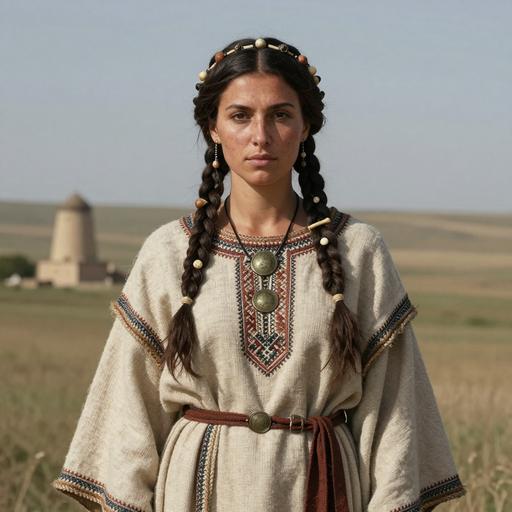
Portrait reconstruction of A woman buried in Moldova in the Iron Age era
Ancient Individual

A woman buried in Moldova in the Iron Age era

A woman buried in Moldova during the Cimmerian Period Moldova

A fragment of the ancient world, preserved across millennia in strands of DNA.

cim359
1011 BCE - 832 BCE
Female
Moldova
Scroll to begin
Chapter I

Identity

The biological and cultural markers that define this ancient individual

Sample ID

cim359

Date Range

1011 BCE - 832 BCE

Cultural Period

Cimmerian Period Moldova

Biological Sex

Female

mtDNA Haplogroup

R

Y-DNA Haplogroup

N/A (Female)

Chapter II

Place

Where this individual was discovered

Country Moldova
Locality Rybnitsa District. Mokra
Coordinates 47.3753, 29.0907
Chapter III

Time

When this individual lived in the broader context of human history

cim359 1011 BCE - 832 BCE
Chapter IV

Story

The narrative of this ancient life

The Cimmerian Period in Moldova refers to the time when Cimmerian tribes, often classified within the broader category of steppe cultures, inhabited the region. This period is part of a larger narrative involving the movements and interactions of nomadic groups across the Eurasian steppes and typically dates back to around the 8th to 7th centuries BCE.

Geographic and Environmental Context

Moldova, during the Cimmerian Period, was characterized by its diverse landscape comprising plains, rivers, and forest-steppe regions. The Prut and Dniester Rivers would have been significant geographic features, providing water sources and natural routes for movement. The climate at the time was likely similar to today's, with cold winters and warm summers, supporting a semi-nomadic lifestyle due to the availability of pastures for livestock.

Cultural Characteristics

Social Structure

The Cimmerian society during this period was largely nomadic or semi-nomadic, organized into tribal groups. These groups were likely kin-based, emphasizing family ties and alliances between different tribal entities. The social hierarchy was probably led by chieftains or warrior leaders, who wielded power based on their skills in battle and diplomacy.

Economy

The economy of the Cimmerian tribes in Moldova would have been predominantly based on pastoralism. Herding of cattle, horses, sheep, and goats was central to their way of life. The horse, in particular, played an essential role, not only as a source of food but also as a status symbol and a key component of warfare. There was also some engagement in hunting and limited agriculture, adapted to the environmental conditions of the region.

Warfare and Weaponry

The Cimmerians were known as formidable warriors, often involving themselves in raids and conflicts with neighboring cultures. They are depicted in various historical accounts as fearsome mounted fighters. Their weaponry typically included short swords, spears, bows, and arrows. The use of composite bows and a distinctive style of horseback warfare set them apart from other cultures in the region.

Art and Artifacts

While the Cimmerians did not leave behind a written record, their presence is evidenced by archaeological finds. Artifacts such as pottery, metalwork, and weaponry have been uncovered, showcasing their craftsmanship. The metalwork, often in bronze or iron, included elaborate jewelry and armor, suggesting a rich culture of artisanship. Art motifs frequently included animal figures, reflective of their shamanistic and animistic beliefs.

Interaction with Other Cultures

The Cimmerians of Moldova were part of a broader spectrum of nomadic cultures that interacted with settled civilizations. They had interactions with cultures such as the Thracians, Scythians, and later the Greeks. These interactions ranged from trade exchanges to conflicts, which played a significant role in shaping the region's historical development. The Cimmerians are often credited with influencing the subsequent Scythian culture that came to dominate the steppe regions after their decline.

Decline and Legacy

The decline of the Cimmerian presence in Moldova and surrounding steppe regions is generally attributed to pressure from other nomadic groups, particularly the Scythians, who displaced them. As the Cimmerians faded as a dominant culture, they assimilated into other groups or migrated further, contributing to the ethnogenesis of later nomadic and semi-nomadic cultures.

The legacy of the Cimmerian Period in Moldova is seen in the transmission of technologies and cultural elements, such as horsemanship and metalwork, to later populations. Their period of prominence laid foundational socio-cultural and economic patterns that echoed through the subsequent history of the Eurasian steppes.

In summary, the Cimmerian Period in Moldova is a fascinating chapter in the history of the Eurasian steppe cultures, characterized by its dynamic nomadic lifestyle, skilled warfare, and intricate metal craftsmanship. Despite being eventually overshadowed by the rise of the Scythians, the Cimmerians left a lasting imprint on the cultural and historical landscape of the region.

Chapter V

Genetics

These comparisons show genetic similarity, not identity or origin. The populations listed are those whose genomes show statistical alignment to this ancient individual.

Similarity reflects shared history, not shared identity. These are analytical comparisons, not claims about who this person was.

Modern Genetic Admixture

This analysis compares the DNA profile with present-day reference populations, showing what percentage of genetic makeup resembles modern populations from different regions.

Asia 59.2%
Central Asian, Northern Indian & Pakistani 26.7%
Central Asian 16.1%
Pakistan 6.7%
Indian 3.9%
Northern Asian 18.9%
Siberian 14.9%
Mongolian 4.0%
Chinese & Southeast Asian 6.9%
Tibetan 6.9%
Northern West Asian 6.7%
Caucasian 6.7%
Europe 37.5%
Eastern European 22.4%
Northwestern European 15.2%
English 15.2%
America 3.1%
America 3.1%
Native American 3.1%

Closest Modern Populations

These are the modern populations showing the closest statistical alignment to A woman buried in Moldova in the Iron Age era, ranked by genetic distance. Lower distance values indicate closer statistical similarity.

1
Bashkir
3.2628
Context

Related Samples

This individual exists within a broader network of ancient samples. No ancient genome stands alone.

Sample ID Culture/Period Date Location Action
kzb002 Srubnaya-Alakul Culture, Russia 1879 BCE Republic of Bashkorstan. Near Usmanovo village. Kazburun 1, Russia View
scy006 Scythian Culture, Ukraine 800 BCE Cherkasy Region. Gorodische District. Starosillya, Ukraine View
scy009 Scythian Culture, Ukraine 766 BCE Cherkasy Region. Gorodische District. Starosillya, Ukraine View
scy010 Scythian Culture, Ukraine 789 BCE Cherkasy Region. Gorodische District. Starosillya, Ukraine View
scy011 Scythian Culture, Ukraine 356 BCE Cherkasy Region. Mankivsky District. Nesterivka, Ukraine View
mur003 Srubnaya-Alakul Culture, Russia 1881 BCE Republic of Bashkorstan. Near Usmanovo Village. Muradym 8, Russia View
kzb007 Srubnaya-Alakul Culture, Russia 1873 BCE Republic of Bashkorstan. Near Usmanovo village. Kazburun 1, Russia View
mur004 Srubnaya-Alakul Culture, Russia 1888 BCE Republic of Bashkorstan. Near Usmanovo Village. Muradym 8, Russia View
kzb008 Srubnaya-Alakul Culture, Russia 1887 BCE Republic of Bashkorstan. Near Usmanovo village. Kazburun 1, Russia View
tem003 Late Sarmatian Culture, Russia 131 CE Republic of Bashkortostan. Baymak Distict. Temyaysovo-1 burial ground, Russia View
kzb006 Srubnaya-Alakul Culture, Russia 1868 BCE Republic of Bashkorstan. Near Usmanovo village. Kazburun 1, Russia View
chy002 Late Sarmatian Culture, Russia 81 CE Orenburg Regio. Southern Urals. Cherniy Yar, Russia View
kzb005 Srubnaya-Alakul Culture, Russia 1882 BCE Republic of Bashkorstan. Near Usmanovo village. Kazburun 1, Russia View
kzb009 Srubnaya-Alakul Culture, Russia 1866 BCE Republic of Bashkorstan. Near Usmanovo village. Kazburun 1, Russia View
tem002 Late Sarmatian Culture, Russia 121 CE Republic of Bashkortostan. Baymak Distict. Temyaysovo-1 burial ground, Russia View
chy001 Late Sarmatian Culture, Russia 27 CE Orenburg Regio. Southern Urals. Cherniy Yar, Russia View
kzb001 Srubnaya-Alakul Culture, Russia 1740 BCE Republic of Bashkorstan. Near Usmanovo village. Kazburun 1, Russia View
tem001 Late Sarmatian Culture, Russia 129 CE Republic of Bashkortostan. Baymak Distict. Temyaysovo-1 burial ground, Russia View
kzb003 Srubnaya-Alakul Culture, Russia 1870 BCE Republic of Bashkorstan. Near Usmanovo village. Kazburun 1, Russia View
mur001 Srubnaya-Alakul Culture, Russia 1740 BCE Republic of Bashkorstan. Near Usmanovo Village. Muradym 8, Russia View
mur002 Srubnaya-Alakul Culture, Russia 1680 BCE Republic of Bashkorstan. Near Usmanovo Village. Muradym 8, Russia View
kzb004 Srubnaya-Alakul Culture, Russia 1872 BCE Republic of Bashkorstan. Near Usmanovo village. Kazburun 1, Russia View
scy303 Scythian Period Glinoe, Moldova 386 BCE Slobodzeya District. Glinoe, Moldova View
scy301 Scythian Period Glinoe, Moldova 390 BCE Slobodzeya District. Glinoe, Moldova View
scy192 Scythian Period Glinoe, Moldova 400 BCE Slobodzeya District. Glinoe, Moldova View
cim359 Cimmerian Period Moldova 1011 BCE Rybnitsa District. Mokra, Moldova View
scy300 Scythian Period Glinoe, Moldova 395 BCE Slobodzeya District. Glinoe, Moldova View
scy311 Scythian Period Glinoe, Moldova 391 BCE Slobodzeya District. Glinoe, Moldova View
scy197 Scythian Period Glinoe, Moldova 400 BCE Slobodzeya District. Glinoe, Moldova View
cim357 Cimmerian Period Moldova 916 BCE Slobodzeya District. Glinoe Sad, Moldova View
scy305 Scythian Period Glinoe, Moldova 396 BCE Slobodzeya District. Glinoe, Moldova View
cim358 Cimmerian Period Moldova 971 BCE Slobodzeya District. Glinoe Sad, Moldova View
scy304 Scythian Period Glinoe, Moldova 367 BCE Slobodzeya District. Glinoe, Moldova View
scy193 Scythian Period Glinoe, Moldova 400 BCE Slobodzeya District. Glinoe, Moldova View
scy332 Scythian Period Glinoe, Moldova 250 CE Slobodzeya District. Glinoe, Moldova View
chy001 27 CE Orenburg Regio. Southern Urals. Cherniy Yar, Russia View
chy002 81 CE Orenburg Regio. Southern Urals. Cherniy Yar, Russia View
cim357 916 BCE Slobodzeya District. Glinoe Sad, Moldova View
cim358 971 BCE Slobodzeya District. Glinoe Sad, Moldova View
cim359 1011 BCE Rybnitsa District. Mokra, Moldova View
kzb001 1740 BCE Republic of Bashkorstan. Near Usmanovo village. Kazburun 1, Russia View
kzb003 1870 BCE Republic of Bashkorstan. Near Usmanovo village. Kazburun 1, Russia View
kzb004 1872 BCE Republic of Bashkorstan. Near Usmanovo village. Kazburun 1, Russia View
kzb005 1882 BCE Republic of Bashkorstan. Near Usmanovo village. Kazburun 1, Russia View
kzb006 1868 BCE Republic of Bashkorstan. Near Usmanovo village. Kazburun 1, Russia View
kzb007 1873 BCE Republic of Bashkorstan. Near Usmanovo village. Kazburun 1, Russia View
kzb008 1887 BCE Republic of Bashkorstan. Near Usmanovo village. Kazburun 1, Russia View
kzb009 1866 BCE Republic of Bashkorstan. Near Usmanovo village. Kazburun 1, Russia View
mur001 1740 BCE Republic of Bashkorstan. Near Usmanovo Village. Muradym 8, Russia View
mur002 1680 BCE Republic of Bashkorstan. Near Usmanovo Village. Muradym 8, Russia View
mur003 1881 BCE Republic of Bashkorstan. Near Usmanovo Village. Muradym 8, Russia View
mur004 1888 BCE Republic of Bashkorstan. Near Usmanovo Village. Muradym 8, Russia View
scy009 766 BCE Cherkasy Region. Gorodische District. Starosillya, Ukraine View
scy010 789 BCE Cherkasy Region. Gorodische District. Starosillya, Ukraine View
scy011 356 BCE Cherkasy Region. Mankivsky District. Nesterivka, Ukraine View
scy192 400 BCE Slobodzeya District. Glinoe, Moldova View
scy193 400 BCE Slobodzeya District. Glinoe, Moldova View
scy197 400 BCE Slobodzeya District. Glinoe, Moldova View
scy300 395 BCE Slobodzeya District. Glinoe, Moldova View
scy301 390 BCE Slobodzeya District. Glinoe, Moldova View
scy303 386 BCE Slobodzeya District. Glinoe, Moldova View
scy304 367 BCE Slobodzeya District. Glinoe, Moldova View
scy305 396 BCE Slobodzeya District. Glinoe, Moldova View
scy311 391 BCE Slobodzeya District. Glinoe, Moldova View
scy332 250 CE Slobodzeya District. Glinoe, Moldova View
tem001 129 CE Republic of Bashkortostan. Baymak Distict. Temyaysovo-1 burial ground, Russia View
tem002 121 CE Republic of Bashkortostan. Baymak Distict. Temyaysovo-1 burial ground, Russia View
tem003 131 CE Republic of Bashkortostan. Baymak Distict. Temyaysovo-1 burial ground, Russia View
Sample ID Culture/Period Date Location Action
cim359 Cimmerian Period Moldova 1011 BCE Rybnitsa District. Mokra, Moldova View
cim357 Cimmerian Period Moldova 916 BCE Slobodzeya District. Glinoe Sad, Moldova View
cim358 Cimmerian Period Moldova 971 BCE Slobodzeya District. Glinoe Sad, Moldova View
Sources

References

Scientific publications and genetic data that inform this profile.

Scientific Publication

Ancient genomes suggest the eastern Pontic-Caspian steppe as the source of western Iron Age nomads

Authors Krzewińska M, Kılınç GM, Juras A, Koptekin D, Chyleński M et al.
Abstract

For millennia, the Pontic-Caspian steppe was a connector between the Eurasian steppe and Europe. In this scene, multidirectional and sequential movements of different populations may have occurred, including those of the Eurasian steppe nomads. We sequenced 35 genomes (low to medium coverage) of Bronze Age individuals (Srubnaya-Alakulskaya) and Iron Age nomads (Cimmerians, Scythians, and Sarmatians) that represent four distinct cultural entities corresponding to the chronological sequence of cultural complexes in the region. Our results suggest that, despite genetic links among these peoples, no group can be considered a direct ancestor of the subsequent group. The nomadic populations were heterogeneous and carried genetic affinities with populations from several other regions including the Far East and the southern Urals. We found evidence of a stable shared genetic signature, making the eastern Pontic-Caspian steppe a likely source of western nomadic groups.

G25 Coordinates

These coordinates represent a position in genetic space, a tool for comparison, not a conclusion. You can use these to perform custom admixture analysis in G25 Studio.

cim359,0.08934126,-0.09271266,0.05378084,0.03903212,-0.03966232,0.0016713,-0.0036858,-0.00201708,-0.0048092,-0.01642404,-0.0001651,-0.00106062,0.00409,-0.02159928,0.00880766,0.00044244,-0.01006808,-0.0025224,-0.00288742,0.00290608,-0.0158998,0.00558962,-0.00583816,0.0031945,-0.00304418
Continue in G25 Studio
Use code for 25% off Expires Jul 12