Menu
Currency
Main
Store
Blog

Loading Report

Preparing your ancestry journey

Connecting to ancient matches...

Preparing your report

Skip to main content
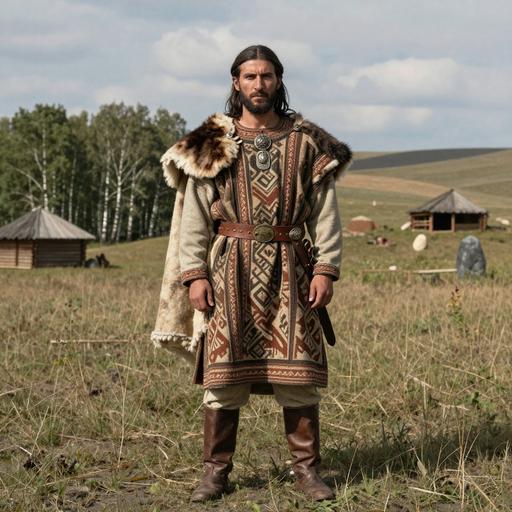
Portrait reconstruction of A man buried in Russia in the Middle Ages era
Ancient Individual

A man buried in Russia in the Middle Ages era

A man buried in Russia during the Late Sarmatian Culture, Russia

A fragment of the ancient world, preserved across millennia in strands of DNA.

tem002
121 CE - 246 CE
Male
Russia
Scroll to begin
Chapter I

Identity

The biological and cultural markers that define this ancient individual

Sample ID

tem002

Date Range

121 CE - 246 CE

Cultural Period

Late Sarmatian Culture, Russia

Biological Sex

Male

mtDNA Haplogroup

D4q

Y-DNA Haplogroup

R-FGC48758

Chapter II

Place

Where this individual was discovered

Country Russia
Locality Republic of Bashkortostan. Baymak Distict. Temyaysovo-1 burial ground
Coordinates 52.9851, 58.1243
Chapter III

Time

When this individual lived in the broader context of human history

tem002 121 CE - 246 CE
Chapter IV

Story

The narrative of this ancient life

The Late Sarmatian culture, which flourished roughly from the 2nd century to the 4th century AD, represents a significant phase in the history of the Sarmatian peoples—a group of related Iranian nomadic tribes that once roamed the steppes of Eurasia. This period is particularly notable for its contributions to the cultural and historical development of the Pontic-Caspian steppe region, which encompasses parts of modern-day Russia, Ukraine, and Kazakhstan.

Geographic Scope

During the Late Sarmatian era, the culture primarily occupied the expansive region extending from the Don River basin to the Ural Mountains. This vast territory allowed for a variety of interactions with other cultures, influencing the Sarmatians’ social, economic, and cultural practices.

Social Structure

The Late Sarmatian society was organized as a tribal confederation. This structure was somewhat hierarchical, with a nobility class known as \lords" or "princes" who wielded significant influence. The social organization also included warriors, herders, craftsmen, and slaves. The matriarchal elements of earlier Sarmatian societies continued to persist, with women sometimes playing prominent roles, particularly in religious and ceremonial contexts.

Economy

The Late Sarmatian culture was primarily nomadic, focusing on pastoralism. The mainstay of their economy was livestock herding, particularly horses, sheep, and cattle, which facilitated their itinerant lifestyle on the steppe. Trade was also crucial, and their strategic position enabled them to act as intermediaries between sedentary agricultural societies to the west and east, exchanging goods like furs, textiles, and metalwork.

Material Culture

Artifacts from this period reveal a rich material culture. The Sarmatians are known for their distinctive metalwork, particularly in gold and silver. This included ornate jewelry, weaponry, and horse gear. Their burial practices also provide significant insights into their beliefs and artistry, with kurgans (burial mounds) revealing richly adorned armor and personal ornaments, exemplifying their craftsmanship and the influences of contact with Hellenistic, Roman, and other neighboring cultures.

Military and Warfare

Sarmatians were renowned as formidable warriors, especially as mounted archers and cavalry. They played a crucial role as mercenaries in the Roman military. Their influence on warfare extended into the development of heavy cavalry tactics, which would later inspire European knights during the medieval period.

Religion and Beliefs

The Sarmatian religious system was polytheistic, with a blend of animistic and shamanistic elements. They revered natural elements and deities associated with the sky, sun, and fire, reflecting their nomadic connection to nature. Burial practices from this era—which include elaborate grave goods—suggest a belief in an afterlife and an emphasis on honoring the dead.

Cultural Interactions and Influence

The Late Sarmatian culture was at a crossroads of civilizations, engaging in interactions and exchanges with various peoples, including the Goths, Alans, Scythians, Huns, and the Roman Empire. These interactions led to cultural syncretism, visibly impacting Sarmatian art, language, and social customs.

Decline and Legacy

The Late Sarmatian period began to decline with the incursions of Gothic and Hunnic tribes during the 4th century AD. Over time, the Sarmatians were assimilated or displaced by these groups, but their cultural and military influence persisted, notably in the shaping of knightly traditions and horse culture in Europe. The eventual assimilation of Sarmatians into these emerging powers marked the end of their distinct cultural identity but left a lasting legacy on the regions they once dominated.

The study of the Late Sarmatian culture provides valuable insights into the dynamics of nomadic societies on the Eurasian steppes and their interactions with the broader cultural and historical currents of ancient Europe and Asia."

Chapter V

Genetics

These comparisons show genetic similarity, not identity or origin. The populations listed are those whose genomes show statistical alignment to this ancient individual.

Similarity reflects shared history, not shared identity. These are analytical comparisons, not claims about who this person was.

Modern Genetic Admixture

This analysis compares the DNA profile with present-day reference populations, showing what percentage of genetic makeup resembles modern populations from different regions.

Europe 64.1%
Eastern European 43.1%
Northwestern European 20.9%
Northwestern European 16.7%
English 3.1%
Scandinavian 1.2%
Asia 33.3%
Northern West Asian 21.5%
Caucasian 21.5%
Central Asian, Northern Indian & Pakistani 11.4%
Pakistan 11.4%
America 1.8%
America 1.8%
Native American 1.8%
Oceania 0.9%
Melanesian 0.9%
Papuan 0.9%

Closest Modern Populations

These are the modern populations showing the closest statistical alignment to A man buried in Russia in the Middle Ages era, ranked by genetic distance. Lower distance values indicate closer statistical similarity.

1
Turkish Deliorman
6.9052
2
Tatar Mishar
7.0294
3
Turkish Rumeli
7.3533
4
Pamiri Rushan
7.5417
5
Tajik Yaghnobi
7.5591
6
Andian B
8.1313
7
Moksha
8.1490
8
Kaitag
8.1728
9
Lezgin
8.1799
10
Tatar Kazan
8.2014
Context

Related Samples

This individual exists within a broader network of ancient samples. No ancient genome stands alone.

Sample ID Culture/Period Date Location Action
kzb002 Srubnaya-Alakul Culture, Russia 1879 BCE Republic of Bashkorstan. Near Usmanovo village. Kazburun 1, Russia View
scy006 Scythian Culture, Ukraine 800 BCE Cherkasy Region. Gorodische District. Starosillya, Ukraine View
scy009 Scythian Culture, Ukraine 766 BCE Cherkasy Region. Gorodische District. Starosillya, Ukraine View
scy010 Scythian Culture, Ukraine 789 BCE Cherkasy Region. Gorodische District. Starosillya, Ukraine View
scy011 Scythian Culture, Ukraine 356 BCE Cherkasy Region. Mankivsky District. Nesterivka, Ukraine View
mur003 Srubnaya-Alakul Culture, Russia 1881 BCE Republic of Bashkorstan. Near Usmanovo Village. Muradym 8, Russia View
kzb007 Srubnaya-Alakul Culture, Russia 1873 BCE Republic of Bashkorstan. Near Usmanovo village. Kazburun 1, Russia View
mur004 Srubnaya-Alakul Culture, Russia 1888 BCE Republic of Bashkorstan. Near Usmanovo Village. Muradym 8, Russia View
kzb008 Srubnaya-Alakul Culture, Russia 1887 BCE Republic of Bashkorstan. Near Usmanovo village. Kazburun 1, Russia View
tem003 Late Sarmatian Culture, Russia 131 CE Republic of Bashkortostan. Baymak Distict. Temyaysovo-1 burial ground, Russia View
kzb006 Srubnaya-Alakul Culture, Russia 1868 BCE Republic of Bashkorstan. Near Usmanovo village. Kazburun 1, Russia View
chy002 Late Sarmatian Culture, Russia 81 CE Orenburg Regio. Southern Urals. Cherniy Yar, Russia View
kzb005 Srubnaya-Alakul Culture, Russia 1882 BCE Republic of Bashkorstan. Near Usmanovo village. Kazburun 1, Russia View
kzb009 Srubnaya-Alakul Culture, Russia 1866 BCE Republic of Bashkorstan. Near Usmanovo village. Kazburun 1, Russia View
tem002 Late Sarmatian Culture, Russia 121 CE Republic of Bashkortostan. Baymak Distict. Temyaysovo-1 burial ground, Russia View
chy001 Late Sarmatian Culture, Russia 27 CE Orenburg Regio. Southern Urals. Cherniy Yar, Russia View
kzb001 Srubnaya-Alakul Culture, Russia 1740 BCE Republic of Bashkorstan. Near Usmanovo village. Kazburun 1, Russia View
tem001 Late Sarmatian Culture, Russia 129 CE Republic of Bashkortostan. Baymak Distict. Temyaysovo-1 burial ground, Russia View
kzb003 Srubnaya-Alakul Culture, Russia 1870 BCE Republic of Bashkorstan. Near Usmanovo village. Kazburun 1, Russia View
mur001 Srubnaya-Alakul Culture, Russia 1740 BCE Republic of Bashkorstan. Near Usmanovo Village. Muradym 8, Russia View
mur002 Srubnaya-Alakul Culture, Russia 1680 BCE Republic of Bashkorstan. Near Usmanovo Village. Muradym 8, Russia View
kzb004 Srubnaya-Alakul Culture, Russia 1872 BCE Republic of Bashkorstan. Near Usmanovo village. Kazburun 1, Russia View
scy303 Scythian Period Glinoe, Moldova 386 BCE Slobodzeya District. Glinoe, Moldova View
scy301 Scythian Period Glinoe, Moldova 390 BCE Slobodzeya District. Glinoe, Moldova View
scy192 Scythian Period Glinoe, Moldova 400 BCE Slobodzeya District. Glinoe, Moldova View
cim359 Cimmerian Period Moldova 1011 BCE Rybnitsa District. Mokra, Moldova View
scy300 Scythian Period Glinoe, Moldova 395 BCE Slobodzeya District. Glinoe, Moldova View
scy311 Scythian Period Glinoe, Moldova 391 BCE Slobodzeya District. Glinoe, Moldova View
scy197 Scythian Period Glinoe, Moldova 400 BCE Slobodzeya District. Glinoe, Moldova View
cim357 Cimmerian Period Moldova 916 BCE Slobodzeya District. Glinoe Sad, Moldova View
scy305 Scythian Period Glinoe, Moldova 396 BCE Slobodzeya District. Glinoe, Moldova View
cim358 Cimmerian Period Moldova 971 BCE Slobodzeya District. Glinoe Sad, Moldova View
scy304 Scythian Period Glinoe, Moldova 367 BCE Slobodzeya District. Glinoe, Moldova View
scy193 Scythian Period Glinoe, Moldova 400 BCE Slobodzeya District. Glinoe, Moldova View
scy332 Scythian Period Glinoe, Moldova 250 CE Slobodzeya District. Glinoe, Moldova View
chy001 27 CE Orenburg Regio. Southern Urals. Cherniy Yar, Russia View
chy002 81 CE Orenburg Regio. Southern Urals. Cherniy Yar, Russia View
cim357 916 BCE Slobodzeya District. Glinoe Sad, Moldova View
cim358 971 BCE Slobodzeya District. Glinoe Sad, Moldova View
cim359 1011 BCE Rybnitsa District. Mokra, Moldova View
kzb001 1740 BCE Republic of Bashkorstan. Near Usmanovo village. Kazburun 1, Russia View
kzb003 1870 BCE Republic of Bashkorstan. Near Usmanovo village. Kazburun 1, Russia View
kzb004 1872 BCE Republic of Bashkorstan. Near Usmanovo village. Kazburun 1, Russia View
kzb005 1882 BCE Republic of Bashkorstan. Near Usmanovo village. Kazburun 1, Russia View
kzb006 1868 BCE Republic of Bashkorstan. Near Usmanovo village. Kazburun 1, Russia View
kzb007 1873 BCE Republic of Bashkorstan. Near Usmanovo village. Kazburun 1, Russia View
kzb008 1887 BCE Republic of Bashkorstan. Near Usmanovo village. Kazburun 1, Russia View
kzb009 1866 BCE Republic of Bashkorstan. Near Usmanovo village. Kazburun 1, Russia View
mur001 1740 BCE Republic of Bashkorstan. Near Usmanovo Village. Muradym 8, Russia View
mur002 1680 BCE Republic of Bashkorstan. Near Usmanovo Village. Muradym 8, Russia View
mur003 1881 BCE Republic of Bashkorstan. Near Usmanovo Village. Muradym 8, Russia View
mur004 1888 BCE Republic of Bashkorstan. Near Usmanovo Village. Muradym 8, Russia View
scy009 766 BCE Cherkasy Region. Gorodische District. Starosillya, Ukraine View
scy010 789 BCE Cherkasy Region. Gorodische District. Starosillya, Ukraine View
scy011 356 BCE Cherkasy Region. Mankivsky District. Nesterivka, Ukraine View
scy192 400 BCE Slobodzeya District. Glinoe, Moldova View
scy193 400 BCE Slobodzeya District. Glinoe, Moldova View
scy197 400 BCE Slobodzeya District. Glinoe, Moldova View
scy300 395 BCE Slobodzeya District. Glinoe, Moldova View
scy301 390 BCE Slobodzeya District. Glinoe, Moldova View
scy303 386 BCE Slobodzeya District. Glinoe, Moldova View
scy304 367 BCE Slobodzeya District. Glinoe, Moldova View
scy305 396 BCE Slobodzeya District. Glinoe, Moldova View
scy311 391 BCE Slobodzeya District. Glinoe, Moldova View
scy332 250 CE Slobodzeya District. Glinoe, Moldova View
tem001 129 CE Republic of Bashkortostan. Baymak Distict. Temyaysovo-1 burial ground, Russia View
tem002 121 CE Republic of Bashkortostan. Baymak Distict. Temyaysovo-1 burial ground, Russia View
tem003 131 CE Republic of Bashkortostan. Baymak Distict. Temyaysovo-1 burial ground, Russia View
Sample ID Culture/Period Date Location Action
tem003 Late Sarmatian Culture, Russia 131 CE Republic of Bashkortostan. Baymak Distict. Temyaysovo-1 burial ground, Russia View
chy002 Late Sarmatian Culture, Russia 81 CE Orenburg Regio. Southern Urals. Cherniy Yar, Russia View
tem002 Late Sarmatian Culture, Russia 121 CE Republic of Bashkortostan. Baymak Distict. Temyaysovo-1 burial ground, Russia View
chy001 Late Sarmatian Culture, Russia 27 CE Orenburg Regio. Southern Urals. Cherniy Yar, Russia View
tem001 Late Sarmatian Culture, Russia 129 CE Republic of Bashkortostan. Baymak Distict. Temyaysovo-1 burial ground, Russia View
Sources

References

Scientific publications and genetic data that inform this profile.

Scientific Publication

Ancient genomes suggest the eastern Pontic-Caspian steppe as the source of western Iron Age nomads

Authors Krzewińska M, Kılınç GM, Juras A, Koptekin D, Chyleński M et al.
Abstract

For millennia, the Pontic-Caspian steppe was a connector between the Eurasian steppe and Europe. In this scene, multidirectional and sequential movements of different populations may have occurred, including those of the Eurasian steppe nomads. We sequenced 35 genomes (low to medium coverage) of Bronze Age individuals (Srubnaya-Alakulskaya) and Iron Age nomads (Cimmerians, Scythians, and Sarmatians) that represent four distinct cultural entities corresponding to the chronological sequence of cultural complexes in the region. Our results suggest that, despite genetic links among these peoples, no group can be considered a direct ancestor of the subsequent group. The nomadic populations were heterogeneous and carried genetic affinities with populations from several other regions including the Far East and the southern Urals. We found evidence of a stable shared genetic signature, making the eastern Pontic-Caspian steppe a likely source of western nomadic groups.

G25 Coordinates

These coordinates represent a position in genetic space, a tool for comparison, not a conclusion. You can use these to perform custom admixture analysis in G25 Studio.

tem002,0.11547266,0.07324684,0.02390366,0.03897662,-0.00946342,0.01593064,-6.204E-05,-0.00602326,-0.02116576,-0.02301166,-0.00148532,0.00256422,0.00159988,-0.00755778,0.00696764,0.00012966,-0.00637588,0.00101874,-0.00298622,-0.00430256,0.00336016,0.00269876,0.00088384,0.009137,-0.00035581
Continue in G25 Studio
Use code for 25% off Expires Jul 12