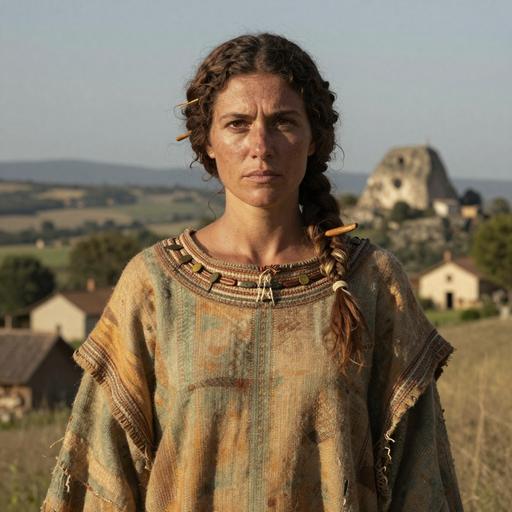
The period spanning the Late Neolithic to the Early-Middle Bronze Age in La Clape, a massif in Southern France near the Mediterranean coast, represents a fascinating and transformative era in Western European prehistory. This era, roughly dating from around 3000 BCE to 1500 BCE, highlights significant advancements in societal structure, technology, and cultural practices.
Geography and Environment
La Clape is characterized by its rugged limestone cliffs, hills, and Mediterranean flora. During this period, the climate was likely milder and more humid than it is today, supporting a diverse ecosystem that would have been favorable for early agrarian societies. The region's proximity to the Mediterranean Sea also provided access to marine resources, facilitating a mixed economy of agriculture, fishing, and trade.
Sociopolitical Structure
The transition from the Neolithic to the Bronze Age is marked by increased social stratification and the formation of more complex societies. In La Clape, as in much of Western Europe, there was likely a shift from egalitarian communities to hierarchical structures. This transition was driven by the accumulation of resources, technological advancements, and increased trade. Evidence suggests the emergence of local chieftains or tribal leaders who wielded influence over smaller settlements.
Economy and Subsistence
The economy of this period in La Clape was diverse. The Late Neolithic era witnessed the intensification of agriculture, with communities growing a variety of crops such as wheat, barley, and legumes. Domestication of animals including cattle, sheep, goats, and pigs was prevalent. The Early-Middle Bronze Age saw this agricultural base expand, supported by technological innovations like the plow and advancements in metallurgy.
The region's strategic location facilitated trade and the exchange of goods, ideas, and technologies. Flint and stone tools from the Neolithic period were gradually supplanted by bronze artifacts, leading to more efficient farming practices and improved craftsmanship.
Technological and Cultural Innovations
The Late Neolithic to Early-Middle Bronze Age was a time of technological innovation. The introduction and development of metallurgy were pivotal, enabling the production of bronze tools and weapons. This technological leap facilitated not only agricultural and military advancements but also artistic expression.
Pottery from this period exhibits increased sophistication, with intricate designs and diverse forms reflecting both utilitarian and ceremonial uses. The craftsmanship in tool-making, pottery, and jewelry indicates a society with specialized skills and a growing appreciation for aesthetics and symbolism.
Burial Practices and Spiritual Beliefs
Archaeological findings in La Clape reveal diverse burial practices, which provide insights into the spiritual beliefs and social structures of these communities. The period saw a shift from simple pit burials to more complex megalithic structures such as dolmens and cairns, reflecting a greater concern with the afterlife and possibly indicating social hierarchies.
Grave goods found in these burial sites, including pottery, tools, and weapons, suggest beliefs in an afterlife where such items would be needed. These practices underscore a cultural emphasis on ancestor worship and the significance of lineage and heritage in societal organization.
Art and Symbolism
The art of this era, as observed in carvings and decorative motifs, often features abstract and geometric patterns. These symbols may have had religious or cultural significance, possibly related to cosmology or mythological narratives. Paintings and carvings from this period occasionally depict anthropomorphic figures and animals, indicating a connection to the natural world and spiritual beliefs.
Conclusion
The Late Neolithic to Early-Middle Bronze Age in La Clape represents a critical transitional era characterized by technological innovation, social complexity, and cultural development. This period laid the foundation for subsequent historical developments in Europe, influencing the trajectory of societies in the region with its advancements in agriculture, metallurgy, and social organization.