Menu
Currency
Main
Store
Blog

Loading Report

Preparing your ancestry journey

Connecting to ancient matches...

Preparing your report

Skip to main content
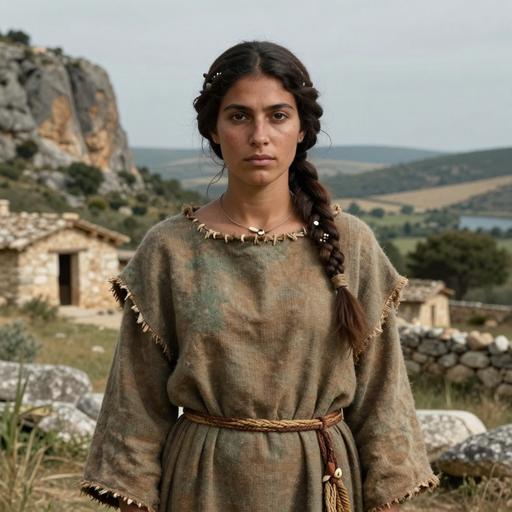
Portrait reconstruction of A woman buried in France in the Late Neolithic era
Ancient Individual

A woman buried in France in the Late Neolithic era

A woman buried in France during the Late Neolithic to Early-Middle Bronze Age La Clape, France

A fragment of the ancient world, preserved across millennia in strands of DNA.

ROUQEE
3321 BCE - 2937 BCE
Female
France
Scroll to begin
Chapter I

Identity

The biological and cultural markers that define this ancient individual

Sample ID

ROUQEE

Date Range

3321 BCE - 2937 BCE

Cultural Period

Late Neolithic to Early-Middle Bronze Age La Clape, France

Biological Sex

Female

mtDNA Haplogroup

H1-d

Y-DNA Haplogroup

N/A (Female)

Social Role

Farmer (AI estimate, era-typical)

Chapter II

Place

Where this individual was discovered

Country France
Locality La Clape. Grotte du Rouquet
Coordinates 43.5940, 3.9193
Chapter III

Time

When this individual lived in the broader context of human history

ROUQEE 3321 BCE - 2937 BCE
Chapter IV

Story

The narrative of this ancient life

The period spanning the Late Neolithic to the Early-Middle Bronze Age in La Clape, a massif in Southern France near the Mediterranean coast, represents a fascinating and transformative era in Western European prehistory. This era, roughly dating from around 3000 BCE to 1500 BCE, highlights significant advancements in societal structure, technology, and cultural practices.

Geography and Environment

La Clape is characterized by its rugged limestone cliffs, hills, and Mediterranean flora. During this period, the climate was likely milder and more humid than it is today, supporting a diverse ecosystem that would have been favorable for early agrarian societies. The region's proximity to the Mediterranean Sea also provided access to marine resources, facilitating a mixed economy of agriculture, fishing, and trade.

Sociopolitical Structure

The transition from the Neolithic to the Bronze Age is marked by increased social stratification and the formation of more complex societies. In La Clape, as in much of Western Europe, there was likely a shift from egalitarian communities to hierarchical structures. This transition was driven by the accumulation of resources, technological advancements, and increased trade. Evidence suggests the emergence of local chieftains or tribal leaders who wielded influence over smaller settlements.

Economy and Subsistence

The economy of this period in La Clape was diverse. The Late Neolithic era witnessed the intensification of agriculture, with communities growing a variety of crops such as wheat, barley, and legumes. Domestication of animals including cattle, sheep, goats, and pigs was prevalent. The Early-Middle Bronze Age saw this agricultural base expand, supported by technological innovations like the plow and advancements in metallurgy.

The region's strategic location facilitated trade and the exchange of goods, ideas, and technologies. Flint and stone tools from the Neolithic period were gradually supplanted by bronze artifacts, leading to more efficient farming practices and improved craftsmanship.

Technological and Cultural Innovations

The Late Neolithic to Early-Middle Bronze Age was a time of technological innovation. The introduction and development of metallurgy were pivotal, enabling the production of bronze tools and weapons. This technological leap facilitated not only agricultural and military advancements but also artistic expression.

Pottery from this period exhibits increased sophistication, with intricate designs and diverse forms reflecting both utilitarian and ceremonial uses. The craftsmanship in tool-making, pottery, and jewelry indicates a society with specialized skills and a growing appreciation for aesthetics and symbolism.

Burial Practices and Spiritual Beliefs

Archaeological findings in La Clape reveal diverse burial practices, which provide insights into the spiritual beliefs and social structures of these communities. The period saw a shift from simple pit burials to more complex megalithic structures such as dolmens and cairns, reflecting a greater concern with the afterlife and possibly indicating social hierarchies.

Grave goods found in these burial sites, including pottery, tools, and weapons, suggest beliefs in an afterlife where such items would be needed. These practices underscore a cultural emphasis on ancestor worship and the significance of lineage and heritage in societal organization.

Art and Symbolism

The art of this era, as observed in carvings and decorative motifs, often features abstract and geometric patterns. These symbols may have had religious or cultural significance, possibly related to cosmology or mythological narratives. Paintings and carvings from this period occasionally depict anthropomorphic figures and animals, indicating a connection to the natural world and spiritual beliefs.

Conclusion

The Late Neolithic to Early-Middle Bronze Age in La Clape represents a critical transitional era characterized by technological innovation, social complexity, and cultural development. This period laid the foundation for subsequent historical developments in Europe, influencing the trajectory of societies in the region with its advancements in agriculture, metallurgy, and social organization.

Context

Related Samples

This individual exists within a broader network of ancient samples. No ancient genome stands alone.

Sample ID Culture/Period Date Location Action
1H04 Middle to Late Neolithic Mont-Aime, France 2917 BCE Marne. Mont-Aimé hypogée I, France View
1H06 Middle to Late Neolithic Mont-Aime, France 3330 BCE Marne. Mont-Aimé hypogée I, France View
1H07 Middle to Late Neolithic Mont-Aime, France 3338 BCE Marne. Mont-Aimé hypogée I, France View
1H13 Middle to Late Neolithic Mont-Aime, France 3092 BCE Marne. Mont-Aimé hypogée I, France View
1H14 Middle to Late Neolithic Mont-Aime, France 3334 BCE Marne. Mont-Aimé hypogée I, France View
2H06 Middle to Late Neolithic Mont-Aime, France 3344 BCE Marne. Mont-Aimé hypogée II, France View
2H07 Middle to Late Neolithic Mont-Aime, France 3366 BCE Marne. Mont-Aimé hypogée II, France View
2H10 Middle to Late Neolithic Mont-Aime, France 3341 BCE Marne. Mont-Aimé hypogée II, France View
2H11 Middle to Late Neolithic Mont-Aime, France 3351 BCE Marne. Mont-Aimé hypogée II, France View
2H17 Middle to Late Neolithic Mont-Aime, France 3338 BCE Marne. Mont-Aimé hypogée II, France View
2HC51961131 Middle to Late Neolithic Mont-Aime, France 3357 BCE Marne. Mont-Aimé hypogée II, France View
GBVPK Late Neolithic to Early-Middle Bronze Age La Clape, France 2461 BCE La Clape. Grotte Basse de la Vigne Perdue, France View
GBVPL Late Neolithic to Early-Middle Bronze Age La Clape, France 2574 BCE La Clape. Grotte Basse de la Vigne Perdue, France View
GBVPO Late Neolithic to Early-Middle Bronze Age La Clape, France 1737 BCE La Clape. Grotte Basse de la Vigne Perdue, France View
MAS15 Late Neolithic Ferrieres Culture, Mas Rouge, France 3092 BCE La Cavalade. Mas Rouge, France View
ROUQCC Late Neolithic to Early-Middle Bronze Age La Clape, France 3495 BCE La Clape. Grotte du Rouquet, France View
ROUQEE Late Neolithic to Early-Middle Bronze Age La Clape, France 3321 BCE La Clape. Grotte du Rouquet, France View
ROUQFF Late Neolithic to Early-Middle Bronze Age La Clape, France 3340 BCE La Clape. Grotte du Rouquet, France View
ROUQHH Late Neolithic to Early-Middle Bronze Age La Clape, France 3346 BCE La Clape. Grotte du Rouquet, France View
ROUQV Late Neolithic to Early-Middle Bronze Age La Clape, France 3354 BCE La Clape. Grotte du Rouquet, France View
ROUQW Late Neolithic to Early-Middle Bronze Age La Clape, France 3356 BCE La Clape. Grotte du Rouquet, France View
TORTC Late Neolithic to Early Bronze Age Veraza Culture, La Clape, France 2578 BCE La Clape. Grotte des Tortues, France View
TORTD Late Neolithic to Early Bronze Age Veraza Culture, La Clape, France 3261 BCE La Clape. Grotte des Tortues, France View
TORTE Late Neolithic to Early Bronze Age Veraza Culture, La Clape, France 2839 BCE La Clape. Grotte des Tortues, France View
TORTF Late Neolithic to Early Bronze Age Veraza Culture, La Clape, France 2008 BCE La Clape. Grotte des Tortues, France View
LAR11 Late Paleolithic Southern Provence 1629 CE Lariey-Puy-Saint-Pierre (Provence-Alpes-Côte d'Azur, Hautes-Alpes Department), France View
LAR14 Late Paleolithic Southern Provence 1629 CE Lariey-Puy-Saint-Pierre (Provence-Alpes-Côte d'Azur, Hautes-Alpes Department), France View
LAR23 Late Paleolithic Southern Provence 1629 CE Lariey-Puy-Saint-Pierre (Provence-Alpes-Côte d'Azur, Hautes-Alpes Department), France View
LAR24 Late Paleolithic Southern Provence 1629 CE Lariey-Puy-Saint-Pierre (Provence-Alpes-Côte d'Azur, Hautes-Alpes Department), France View
LAR26 Late Paleolithic Southern Provence 1629 CE Lariey-Puy-Saint-Pierre (Provence-Alpes-Côte d'Azur, Hautes-Alpes Department), France View
LAR27 Late Paleolithic Southern Provence 1629 CE Lariey-Puy-Saint-Pierre (Provence-Alpes-Côte d'Azur, Hautes-Alpes Department), France View
LAR30 Late Paleolithic Southern Provence 1629 CE Lariey-Puy-Saint-Pierre (Provence-Alpes-Côte d'Azur, Hautes-Alpes Department), France View
LAR31 Late Paleolithic Southern Provence 1629 CE Lariey-Puy-Saint-Pierre (Provence-Alpes-Côte d'Azur, Hautes-Alpes Department), France View
LAR8 Late Paleolithic Southern Provence 1629 CE Lariey-Puy-Saint-Pierre (Provence-Alpes-Côte d'Azur, Hautes-Alpes Department), France View
LAR9 Late Paleolithic Southern Provence 1629 CE Lariey-Puy-Saint-Pierre (Provence-Alpes-Côte d'Azur, Hautes-Alpes Department), France View
Sample ID Culture/Period Date Location Action
GBVPK Late Neolithic to Early-Middle Bronze Age La Clape, France 2461 BCE La Clape. Grotte Basse de la Vigne Perdue, France View
GBVPL Late Neolithic to Early-Middle Bronze Age La Clape, France 2574 BCE La Clape. Grotte Basse de la Vigne Perdue, France View
GBVPO Late Neolithic to Early-Middle Bronze Age La Clape, France 1737 BCE La Clape. Grotte Basse de la Vigne Perdue, France View
ROUQCC Late Neolithic to Early-Middle Bronze Age La Clape, France 3495 BCE La Clape. Grotte du Rouquet, France View
ROUQEE Late Neolithic to Early-Middle Bronze Age La Clape, France 3321 BCE La Clape. Grotte du Rouquet, France View
ROUQFF Late Neolithic to Early-Middle Bronze Age La Clape, France 3340 BCE La Clape. Grotte du Rouquet, France View
ROUQHH Late Neolithic to Early-Middle Bronze Age La Clape, France 3346 BCE La Clape. Grotte du Rouquet, France View
ROUQV Late Neolithic to Early-Middle Bronze Age La Clape, France 3354 BCE La Clape. Grotte du Rouquet, France View
ROUQW Late Neolithic to Early-Middle Bronze Age La Clape, France 3356 BCE La Clape. Grotte du Rouquet, France View
Sources

References

Scientific publications and genetic data that inform this profile.

Scientific Publication

Heterogeneous Hunter-Gatherer and Steppe-Related Ancestries in Late Neolithic and Bell Beaker Genomes from Present-Day France

Authors Seguin-Orlando A, Donat R, Der Sarkissian C, Southon J, Thèves C et al.
Abstract

The transition from the Late Neolithic to the Bronze Age has witnessed important population and societal changes in western Europe.1 These include massive genomic contributions of pastoralist herders originating from the Pontic-Caspian steppes2,3 into local populations, resulting from complex interactions between collapsing hunter-gatherers and expanding farmers of Anatolian ancestry.4-8 This transition is documented through extensive ancient genomic data from present-day Britain,9,10 Ireland,11,12 Iberia,13 Mediterranean islands,14,15 and Germany.8 It remains, however, largely overlooked in France, where most focus has been on the Middle Neolithic (n = 63),8,9,16 with the exception of one Late Neolithic genome sequenced at 0.05× coverage.16 This leaves the key transitional period covering ∼3,400-2,700 cal. years (calibrated years) BCE genetically unsampled and thus the exact time frame of hunter-gatherer persistence and arrival of steppe migrations unknown. To remediate this, we sequenced 24 ancient human genomes from France spanning ∼3,400-1,600 cal. years BCE. This reveals Late Neolithic populations that are genetically diverse and include individuals with dark skin, hair, and eyes. We detect heterogeneous hunter-gatherer ancestries within Late Neolithic communities, reaching up to ∼63.3% in some individuals, and variable genetic contributions of steppe herders in Bell Beaker populations. We provide an estimate as late as ∼3,800 years BCE for the admixture between Neolithic and Mesolithic populations and as early as ∼2,650 years BCE for the arrival of steppe-related ancestry. The genomic heterogeneity characterized underlines the complex history of human interactions even at the local scale.

Use code for 25% off Expires Jul 15