Menu
Currency
Main
Store
Blog

Loading Report

Preparing your ancestry journey

Connecting to ancient matches...

Preparing your report

Skip to main content
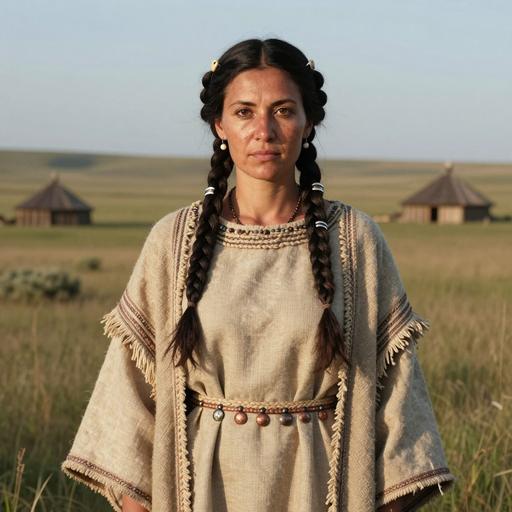
Portrait reconstruction of A woman buried in Russia in the Copper Age era
Ancient Individual

A woman buried in Russia in the Copper Age era

A woman buried in Russia during the Late Maikop Culture, Russia

A fragment of the ancient world, preserved across millennia in strands of DNA.

I11132
3350 BCE - 3100 BCE
Female
Russia
Scroll to begin
Chapter I

Identity

The biological and cultural markers that define this ancient individual

Sample ID

I11132

Date Range

3350 BCE - 3100 BCE

Cultural Period

Late Maikop Culture, Russia

Biological Sex

Female

mtDNA Haplogroup

U4c1

Y-DNA Haplogroup

N/A (Female)

Chapter II

Place

Where this individual was discovered

Country Russia
Locality Sinjucha. Kuban steppe
Coordinates 45.0500, 39.9100
Chapter III

Time

When this individual lived in the broader context of human history

I11132 3350 BCE - 3100 BCE
Chapter IV

Story

The narrative of this ancient life

The Late Maikop culture is an intriguing and significant archaeological culture that emerged in the North Caucasus region of what is now Russia, roughly spanning the period from around 3700 to 3000 BCE. It is named after the Maikop kurgan, a burial mound discovered in the Kuban River area in the late 19th century. The culture is considered a late development of the broader Maikop cultural sphere, which is known for its early adoption of bronze metallurgy, and it sits intriguingly at the intersection of the broader Eurasian steppe cultures and the developments happening in the Near East.

Geographical Context

The Late Maikop culture occupied a strategic and varied geographical zone in the North Caucasus, which consisted of the foothills and plains north of the Caucasus Mountains. This area served as a critical juncture between the steppes to the north, which were primarily occupied by nomadic pastoralist cultures, and the more settled agricultural societies to the south. This position rendered it a melting pot of cultural exchanges and influences.

Archaeological Discoveries

The defining feature of the Late Maikop culture, like its predecessors, is the presence of kurgans, or burial mounds. These kurgans often contained rich grave goods, including metalwork crafted from bronze, gold, and silver. The artifacts found in these burials highlight significant advances in metallurgy, with intricate designs and techniques that suggest both local innovation and external influences, perhaps from contacts with the Near East.

Pottery from the Late Maikop period is also notable, often characterized by distinctive geometric patterns and incised decorations. The ceramics indicate a continuity of local traditions, although some variations might suggest exchange or interaction with neighboring cultures.

Economy and Subsistence

The Late Maikop culture was primarily agrarian, with evidence of both farming and animal husbandry. The fertile lands of the North Caucasus supported the cultivation of cereals, while the foothills provided pasture for livestock, including cattle, sheep, and goats. This dual economy likely facilitated a relatively stable and prosperous society capable of supporting the artisan metalworking traditions evident in their grave goods.

Sociopolitical Structure

While specific details about the sociopolitical organization of the Late Maikop culture are elusive due to the lack of written records, the presence of richly furnished graves suggests a stratified society with emerging social hierarchies. The elaborate kurgan burials likely belong to a warrior or elite class, which points to a society that, while primarily agrarian, placed significant importance on martial prowess or leadership roles.

Cultural and Linguistic Context

Although direct linguistic correlations are challenging to establish, the location and time frame of the Late Maikop culture overlap with the theorized dispersal of Proto-Indo-European (PIE) cultures. Some scholars speculate that the Maikop culture could represent an early interaction zone between Proto-Indo-European speakers and the native North Caucasus populations. However, due to the complex cultural interactions in the area, the precise linguistic affiliations remain speculative.

Relationship with Other Cultures

The Late Maikop culture did not exist in isolation. It was contemporaneous with and likely influenced by the cultures of the Pontic-Caspian steppe to the north, and the early urban centers of the Near East to the south. This position facilitated a conduit for technology transfer, such as bronze metallurgy, and potentially even early wheeled vehicles or chariots, although direct evidence for these is not as robust as in the steppe cultures.

Decline and Legacy

By around 3000 BCE, the Late Maikop culture began to fade, possibly due to climatic shifts, internal social dynamics, or external pressures from expanding neighboring cultures. However, its influence can be seen in the subsequent cultures of the North Caucasus and the broader regions, as elements of its metallurgical and burial practices were adopted and adapted by successor societies.

In summary, the Late Maikop culture serves as a fascinating and crucial link in the chain of prehistoric cultures in the Caucasus region. Its advancements in metallurgy, distinctive burial customs, and strategic geographical position highlight its role in the cultural and technological exchanges that shaped the prehistoric Eurasian landscape. While many mysteries remain, particularly concerning its language and detailed sociopolitical structures, ongoing archaeological work continues to shed light on this pivotal and dynamic period.

Context

Related Samples

This individual exists within a broader network of ancient samples. No ancient genome stands alone.

Sample ID Culture/Period Date Location Action
ARM001 Early Bronze Age Armenia 3625 BCE South Caucasus mountains. Kaps, Armenia View
ARM002 Early Bronze Age Armenia 3356 BCE South Caucasus mountains. Kaps, Armenia View
AY2001 The Maikop Culture 3514 BCE Kaspi steppe. Aygurskij 2, Russia View
AY2003 The Maikop Culture 3630 BCE Kaspi steppe. Aygurskij 2, Russia View
BU2001 North Caucasus Culture, Russia 2866 BCE Piedmont. Belij Ugol 2, Russia View
GW1001 North Caucasus Culture, Russia 2883 BCE Piedmont. Gorjačevodskij 1, Russia View
I1722 Eneolithic Caucasus, Russia 4539 BCE Unakozovskaya, Russia View
I2051 Late Bronze Age Dolmen Culture, Caucasus, Russia 1450 BCE North Caucasus. Marchenkova Gora, Russia View
I2055 Eneolithic Caucasus, Russia 4676 BCE Unakozovskaya, Russia View
I2056 Eneolithic Caucasus, Russia 4607 BCE Unakozovskaya, Russia View
I6266 Maikop-Novosvobodnaya Culture, Caucasus, Russia 3504 BCE Klady. Dlinnaya Polyana, Russia View
I6267 Maikop-Novosvobodnaya Culture, Caucasus, Russia 3625 BCE Klady. Dlinnaya Polyana, Russia View
I6268 Maikop-Novosvobodnaya Culture, Caucasus, Russia 3516 BCE Klady. Dlinnaya Polyana, Russia View
I6272 Maikop-Novosvobodnaya Culture, Caucasus, Russia 3318 BCE Klady. Dlinnaya Polyana, Russia View
IV3002 The Maikop Culture 3617 BCE North Caucasus steppe. Ipatovo 3, Russia View
KBD001 Middle Bronze Age North Caucasus, Russia 2197 BCE North Caucasus mountains. Kabardinka, Russia View
KBD002 Middle Bronze Age North Caucasus, Russia 2192 BCE North Caucasus mountains. Kabardinka, Russia View
KDC001 Middle Bronze Age North Caucasus, Russia 1950 BCE Piedmont/mountains. Kudachurt, Russia View
KDC002 Middle Bronze Age North Caucasus, Russia 1900 BCE Piedmont/mountains. Kudachurt, Russia View
LYG001 North Caucasus Culture, Russia 2866 BCE Piedmont. Lysogarskaya, Russia View
MK3003 Catacomb Culture, Russian Steppe 2580 BCE Piedmont. Mar'inskaja 3, Russia View
MK5001 Late Maikop Culture, Caucasus, Russia 3400 BCE Piedmont. Mar'inskaja 5, Russia View
MK5004 Late Maikop Culture, Caucasus, Russia 3400 BCE Piedmont. Mar'inskaja 5, Russia View
MK5008 Late Maikop Culture, Caucasus, Russia 3369 BCE Piedmont. Mar'inskaja 5, Russia View
MK5009 North Caucasus Culture, Russia 2879 BCE Piedmont. Mar'inskaja 5, Russia View
NV3001 Lola Culture, Russian Steppe 2127 BCE North Caucasus steppe. Nevinnommiskij 3, Russia View
OSS001 Maikop Culture, Caucasus, Russia 3704 BCE Piedmont. Ossetia, Russia View
PG2001 Eneolithic Russian Steppe 4994 BCE Piedmont. Progress 2, Russia View
PG2002 North Caucasus Culture, Russia 2476 BCE Piedmont. Progress 2, Russia View
PG2004 Eneolithic Russian Steppe 4240 BCE Piedmont. Progress 2, Russia View
RK1001 Early Bronze Age Yamnaya Culture, Caucasus, Russia 2881 BCE Kuban steppe. Rasshevatskij 1, Russia View
RK1003 North Caucasus Culture, Russia 2899 BCE Kuban steppe. Rasshevatskij 1, Russia View
RK1007 Early Bronze Age Yamnaya Culture, Caucasus, Russia 3331 BCE Kuban steppe. Rasshevatskij 1, Russia View
RK4001 Catacomb Culture, Russian Steppe 2451 BCE Kuban steppe. Rasshevatskij 4, Russia View
RK4002 Catacomb Culture, Russian Steppe 2662 BCE Kuban steppe. Rasshevatskij 4, Russia View
SA6001 The Maikop Culture 3520 BCE Kaspi steppe. Šarachalsun 6, Russia View
I11133 Late Maikop Culture, Russia 3332 BCE Sinjucha. Kuban steppe, Russia View
SA6003 Catacomb Culture, Russian Steppe 2470 BCE Kaspi steppe. Šarachalsun 6, Russia View
SA6004 The Maikop Culture 3359 BCE Kaspi steppe. Šarachalsun 6, Russia View
SA6010 Russian Yamnaya 2886 BCE Kaspi steppe. Šarachalsun 6, Russia View
SA6013 The Maikop Culture 3360 BCE Kaspi steppe. Šarachalsun 6, Russia View
I11131 Late Maikop Culture, Russia 3349 BCE Sinjucha. Kuban steppe, Russia View
I11132 Late Maikop Culture, Russia 3350 BCE Sinjucha. Kuban steppe, Russia View
VEK006 Kura-Araxes Culture, Caucasus, Russia 3000 BCE Caspian sea shore. Velikent, Russia View
VEK007 Kura-Araxes Culture, Caucasus, Russia 3000 BCE Caspian sea shore. Velikent, Russia View
VJ1001 Eneolithic Russian Steppe 4337 BCE Piedmont. Vonjucka 1, Russia View
ZO2002 Early Bronze Age Yamnaya Culture, Caucasus, Russia 3300 BCE North Caucasus steppe. Zolotarjëvka 2, Russia View
OSS002 The Maikop Culture 3932 BCE Ossetia'. Piedmont, Russia View
MK5005 The Maikop Culture 3650 BCE Mar'inskaja 5. Piedmont, Russia View
I1723 North Caucasus Culture, Russia 2877 BCE Goryachevadskiy, Russia View
I1720 Maikop Culture, Caucasus, Russia 3700 BCE Baksanyonok, Russia View
SA6002 Late Maikop Culture, Russia 3332 BCE Sinyukha (Republic of Adygea, Krasnogvardeysky District), Russia View
SIJ002 Late Maikop Culture, Russia 3349 BCE Sinyukha (Republic of Adygea, Krasnogvardeysky District), Russia View
SIJ003 Late Maikop Culture, Russia 3350 BCE Sinyukha (Republic of Adygea, Krasnogvardeysky District), Russia View
ARM002 3356 BCE South Caucasus mountains. Kaps, Armenia View
VEK007 3000 BCE Caspian sea shore. Velikent, Russia View
I1720 3700 BCE Baksanyonok, Russia View
I1723 2877 BCE Goryachevadskiy, Russia View
Sample ID Culture/Period Date Location Action
I11133 Late Maikop Culture, Russia 3332 BCE Sinjucha. Kuban steppe, Russia View
I11131 Late Maikop Culture, Russia 3349 BCE Sinjucha. Kuban steppe, Russia View
I11132 Late Maikop Culture, Russia 3350 BCE Sinjucha. Kuban steppe, Russia View
SA6002 Late Maikop Culture, Russia 3332 BCE Sinyukha (Republic of Adygea, Krasnogvardeysky District), Russia View
SIJ002 Late Maikop Culture, Russia 3349 BCE Sinyukha (Republic of Adygea, Krasnogvardeysky District), Russia View
SIJ003 Late Maikop Culture, Russia 3350 BCE Sinyukha (Republic of Adygea, Krasnogvardeysky District), Russia View
Sources

References

Scientific publications and genetic data that inform this profile.

Scientific Publication

Ancient human genome-wide data from a 3000-year interval in the Caucasus corresponds with eco-geographic regions

Authors Wang CC, Reinhold S, Kalmykov A, Wissgott A, Brandt G et al.
Abstract

Archaeogenetic studies have described the formation of Eurasian 'steppe ancestry' as a mixture of Eastern and Caucasus hunter-gatherers. However, it remains unclear when and where this ancestry arose and whether it was related to a horizon of cultural innovations in the 4th millennium BCE that subsequently facilitated the advance of pastoral societies in Eurasia. Here we generated genome-wide SNP data from 45 prehistoric individuals along a 3000-year temporal transect in the North Caucasus. We observe a genetic separation between the groups of the Caucasus and those of the adjacent steppe. The northern Caucasus groups are genetically similar to contemporaneous populations south of it, suggesting human movement across the mountain range during the Bronze Age. The steppe groups from Yamnaya and subsequent pastoralist cultures show evidence for previously undetected farmer-related ancestry from different contact zones, while Steppe Maykop individuals harbour additional Upper Palaeolithic Siberian and Native American related ancestry.

Use code for 25% off Expires Jul 12