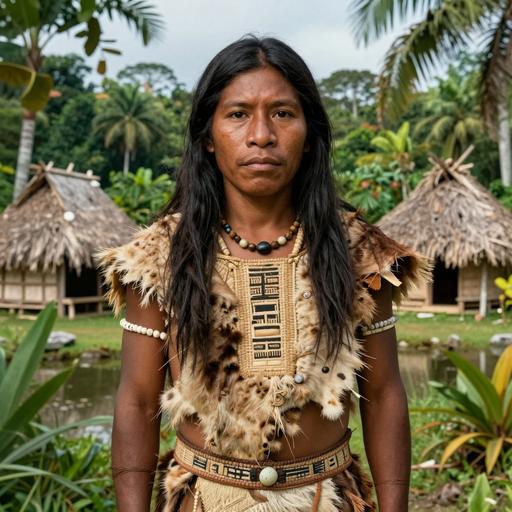
The time period around 4,900 years ago places us in what is known as the early pre-Columbian era in the region that would become the heartland of the Maya civilization. During this era, Belize and the broader Maya lowlands were undergoing significant transformation, marking the beginnings of complex societies that would eventually develop into one of the most sophisticated and enduring civilizations of the ancient world.
Geography and Environment:
Belize is located in Central America, bordered by Mexico to the north, Guatemala to the west and south, and the Caribbean Sea to the east. The geography of the area is characterized by tropical lowland forests, rivers, savannahs, and a varied coastline. Around 4,900 years ago, the climate was likely similar to today, fostering a rich biodiversity that provided ample resources for early inhabitants.
Early Inhabitants:
The people living in Belize during this period were transitioning from hunter-gatherer lifestyles to more settled farming communities. This transition marks the Archaic to Preclassic period shift in Maya history. These early inhabitants were semi-nomadic, but increasingly engaged in agriculture, particularly the cultivation of maize, which would become a staple crop and cornerstone of Mesoamerican civilizations.
Society and Culture:
This era represents a nascent stage of societal organization in Belize. Communities were small, likely consisting of extended family groups or clans. They would have settled in areas conducive to agriculture and trade, usually near water sources. The social structure was egalitarian, but as agricultural practices improved and surpluses were generated, roles within these communities began to differentiate, setting the stage for more complex social hierarchies.
Technology and Innovation:
Technological advancements were mainly focused on agriculture and tool-making. The Belizean inhabitants of this era utilized stone tools for farming and hunting. They developed techniques for slash-and-burn agriculture, which allowed them to clear land for crop cultivation. Pottery was in its nascent stages and would slowly evolve over the years, gaining increased importance for storage, culinary, and ritualistic purposes.
Trade and Interactions:
Inter-regional trade networks were starting to take shape. Although less extensive than they would become in later periods, these networks facilitated the exchange of goods such as obsidian, jade, shells, and other resources. These interactions also allowed for the sharing of ideas, fostering cultural and technological innovations.
Spiritual and Ritualistic Life:
Spirituality was closely tied to the natural world, with reverence for the elements that sustained them, such as the sun, rain, and maize. These beliefs later evolved into a complex pantheon of Maya deities. Though formalized religious practices are not well-documented for this period, early elements of what would become central religious themes were likely forming, such as ancestor veneration and animism.
Archaeological Evidence:
The evidence from this time in Belize comes from archaeological sites where remnants of early settlements, tools, and other cultural artifacts have been discovered. Sites like Cuello and Cahal Pech provide insights into the development of early Maya culture in Belize. These sites reveal the gradual transition from simple, temporary structures to more permanent constructions as social and economic complexity increased.
Conclusion:
The era of Belize 4,900 years ago marks a period of transition and foundation-building that would underpin the rise of the Maya civilization. It was a time of gradual yet pivotal changes in social organization, agriculture, technology, and spiritual life. The early Belizean inhabitants laid down the essential elements that would bloom into a sophisticated civilization known for its iconic achievements in writing, architecture, mathematics, and astronomy. As such, this period is crucial in understanding the roots and progression of one of the most influential cultures in the ancient Americas.