Menu
Currency
Main
Store
Blog

Loading Report

Preparing your ancestry journey

Connecting to ancient matches...

Preparing your report

Skip to main content
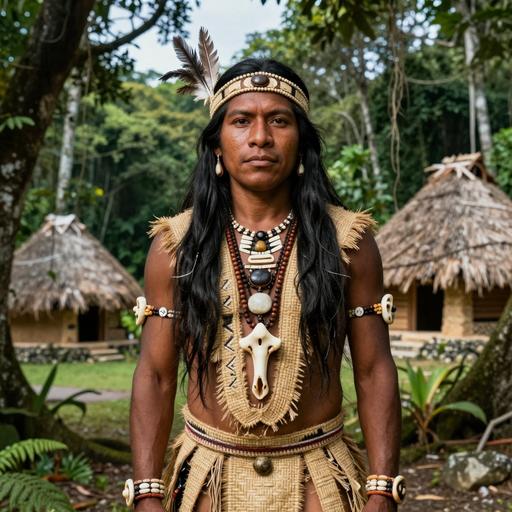
Portrait reconstruction of A man buried in Belize in the Ancient Central America era
Ancient Individual

A man buried in Belize in the Ancient Central America era

A man buried in Belize during the Belize 7,000 Years Ago

A fragment of the ancient world, preserved across millennia in strands of DNA.

I20428
5250 BCE - 4900 BCE
Male
Belize
Scroll to begin
Chapter I

Identity

The biological and cultural markers that define this ancient individual

Sample ID

I20428

Date Range

5250 BCE - 4900 BCE

Cultural Period

Belize 7,000 Years Ago

Biological Sex

Male

mtDNA Haplogroup

Not available

Y-DNA Haplogroup

Not available

Social Role

Hunter (AI estimate, era-typical)

Chapter II

Place

Where this individual was discovered

Country Belize
Locality Mayahak Cab Pek
Chapter III

Time

When this individual lived in the broader context of human history

I20428 5250 BCE - 4900 BCE
Chapter IV

Story

The narrative of this ancient life

Belize, located on the eastern coast of Central America, is a region rich in archaeological history and cultural heritage. Approximately 7,000 years ago, the area that is now Belize was a vastly different landscape compared to the bustling nation it is today. This era, known as the Archaic Period in Mesoamerican chronology, predates the formal establishment of the Maya civilization. During this time, the region was inhabited by pre-Mayan indigenous peoples who laid much of the groundwork for the later, more complex societies.

Environment and Climate

The environment of Belize 7,000 years ago was likely a mix of coastal wetlands, mangroves, tropical forests, and savannahs. The climate was warmer and more humid, as it was situated in the Holocene epoch following the last Ice Age. The region was rich in biodiversity, providing an abundance of resources for its inhabitants, including a variety of plant life and animal species.

Early Inhabitants and Lifestyle

The people living in Belize at this time were primarily Hunter-Gatherers, with some transitioning into early agriculturalists. The transition from nomadic hunting and gathering to settled agricultural practices marks an important cultural development during this era. There is evidence suggesting that these inhabitants engaged in the domestication of plants such as squash, maize, and beans, which became staples in the Mayan diet.

These communities were semi-nomadic, moving periodically to exploit seasonal resources. Their lifestyle was intimately connected to the environment, with a strong focus on the surrounding land and water. The coastal regions, abundant with marine life, provided a reliable food source, while the interior forests offered game and plant materials for food, tools, and shelter.

Tools and Technology

The technological level during this period was characterized by the use of stone tools. Artifacts such as stone blades, projectile points, and grinding stones have been discovered, offering insights into the daily lives of these early inhabitants. These tools were essential for hunting, food preparation, and other basic activities. The use of fire played a crucial role in cooking and land management.

Societal Structure and Cultural Practices

Little is known about the societal structures of the people in Belize 7,000 years ago, but it is likely that they lived in small, kin-based groups. These bands would have comprised extended families who worked together to ensure survival.

Spiritual and ritualistic aspects of life are inferred through archaeological discoveries of burial sites and ceremonial artifacts. These suggest a belief system that included some form of ancestor worship or animism, which may have served as a precursor to the more developed religious practices of the Maya civilization that followed.

Archaeological Sites and Discoveries

Although evidence from this specific period is scarce compared to later Mayan remains, several key archaeological sites provide crucial insights into this era. Excavations in areas such as Colha and Cuello have revealed tools and remains that contribute to our understanding of these early peoples.

Legacy and Influence on Maya Civilization

The cultural practices and advancements of the inhabitants of Belize 7,000 years ago set the groundwork for the rise of the Maya civilization, which began to emerge around 2000 BCE. Their development of agricultural techniques, societal organization, and interaction with the environment played a significant role in the subsequent formation of one of the most advanced civilizations of the ancient world.

In conclusion, Belize 7,000 years ago was a time of transition and development. Despite the lack of written records, the archaeological evidence offers a glimpse into a society that was beginning to innovate and adapt in ways that would influence the rise of the Maya and other Mesoamerican cultures.

Context

Related Samples

This individual exists within a broader network of ancient samples. No ancient genome stands alone.

Sample ID Culture/Period Date Location Action
I24542 Belize 4,600 Years Ago 2950 BCE Mayahak Cab Pek, Belize View
I24541 Belize 11,700 Years Ago 10100 BCE Mayahak Cab Pek, Belize View
I24540 Belize 3,600 Years Ago 3708 BCE Mayahak Cab Pek, Belize View
I7543 Belize 4,000 Years Ago 2017 BCE Mayahak Cab Pek, Belize View
I8041 Belize 4,000 Years Ago 2204 BCE Mayahak Cab Pek, Belize View
I19950 Belize 4,600 Years Ago 2868 BCE Saki Tzul, Belize View
I5455 Belize 4,600 Years Ago 2574 BCE Mayahak Cab Pek, Belize View
I6235 Belize 4,600 Years Ago 2837 BCE Mayahak Cab Pek, Belize View
I6236 Belize 4,600 Years Ago 2621 BCE Saki Tzul, Belize View
I19167 Belize 4,900 Years Ago 3011 BCE Mayahak Cab Pek, Belize View
I19942 Belize 4,900 Years Ago 3091 BCE Saki Tzul, Belize View
I5454 Belize 4,900 Years Ago 3319 BCE Mayahak Cab Pek, Belize View
I7544 Belize 4,900 Years Ago 2894 BCE Mayahak Cab Pek, Belize View
I3442 Belize 4,900 Years Ago 3312 BCE Mayahak Cab Pek, Belize View
I19944 Belize 4,900 Years Ago 3011 BCE Saki Tzul, Belize View
I13267 Belize 5,500 Years Ago 3630 BCE Mayahak Cab Pek, Belize View
I20428 Belize 7,000 Years Ago 5250 BCE Mayahak Cab Pek, Belize View
I19170 Belize 8,800 Years Ago 7050 BCE Mayahak Cab Pek, Belize View
I19169 Belize 8,800 Years Ago 7031 BCE Mayahak Cab Pek, Belize View
I13268 Belize 9,400 Years Ago 7711 BCE Mayahak Cab Pek, Belize View
I7556 Archaic Period Belizean Culture 3761 BCE Mayahak Cab Pek (Toledo District, Maya Mountains, Bladen Nature Reserve), Belize View
I13266 Archaic Period Belizean Culture 2561 BCE Mayahak Cab Pek (Toledo District, Maya Mountains, Bladen Nature Reserve), Belize View
I3442 3312 BCE Mayahak Cab Pek, Belize View
Sample ID Culture/Period Date Location Action
I20428 Belize 7,000 Years Ago 5250 BCE Mayahak Cab Pek, Belize View
Sources

References

Scientific publications and genetic data that inform this profile.

Scientific Publication

South-to-north migration preceded the advent of intensive farming in the Maya region

Authors Kennett DJ, Lipson M, Prufer KM, Mora-Marín D, George RJ et al.
Abstract

The genetic prehistory of human populations in Central America is largely unexplored leaving an important gap in our knowledge of the global expansion of humans. We report genome-wide ancient DNA data for a transect of twenty individuals from two Belize rock-shelters dating between 9,600-3,700 calibrated radiocarbon years before present (cal. BP). The oldest individuals (9,600-7,300 cal. BP) descend from an Early Holocene Native American lineage with only distant relatedness to present-day Mesoamericans, including Mayan-speaking populations. After ~5,600 cal. BP a previously unknown human dispersal from the south made a major demographic impact on the region, contributing more than 50% of the ancestry of all later individuals. This new ancestry derived from a source related to present-day Chibchan speakers living from Costa Rica to Colombia. Its arrival corresponds to the first clear evidence for forest clearing and maize horticulture in what later became the Maya region.

Use code for 25% off Expires Jul 15