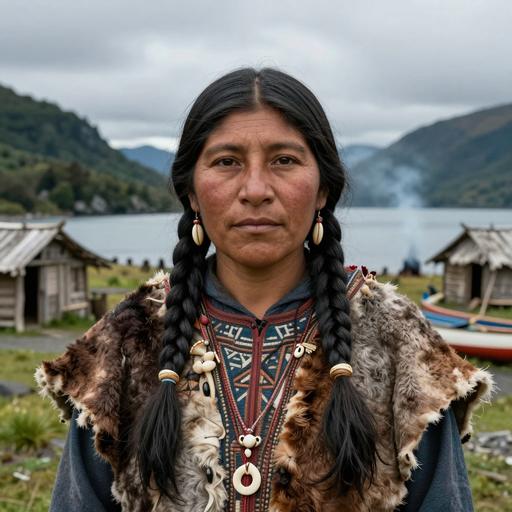
The Kaweskar people, also known as the Alacalufe, have been the indigenous inhabitants of the western archipelago of Chile for centuries, including the era approximately 800 years ago. This South American culture developed in the challenging yet bountiful environment of the southern channels and fjords, primarily on the islands between the Gulf of Penas and the Strait of Magellan. At this time, characterized as roughly the 13th century, the Kaweskar's way of life was intricately adapted to their maritime surroundings.
Geography and Environment
The terrain of the western archipelago is dramatic, with numerous islands, inlets, and rugged coastlines defining the region. The climate is cold and wet, with frequent rain and wind, creating a challenging environment but also one richly populated with marine life. The landscape boasts dense forests, glacial streams, and peat bogs, all of which contributed to the resources available to the Kaweskar.
Social Structure and Community
The Kaweskar society was organized into small, kin-based groups rather than large settlements, reflecting the mobility required to survive in their environment. They were nomadic, moving frequently in response to seasonal changes and the availability of food resources. Social structure was likely egalitarian, with decisions made communally and leadership being temporary or situation-specific. This structure supported their flexible lifestyle, necessary for adapting to the constantly shifting conditions of the coastal environment.
Subsistence and Daily Life
The Kaweskar were expert seafarers and fishers, relying heavily on the ocean for sustenance. Their diet predominantly consisted of seafood, such as fish, shellfish, sea lions, and seals. They skillfully crafted canoes from the bark of trees, which were vital for transportation and hunting in the water-rich environment. These canoes were both lightweight and durable, ideal for navigating the complex waterways of the region. On land, they gathered edible plants, fruits, and eggs, supplementing their marine diet.
The Kaweskar utilized harpoons, bone hooks, and nets to capture their prey, demonstrating a deep understanding of the marine ecosystem. Clothing was primarily made from animal hides, providing essential protection against the biting cold and persistent wet conditions. Shelter consisted of temporary structures like tepee-shaped huts covered in animal skins, which could be easily constructed and dismantled as needed.
Spiritual Beliefs and Practices
Spirituality was an integral part of Kaweskar life, with beliefs likely centered around animism and the reverence of natural forces. Their cosmology would have been closely tied to their environment, reflecting the significance of the sea and its creatures. Rituals and storytelling played a crucial role in maintaining the oral history and cultural traditions of the Kaweskar, with elders imparting wisdom and cultural values through myths and legends.
Language and Cultural Expression
The Kaweskar spoke Kawesqar, a language isolated to their group. Being a primarily oral culture, storytelling, songs, and mythic tales were vital for cultural expression and education. Songs and chants might have been used in both daily activities and ritualistic ceremonies, helping to strengthen group cohesion.
Interactions and Trade
Contact with neighboring indigenous groups, such as the Yahgan to the south and the Chono to the north, may have occurred, though likely limited. Such interactions would have been vital for trade, resource sharing, and cultural exchange. Canoe journeys enabled the Kaweskar to engage with others across considerable distances, sharing knowledge and resources that were necessary for survival in the harsh environments.
Changes and Adaptations
By considering the historical context, the Kaweskar culture has experienced various changes over time due to environmental shifts, external contact, and technological advancements. However, 800 years ago, their life was predominantly shaped by the need to adapt to their unique environmental conditions, leading to a lifestyle that harmonized with the rhythms of the land and sea.
In summarizing the culture of the Kaweskar 800 years ago, the picture that emerges is one of a people deeply connected to their maritime world. Mastery of their environment allowed them to thrive in what many would consider a challenging habitat, showcasing a rich cultural legacy that emphasizes adaptability, resourcefulness, and a profound spiritual connection to nature.