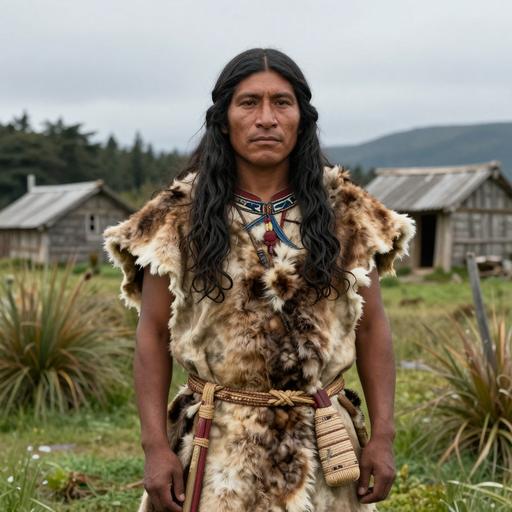
The Yamana, also known as Yaghan, were an indigenous people native to the southernmost regions of South America, particularly the Beagle Channel area in present-day Chile and Argentina. Around 800 years ago, their culture was shaped by the harsh and unique environment of the Tierra del Fuego archipelago. The Yamana are renowned for their adaptability, seafaring skills, and distinctive way of life.
Environment and Geography
The Beagle Channel, located at the southern tip of South America, is a natural waterway spanning over 240 kilometers, characterized by its complex network of channels, islands, fjords, and a challenging maritime climate. The landscape is dominated by the Andes mountain range, subpolar forests, peat bogs, and glaciers. The climate of this region is cold and harsh, with strong winds, frequent rain, and snow, making it imperative for the Yamana to develop survival strategies that were closely tied to the sea.
Lifestyle and Subsistence
The Yamana people were principally nomadic hunter-gatherers who relied heavily on marine resources. They are celebrated for their exceptional abilities as seafarers, often traversing the cold waters in small, bark canoes. These canoes were central to their existence, enabling them to hunt marine mammals like seals, sea lions, and dolphins, which were a staple of their diet. Additionally, they gathered shellfish, fish, sea birds, and some land mammals.
The Yamana developed advanced environmental knowledge and resourceful techniques to thrive in their rugged homeland. They utilized fire not only for warmth but also as a means of communication and a tool to modify their landscape, such as clearing lands for hunting.
Social Organization
The Yamana society was organized into small family groups, possibly reflecting a social structure where kinship ties and cooperative living played crucial roles. Their flexible social organization facilitated adaptation to the seasonal availability of resources and the unpredictability of the environment.
Communication between different family groups may have occurred regularly to share resources, information, and form alliances. Although they lacked a complex hierarchical structure like many other indigenous cultures, their social cohesion was strong, bound by shared cultural practices and beliefs.
Culture and Belief Systems
The Yamana held a deep spiritual connection to their natural surroundings, with animistic beliefs likely that acknowledged spirit presences in animals, plants, and natural phenomena. Shamans, or spiritual leaders, may have played essential roles in mediating between the spiritual and physical worlds.
Their oral traditions and stories were fundamental in passing down cultural knowledge, history, and lessons across generations, although much of this oral literature has sadly been lost over time. Their language, known as Yámana or Yahgan, is noted for its complexity and richness but has almost disappeared in modern times.
Clothing and Shelter
To combat the cold and wet climate, the Yamana wore minimal clothing, as wet clothing could become hazardous, leading to hypothermia. Instead, they relied heavily on a strategy of maintaining constant warmth through proximity to fire. They used animal skins for temporary shelter and clothing when necessary.
Shelters were typically constructed as temporary, dome-shaped structures made from branches, leaves, and animal skins which provided adequate protection against wind and rain.
Interaction with Other Cultures
The Yamana coexisted alongside other indigenous groups in the region, such as the Selk'nam, Haush, and Kawésqar, each with distinct languages and cultural practices. The relationships among these groups fluctuated from trading interactions to conflicts, depending primarily on resources and territory.
Legacy and Modern-Day Context
The arrival of European explorers and settlers in the 19th century significantly impacted the Yamana way of life, leading to dramatic changes in their population, culture, and territory. The introduction of diseases, land appropriation, and cultural assimilation efforts led to a stark decline in their numbers.
Today, the legacy of the Yamana culture survives through archaeological studies, the preservation of artifacts, and the continuing efforts by indigenous peoples and organizations to revitalize their cultural heritage and language, ensuring that the rich history of the Yamana does not fade away completely.
In sum, the Yamana culture of 800 years ago epitomizes human resilience and ingenuity amidst some of the most challenging living conditions on Earth. Their distinctive lifestyle and knowledge of the natural world remain a testament to their profound connection to the land and sea.