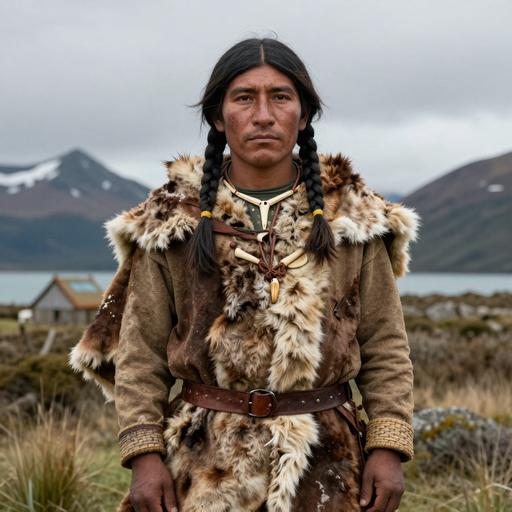
The Western Archipelago Kaweskar culture, existing approximately 1,200 years ago, provides a fascinating glimpse into the life and traditions of indigenous cultures in South America, specifically within the archipelagos of what is now Chile. The Kaweskar, also known as the Alacalufe, were a maritime people who thrived in the challenging environment of the Patagonian waterways. This culture was primarily located in the labyrinth of islands, fjords, and channels along the southern coast of Chile, stretching from the Gulf of Penas to the Magellan Strait.
Environment and Geography
The environment influenced nearly every aspect of Kaweskar life. The western archipelago is characterized by rugged coastlines, dense temperate rainforests, and an array of marine life. These islands are constantly bombarded by heavy rains and fierce winds, creating a demanding yet resource-rich environment. This geographic setup necessitated a nomadic lifestyle centered around the sea.
Lifestyle and Economy
The Kaweskar were skilled seafarers, navigating their region in canoes crafted from the bark of the coigüe or notro trees, in which entire families would travel. Their canoes were not only a means of transport but also served as the foundation for their entire nomadic existence.
Their economy was heavily reliant on hunting and gathering, with a strong focus on marine resources. They hunted sea mammals such as seals and sea lions, fished for various species, and collected shellfish. They also foraged for birds’ eggs, berries, and edible plants found on the shores. Tool-making was an important aspect of their economy; they created tools and weapons from bone, stone, and wood, specializing in harpoons and fishing implements.
Social Structure and Community
Kaweskar society was organized around small, kinship-based groups that moved semi-regularly to exploit seasonal resources. Their social structure was relatively egalitarian, likely driven by the needs of a nomadic lifestyle where cooperation was essential for survival. Family units were crucial, and community decisions were likely made collectively.
Due to their mobility, there was a fluid interaction between different groups of Kaweskar people, facilitating a network of communication and exchange. It is likely that they traded products such as foodstuffs, tools, and raw materials with neighboring groups.
Spirituality and Beliefs
The Kaweskar's belief system was intertwined with their environment—nature was both a provider and a powerful force. They likely worshiped natural spirits associated with the sea, land, and sky. Rituals and storytelling were integral in keeping their traditions alive, helping them pass down cosmologies and practical knowledge from generation to generation.
Shamans or spiritual leaders probably held importance in interpreting the will of the spirits and guiding their communities in rituals. Spiritually significant forces in their worldview included the winds, tides, and animals, reflecting their intimate connection with the natural world around them.
Material Culture
The material culture of the Kaweskar was mostly utilitarian, adapted to their nomadic life. They made temporary shelters known as \wigwams" or "tule huts" from bent saplings and covered them with bark or animal skins. Their clothing was minimal, often made from sealskins to protect against the rain and wind, while also allowing ease of movement while navigating.
Their art and decorative expressions were primarily seen in utilitarian objects. Intricate carvings and symbolic motifs might have decorated their tools or canoes, carrying symbolic meanings or clan identifications.
Conclusion
The Western Archipelago Kaweskar culture was a testament to human adaptation and resilience. Their way of life, deeply rooted in the rhythms of the ocean and dictated by the harsh but bountiful landscape, showcases the ingenuity and adaptability of indigenous cultures in prehistoric South America. Understanding their society provides insight into the diverse cultural tapestries that spanned the continent long before European contact."