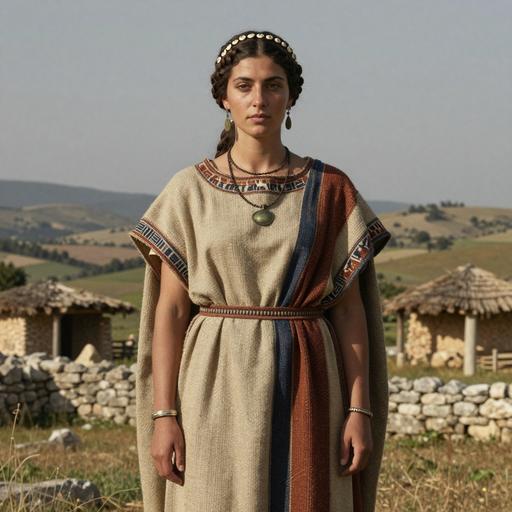
The Daunian culture represents a significant part of the ancient history of Italy, specifically flourishing in the region that is now modern-day Apulia (Puglia) in southern Italy. This culture is predominantly associated with the Iapygian tribes, specifically the Daunians, who occupied northern Apulia. Among the notable sites of Daunian habitation is Salapia, an area rich in archaeological and historical significance.
Geographic Context and Settlements
Salapia, often referred to in ancient sources, was situated near the coastal lagoons of the Adriatic Sea in the province of Foggia. The landscape during the Daunian period comprised fertile plains and coastal marshes which facilitated agriculture and trade. The location was strategic for trade routes connecting the Italic peninsula with the wider Mediterranean world. Settlements such as Salapia evolved into fortified urban centers, reflecting both the need for protection and the increasing complexity of urban life.
Historical Background
The Daunians, along with the other Iapygian tribes such as the Peucetians and the Messapians, are believed to have migrated to Italy in the early Iron Age, around the 9th to 8th centuries BCE. Their origin is often debated but is traditionally attributed to Illyrian or Balkan roots, reflecting a wider context of movement and interaction across the Adriatic Sea.
Cultural Characteristics
Language and Writing: The Daunian language was part of the Iapygian language group, which is not fully deciphered but is known from inscriptions using a variant of the Greek alphabet. These inscriptions provide invaluable insights into their socio-political structures and cultural influences from the Greek world.
Art and Pottery: Daunian art is distinguished by its geometric styles and motifs, with pottery being a prominent feature. The pottery often includes intricate patterns and figurative designs that depict mythological and everyday themes. The shapes of the pottery are unique and serve both practical and ritualistic purposes.
Religion and Mythology: The religious practices of the Daunians involved a pantheon of deities, likely influenced by both Italic and Hellenic traditions. Archaeological finds suggest the presence of sanctuaries and ritual objects that point to a complex spiritual life involving nature worship and rites for fertility and protection.
Social Structure: The society was tribal but exhibited increasing complexity with the development of urban centers. This is evidenced by archaeological sites showing evidence of defensive structures, public buildings, and organized civic spaces, indicating a society with distinct social hierarchies and governance systems.
Economy and Trade: Agriculture was the economic backbone due to the region's fertile lands, complemented by craftsmanship in metalwork, textiles, and ceramics. The proximity of Salapia to the coast facilitated trade not only with neighboring tribes but also across the Adriatic to the Greek colonies and beyond. This led to significant cultural exchanges that influenced Daunian material culture.
Archaeological Evidence
Significant archaeological work has been conducted in the region, revealing settlements, burial sites, and artifacts that provide insight into Daunian life. The necropoleis, or burial grounds, are particularly rich sources of information, showcasing elaborate burial customs with grave goods that indicate belief systems and social stratification.
Legacy
The Daunian culture ultimately became subsumed within the broader Italic and Roman contexts as Roman expansion reached the region in the 4th century BCE. Nevertheless, the imprint of the Daunians and their interactions with Greek and other Italic cultures contributed to the rich tapestry of Italy’s pre-Roman history. The vestiges of their settlements, artifacts, and cultural influence continue to be subjects of archaeological and historical investigation, reflecting a vibrant chapter in the narrative of Mediterranean antiquity.