Menu
Currency
Main
Store
Blog

Loading Report

Preparing your ancestry journey

Connecting to ancient matches...

Preparing your report

Skip to main content
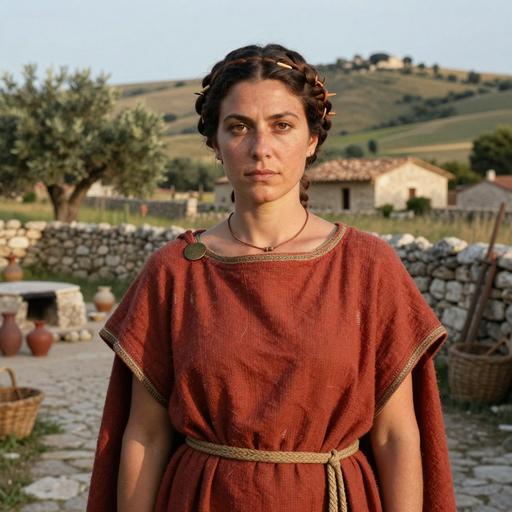
Portrait reconstruction of A woman buried in Italy in the Iron Age era
Ancient Individual

A woman buried in Italy in the Iron Age era

A woman buried in Italy during the Iron Age San Giovanni, Italy

A fragment of the ancient world, preserved across millennia in strands of DNA.

SGR003
368 BCE - 177 BCE
Female
Italy
Scroll to begin
Chapter I

Identity

The biological and cultural markers that define this ancient individual

Sample ID

SGR003

Date Range

368 BCE - 177 BCE

Cultural Period

Iron Age San Giovanni, Italy

Biological Sex

Female

mtDNA Haplogroup

H1+16311T!

Y-DNA Haplogroup

N/A (Female)

Social Role

Farmer (AI estimate, era-typical)

Chapter II

Place

Where this individual was discovered

Country Italy
Locality Apulia. SanGiovanniRotondo
Coordinates 41.3167, 15.6330
Chapter III

Time

When this individual lived in the broader context of human history

SGR003 368 BCE - 177 BCE
Chapter IV

Story

The narrative of this ancient life

The Iron Age in the region of San Giovanni, Italy, marks a significant period in the broader tapestry of Italian prehistory and early civilization. This era, roughly spanning from around 900 BCE to the Roman conquest, witnessed profound changes in cultural, social, and technological practices, paving the way for what would eventually become classical Roman civilization.

Geographical Context

San Giovanni's region is situated in the southern part of the Italian Peninsula, a territory characterized by its varied topography including rolling hills, fertile plains, and proximity to the coastlines of the Mediterranean. This advantageous geography provided the inhabitants with rich resources for agriculture, trade, and maritime activities, fostering connections with both internal and external cultures across the Mediterranean basin.

Socio-Political Structure

During the Iron Age, the Italian peninsula was not unified under a single political entity but was instead a mosaic of different cultures and tribes. The area of San Giovanni would have primarily been influenced by the Italic peoples such as the Latins, Sabines, Samnites, and Etruscans, although it also faced influences from other neighboring groups.

The society was typically organized into tribal communities, with power often concentrated in the hands of local chieftains or clan leaders. These leaders were likely tasked with protection, judicial functions, and religious duties, acting as intermediaries between the people and the deities they worshiped.

Economy and Trade

The economy of Iron Age San Giovanni relied heavily on agriculture, with a focus on crops such as grain, olives, and grapes—plants that were well-suited to the Mediterranean climate. The introduction and use of iron tools enabled more efficient farming practices, leading to surplus production which catalyzed trade.

Trade networks extended throughout the peninsula and beyond, with evidence of goods such as pottery, metalwork, and textiles being exchanged with regions as distant as Greece and the Near East. The region's access to the coast facilitated maritime trade, further enriching the local economy.

Technological and Cultural Innovations

The advent of iron significantly transformed daily life and societal development. The local peoples were adept at metallurgical skills, producing tools and weapons that were superior to those of earlier periods. These innovations did not only bolster agriculture but also gave communities a military advantage.

Culturally, the region would have seen a fusion of Italic traditions with external influences, especially from the Greeks and Etruscans. Etruscan influence, in particular, was profound, permeating religious practices, language scripts, and artistic expressions. These interactions led to the development of sophisticated societal structures and cultural artifacts, including distinctive pottery styles and ornate metal objects.

Religion and Beliefs

Religion during the Iron Age in San Giovanni was polytheistic, with a pantheon of gods and goddesses who were believed to oversee various aspects of life and nature. Rituals and offerings were integral to maintaining the favor of these deities, and local spirituality was deeply connected to the natural world and land.

Religious sites likely included sacred groves, natural springs, and purpose-built altars where rites and ceremonies were performed, reflecting both local traditions and the influence of predominant cultures in the region.

Artistic and Architectural Developments

Artistic expression flourished during the Iron Age with advancements in pottery, sculpture, and metalwork that demonstrate both aesthetic sensibilities and practical functions. Pottery, marked by intricate designs and forms, was often used in both domestic settings and religious contexts.

Architecture saw the transition from simple wooden structures to more complex buildings incorporating stone and brick, influenced by the Etruscans' advanced construction techniques. Fortified settlements began to appear, indicative of a society that valued defense as well as community cohesion.

Legacy

The San Giovanni region in the Iron Age was a microcosm of broader trends in Italic civilization, reflecting a period of growth, interaction, and transformation. The innovations and cultural exchanges of this era laid the groundwork for subsequent cultural developments during the Roman period. Understanding this era in San Giovanni provides crucial insights into the complexities and dynamism of early Italian civilization, showcasing a rich heritage that would influence the rise of Rome and its empire.

Context

Related Samples

This individual exists within a broader network of ancient samples. No ancient genome stands alone.

Sample ID Culture/Period Date Location Action
SAL011 Daunian Culture Salapia, Italy 386 BCE Apulia. Salapia, Italy View
SGR001 Iron Age San Giovanni, Italy 668 CE Apulia. SanGiovanniRotondo, Italy View
ORD006 Daunian Culture Ordona, Italy 770 BCE Apulia. Ordona. Herdonia, Italy View
ORD009 Daunian Culture Ordona, Italy 750 BCE Apulia. Ordona. Herdonia, Italy View
SAL001 Daunian Culture Salapia, Italy 1260 BCE Apulia. Salapia, Italy View
SAL003 Daunian Culture Salapia, Italy 402 BCE Apulia. Salapia, Italy View
ORD001 Daunian Culture Salapia, Italy 781 BCE Apulia. Ordona. Herdonia, Italy View
ORD004 Daunian Culture Salapia, Italy 516 BCE Apulia. Ordona. Herdonia, Italy View
SAL007 Daunian Culture Salapia, Italy 1300 BCE Apulia. Salapia, Italy View
SAL010 Daunian Culture Salapia, Italy 1300 BCE Apulia. Salapia, Italy View
ORD014 Daunian Culture Ordona, Italy 750 BCE Apulia. Ordona. Herdonia, Italy View
ORD019 Daunian Culture Ordona, Italy 800 BCE Apulia. Ordona. Herdonia, Italy View
SGR002 Iron Age San Giovanni, Italy 751 BCE Apulia. SanGiovanniRotondo, Italy View
SGR003 Iron Age San Giovanni, Italy 368 BCE Apulia. SanGiovanniRotondo, Italy View
ORD010 Medieval Ordona, Italy 995 CE Apulia. Ordona. Herdonia, Italy View
ORD011 Daunian Culture Salapia, Italy 800 BCE Apulia. Ordona. Herdonia, Italy View
Sample ID Culture/Period Date Location Action
SGR001 Iron Age San Giovanni, Italy 668 CE Apulia. SanGiovanniRotondo, Italy View
SGR002 Iron Age San Giovanni, Italy 751 BCE Apulia. SanGiovanniRotondo, Italy View
SGR003 Iron Age San Giovanni, Italy 368 BCE Apulia. SanGiovanniRotondo, Italy View
Sources

References

Scientific publications and genetic data that inform this profile.

Scientific Publication

The Genetic Origin of Daunians and the Pan-Mediterranean Southern Italian Iron Age Context

Authors Aneli S, Saupe T, Montinaro F, Solnik A, Molinaro L et al.
Abstract

The geographical location and shape of Apulia, a narrow land stretching out in the sea at the South of Italy, made this region a Mediterranean crossroads connecting Western Europe and the Balkans. Such movements culminated at the beginning of the Iron Age with the Iapygian civilization which consisted of three cultures: Peucetians, Messapians, and Daunians. Among them, the Daunians left a peculiar cultural heritage, with one-of-a-kind stelae and pottery, but, despite the extensive archaeological literature, their origin has been lost to time. In order to shed light on this and to provide a genetic picture of Iron Age Southern Italy, we collected and sequenced human remains from three archaeological sites geographically located in Northern Apulia (the area historically inhabited by Daunians) and radiocarbon dated between 1157 and 275 calBCE. We find that Iron Age Apulian samples are still distant from the genetic variability of modern-day Apulians, they show a degree of genetic heterogeneity comparable with the cosmopolitan Republican and Imperial Roman civilization, even though a few kilometers and centuries separate them, and they are well inserted into the Iron Age Pan-Mediterranean genetic landscape. Our study provides for the first time a window on the genetic make-up of pre-Roman Apulia, whose increasing connectivity within the Mediterranean landscape, would have contributed to laying the foundation for modern genetic variability. In this light, the genetic profile of Daunians may be compatible with an at least partial autochthonous origin, with plausible contributions from the Balkan peninsula.

Use code for 25% off Expires Jul 15