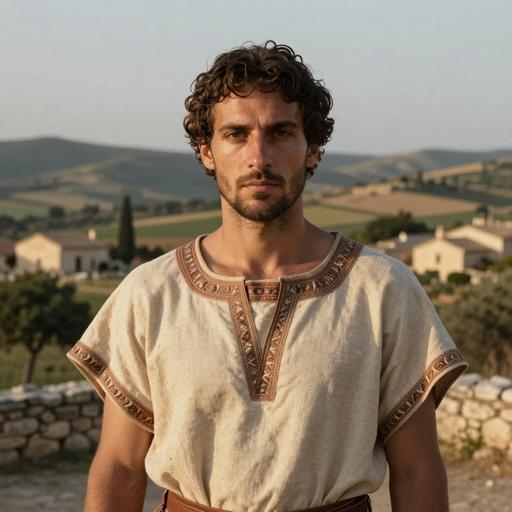
The Daunian culture, which flourished in the southern part of the Italian Peninsula, particularly in what is now the region of Apulia (Puglia), is an intriguing and significant aspect of ancient Italian civilization. The town of Ordona, located in this region, serves as an important archaeological site that sheds light on the Daunian culture.
Geography and Settlement
The Daunians were one of the Iapygian tribes that inhabited the region of Apulia during the first millennium BCE. Ordona, known as Herdonia in ancient times, is situated in the province of Foggia and represented a key settlement in the northern Apulia. This area was strategically important due to its fertile lands and its position along crucial trade routes connecting the interior with the Adriatic coast.
Temporal Framework
The Daunian culture flourished from around the 8th century BCE until the Roman conquest in the 4th century BCE. This period was characterized by significant developments in socio-political structures, trade, and cultural practices as the Daunians interacted with neighboring cultures, including the Greeks, Etruscans, and later, the Romans.
Art and Pottery
One of the most distinguishing features of the Daunian culture is their pottery, especially the geometric and figural decorations that adorn their ceramic vessels. The Daunian ceramics were often characterized by polychrome designs, employing red, brown, and black paints on a lighter background. Common themes included geometric patterns, natural motifs, and stylized human figures, which indicate a rich symbolic language and artistic expression prevalent in their society.
Burial Practices and Funerary Art
Daunian burial customs provide considerable insights into their beliefs and social organizations. The Daunians practiced both inhumation and cremation, with cemeteries often located outside settlement boundaries. Graves were furnished with a variety of grave goods, including pottery, weapons, and personal ornaments, suggesting a belief in an afterlife and the social status of the deceased. Elaborate stelae (stone slabs) were often erected as grave markers, carved with intricate reliefs depicting scenes from life, mythology, or symbolic representations.
Architecture and Urban Planning
While few architectural remains have survived, the Daunian settlements like Ordona typically consisted of simple, circular or rectangular dwellings made from local materials like wood, clay, and stone. The presence of fortifications and organized urban layouts in some sites indicates a certain level of socio-political complexity and the ability to mobilize labor and resources for community projects.
Economy and Trade
The Daunian economy was largely agrarian, focusing on agriculture and animal husbandry due to the fertile plains of Apulia. The position of Ordona along trade routes facilitated exchange with other neighboring cultures, which is evident in the presence of imported items such as Greek ceramics and Etruscan goods. This interaction fostered cultural amalgamation and influenced the local production of goods.
Society and Culture
Daunian society was likely organized into tribal structures with hierarchical governance systems. The influence of Mediterranean trade networks and neighboring cultures was significant, leading to the adoption and adaptation of foreign elements into local traditions. The integration of Greek motifs into Daunian art, for example, showcases this cultural exchange.
Religion and Symbolism
The Daunians had a rich pantheon of deities, which was heavily influenced by both indigenous beliefs and neighboring cultures. Religious practices are partially reconstructed through iconography on pottery and stelae, as well as through the examination of sanctuaries and votive offerings. Mythological scenes depicted in Daunian art suggest a form of storytelling intertwined with religious and cultural identity.
Interaction with Other Cultures
The Daunians were in continuous interaction with other civilizations, such as the Greeks, who established colonies along the coast, and the Etruscans in the north. These encounters were not always peaceful, as evidenced by conflicts but also by cultural exchange and mutual influence that played a crucial role in shaping Daunian civilization.
In summary, the Daunian culture of Ordona represents a fascinating blend of indigenous Italian traditions and external influences, which together created a unique social and cultural milieu. The study of their artifacts, burial practices, and interactions with other cultures enhances our understanding of the complexities of pre-Roman Italy and the diverse tapestry of ancient Mediterranean civilizations.