Zum Hauptinhalt springen
mtDNA · Mütterliche Linie

H20

mtDNA Haplogroup H20

Ein Referenzprofil für einen Abstammungszweig. Gemeinsame Haplogruppen begründen weder eine familiäre Beziehung noch eine kulturelle Identität.

Referenzprofil

Hintergrund des Zweigs

Historischer Kontext für den mtDNA-Abstammungszweig H20

Origins and Evolution

H20 is a derived subclade of mtDNA haplogroup H2, itself part of the widespread European macro-haplogroup H. Given the phylogenetic position of H20 beneath H2 and the estimated age of H2 in the Late Upper Paleolithic to early Holocene, H20 most plausibly arose in the Near East / West Asia region during the early Holocene (~9 kya in this estimate). Its emergence likely postdates the Last Glacial Maximum and coincides with climatic amelioration and demographic expansions that ultimately fed into the Neolithic transition.

H20 is a relatively rare lineage in modern populations and the archaeological record; it appears in small numbers of ancient and modern mitogenomes, consistent with a derived branch that experienced localized expansions rather than a broad continent-wide radiation.

Subclades (if applicable)

At present H20 is treated as a shallow subclade within the H2 branch. Published mitogenome surveys and phylogenies show limited internal diversification for H20 compared with major H subclades; many reported H20 observations are singletons or small clusters defined by private mutations. Resolution of additional internal subclades of H20 depends on high-coverage whole mitogenome sequencing from geographically and temporally diverse samples. In many databases H20 remains sparsely split into named downstream branches (if any), reflecting its low frequency and the need for more comprehensive sampling.

Geographical Distribution

H20 is detected at low to modest frequencies across parts of Europe, the Near East, the Caucasus and North Africa. Reported modern occurrences tend to concentrate in Mediterranean and adjacent regions—particularly Iberia and parts of Southern Europe—alongside detections in Anatolia, the Levant and the Caucasus. Its pattern is consistent with a Near Eastern origin followed by diffusion into Europe during the Neolithic and later historical movements, and with occasional founder effects in localized populations (e.g., island or isolated inland communities).

Because H20 is uncommon, its geographic signal is weaker than major H subclades; nevertheless, its presence in both modern and a small number of ancient samples supports a scenario of early Holocene origin in West Asia with subsequent low-level spread into Europe and neighboring regions.

Historical and Cultural Significance

H20’s distribution and timing tie it to processes that shaped maternal lineages in the Holocene: the spread of Neolithic farmers from Anatolia and the Near East, maritime and overland Mediterranean colonization routes, and later regional demographic shifts (Bronze Age and historical period movements). While it is not a hallmark lineage of major steppe migrations (those are better represented by other mtDNA lineages), H20 can appear alongside other Near Eastern farmer-associated haplogroups (for example J and T2) in Neolithic and post-Neolithic contexts.

In historical and population-genetic studies, H20 is primarily of interest for understanding microevolutionary processes—local founder events, small-scale migrations, and continuity versus replacement within regional maternal gene pools—rather than as a marker of large-scale continental expansions.

Conclusion

mtDNA H20 is a minor but informative maternal subclade of H2 that most likely originated in the Near East / West Asia in the early Holocene and spread at low frequencies into Europe, the Caucasus and North Africa, with the strongest modern signals in Mediterranean and adjacent regions. Its rarity and limited internal diversification mean that expanding whole-mitogenome sampling—especially ancient DNA—from these regions would help clarify its finer-scale phylogeny and demographic history.

Wichtige Punkte

  • Origins and Evolution
  • Subclades (if applicable)
  • Geographical Distribution
  • Historical and Cultural Significance
  • Conclusion
Referenzprofil

Baum und Verwandtschaft

Phylogenetischer Kontext und Subkladen

Entwicklungsweg

Folgen Sie den erfassten übergeordneten Zweigen bis H20. Die Daten sind Schätzungen und können sich ändern, wenn Referenzdaten überarbeitet werden.

Schritte Haplogruppe Altersschätzung Archäologische Epoche Vergangene Zeit Unmittelbare Nachkommen Getestete moderne Nachkommen Antike Verknüpfungen
1 H20 Aktuell ~9,000 years ago Neolithic 9,000 Jahre 3 10 0
2 H ~25,000 years ago Paleolithic 25,000 Jahre 78 9,404 991
3 HV ~30,000 years ago Paleolithic 30,000 Jahre 14 11,092 228
4 R0 ~15,000 years ago Mesolithic 15,000 Jahre 2 11,230 4
5 R ~55,000 years ago Paleolithic 55,000 Jahre 17 22,830 57
6 NA - - - 1 22,830 0
7 N ~60,000 years ago Paleolithic 60,000 Jahre 16 26,150 13
8 L3 ~70,000 years ago Paleolithic 70,000 Jahre 7 30,162 6
9 L3'4 - - - 2 30,212 0
10 L3'4'6 - - - 2 30,216 0
11 L2'3'4'6 - - - 2 31,333 0
12 L2'3'4'5'6'7 - - - 2 31,349 0
13 L1'2'3'4'5'6'7 - - - 2 31,852 0
14 L ~160,000 years ago Paleolithic 160,000 Jahre 2 32,236 5

Geschwisterzweige (77)

Weitere Zweige derselben übergeordneten Haplogruppe

Referenzprofil

Verbreitung weltweit

Geografische Verbreitung und moderne Präsenz

Erfasster Ursprung

Near East / West Asia

Moderne Verbreitung

The populations where MTDNA haplogroup H20 is found include:

  1. Iberian populations (Spain, Portugal, including Basques)
  2. Western and Southern Europeans (France, Italy, Greece)
  3. Eastern European populations (Poland, Ukraine, Balkans)
  4. Near Eastern populations (Anatolia, Levant)
  5. Caucasus populations (Armenia, Georgia, Azerbaijan)
  6. North African populations (Maghreb)
  7. Some Central Asian and South Asian communities (low frequencies)
  8. Jewish communities (Sephardic and Mizrahi lineages at low frequencies)
Historischer Kontext

Ein Zweig durch die Zeit

Geschätzte Entstehung in einer breiten historischen Zeitleiste. Zeitmarken liefern Kontext und implizieren keine Verbindung zu bestimmten Kulturen.

  1. ~10k Jahre zurück

    Neolithische Revolution

    Beginn der Landwirtschaft und feste Siedlungen

  2. ~9k Jahre zurück

    Haplogruppe H20

    Geschätzte Entstehung dieses mtDNA-Zweigs; Daten und Orte sind Referenzschätzungen.

    Dieser Zweig
  3. ~5k Jahre zurück

    Bronzezeit

    Metallverarbeitung, Schrift und frühe Zivilisationen

  4. ~3k Jahre zurück

    Eisenzeit

    Eisenwerkzeuge und ausgedehnte Handelsnetze

  5. ~2.5k Jahre zurück

    Klassische Antike

    Blüte griechischer und römischer Kulturen

  6. Gegenwart

    Gegenwart

    Moderne Zeit

Referenzprofil

Archäologischer Kontext

Erfasste archäologische Zuordnungen für den mtDNA-Zweig H20

Erfasste Zuordnungen

Diese Bezeichnungen beschreiben archäologische Kontexte erfasster Referenzproben mit Bezug zu H20. Eine Zuordnung bedeutet nicht, dass alle Träger einer Kultur angehörten oder einer bestimmten Migrationsroute folgten.

AL_ANDALUS Alföld Linear Pottery Anatolian Bronze Age Armenian Late Bronze Bodrogkeresztur Bustan Culture Canaanite Geoksyur Culture Gumelnița Hellenistic Anatolia Maltese Temple Nazari Culture Peloponnesian Neolithic Russia_MBA_Caucasus Steppe Eneolithic
Kulturzuordnungen basieren auf dem archäologischen Kontext antiker DNA-Proben und können regionale Verknüpfungen in bestimmten Zeiträumen widerspiegeln.
Referenzprofil

Probencatalog

2 direkte Träger und 5 Subkladen-Träger der Haplogruppe H20

7 angezeigt · 7 passende Proben

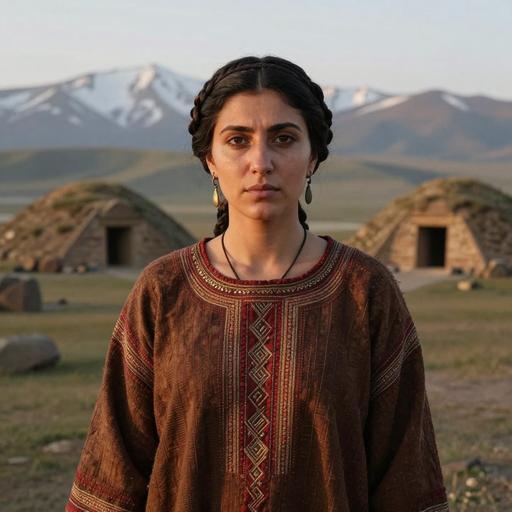
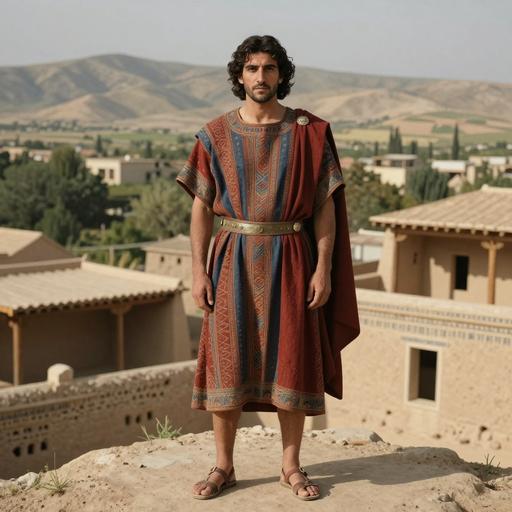
Porträts sind KI-generierte Illustrationen. Probenbezeichnungen und Zugangs-IDs identifizieren die Referenzdatensätze.

Porträt Probe Land Epoche Datum Kultur mtDNA Übereinstimmung
KI-generiertes illustratives Porträt von Ancient individual, Gordion (Central. Ankara), Turkey (323-31 BCE)
Proben-ID: I4030
Turkey Hellenistic Turkey 350-1 BCE Hellenistic Anatolia H20 Direkt
KI-generiertes illustratives Porträt von Lchashen LBA individual, Lchashen cemetery, Armenia (1,420-1,250 BCE)
Proben-ID: I18270
Armenia Armenian LBA 1450-1250 BCE Armenian Late Bronze H20 Direkt
KI-generiertes illustratives Porträt von Medieval Islamic Zira individual, Granada. Huéscar. Cueva Romero, Spain (1,000-1,100 CE)
Proben-ID: I7497
Spain Islamic Zira Period Spain 1000-1100 CE Zira Culture H20a Subklade
KI-generiertes illustratives Porträt von Islamic Civilization individual, Andalusia. Granada. Mondújar (Lecrín). Nécropolis de Torna Alta, Spain (1,500-1,600 CE)
Proben-ID: I7423
Spain Spain NazariPeriod Muslim 1500 CE - 1600 CE Nazari Culture H20c Subklade
KI-generiertes illustratives Porträt von Iberia Muslim individual, Andalusia. Granada. Mondújar (Lecrín). Nécropolis de Torna Alta, Spain (1,500-1,600 CE)
Proben-ID: I7423
Spain Muslim Iberia 1500 CE - 1600 CE AL_ANDALUS H20c Subklade
KI-generiertes illustratives Porträt von MLBA individual, Hatay Province. Tell Atchana/Alalakh, Turkey (1,954-1,772 BCE)
Proben-ID: ALA035
Turkey Middle to Late Bronze Age Turkey 1954-1772 calBCE (3543±24 BP, MAMS-33697) Anatolian Bronze Age H20a Subklade
KI-generiertes illustratives Porträt von IBA individual, Megiddo. Jezreel Valley, Israel (2,340-2,146 BCE)
Proben-ID: I4521
Israel Israel IBA 2340-2146 calBCE (3810±20 BP, PSUAMS-2167) Canaanite H20a Subklade
MATERNAL LINEAGE · ANCIENT DNA

Ancient lineage evidence map

Follow parent clades toward this branch and explore where ancient carriers were found.

Loading ancient observations…

Markers are archaeological find locations. A dashed connector is an uncertain, proposed geographic transition between consecutive branches supported by multiple dated observations; it is not an exact travel route, birthplace or proof of direct descent. Parent-clade samples may belong to other descendant branches. Gaps remain where evidence is insufficient. Sample dates differ from haplogroup formation dates.

Referenzprofil

Trägerverteilungskarte

Geografische Verteilung von 7 antiken DNA-Proben (direkte und Subkladen-Träger von H20)

Direkter Träger Subkladen-Träger
Zeitraumfilter
Alle Zeiträume
Alle Proben werden angezeigt
Referenzprofil

Zeitliche Verteilung

Verteilung der Träger über archäologische Epochen

Referenzprofil

Geografische Verteilung

Anzahlen nach erfasstem Probenland. Sie spiegeln die verfügbare Referenzauswahl wider, nicht Bevölkerungshäufigkeiten.

Referenzprofil

Verteilung Land × Epoche

Vergleichen Sie erfasste Probenanzahlen nach Ländern und archäologischen Epochen. Wählen Sie eine belegte Zelle, um eine Probe anzusehen.

Daten

Daten und Herkunft

Quellenangaben und Datenqualität

Zuletzt aktualisiert 2026-02-16
Konfidenzwert 50/100
Abdeckung Low

Datenquelle

Klassifikation, geschätzte Daten und geografischer Kontext spiegeln die erfassten Referenzdaten wider und können sich bei überarbeiteten Belegen ändern. Die Probenabdeckung ist ungleichmäßig; erfasste Orte und archäologische Zuordnungen begründen weder persönliche Herkunft noch kulturelle Identität.