Zum Hauptinhalt springen
mtDNA · Mütterliche Linie

R30B1

mtDNA Haplogroup R30B1

Ein Referenzprofil für einen Abstammungszweig. Gemeinsame Haplogruppen begründen weder eine familiäre Beziehung noch eine kulturelle Identität.

Referenzprofil

Hintergrund des Zweigs

Historischer Kontext für den mtDNA-Abstammungszweig R30B1

Origins and Evolution

mtDNA haplogroup R30B1 is a downstream subclade of R30B, itself a branch of the broader R30 lineage. Given the parent R30B has an estimated time depth near the Early Holocene (~12 kya) and the observed low, localized diversity of R30B-derived lineages, R30B1 most likely arose on the South Asian subcontinent during the Early–to–Mid Holocene (roughly ~9 kya) as a locally differentiated maternal lineage. The pattern—low frequency and deep regional localization—is consistent with many South Asian-specific R- and M-derived lineages that formed as small, structured populations expanded and fragmented after the Last Glacial Maximum and into the Holocene.

Genetically, R30B1 carries the diagnostic mutations that define R30B with one or more additional private mutations that distinguish it as a named subclade; published population screens and sequence-based studies report only sporadic occurrences, indicating limited demographic expansion compared with some other South Asian maternal clades.

Subclades

At present, R30B1 is a low-diversity clade in available sequence databases and population surveys. Detailed high-resolution mitogenome sequencing in South Asian samples has identified R30B1 as a distinct branch off R30B, but internal substructure within R30B1 is limited in published datasets. Ongoing and future complete mitogenome surveys could reveal additional internal subclades, but currently R30B1 is best treated as a small, regionally restricted sublineage.

Geographical Distribution

R30B1 displays a geographically focused distribution centered on South Asia with rare detections beyond the subcontinent. Modern survey results and forensic/population studies report the haplogroup in diverse Indian populations (tribal, caste, and regional groups), occasional Pakistani and Sri Lankan samples, and very sporadic occurrences in neighboring regions of Central and West Asia and limited Southeast Asian surveys. A small number of detections are also recorded among diasporic South Asian communities. In total, R30B1 is represented by only a handful of modern sequences and a few (four) ancient DNA samples in curated databases, consistent with a long-standing but low-frequency presence in the region.

Historical and Cultural Significance

Because R30B1 is neither common nor widely dispersed, its historical signal is subtle: it likely reflects localized maternal continuity among South Asian populations through the Holocene rather than a major migratory expansion. Its presence in diverse social strata (tribal groups, caste communities, and regional populations) suggests deep, pre-historic establishment in the region prior to later historical processes that reshaped South Asian demography (for example, Bronze Age urbanization, medieval migrations, and historical trade-related movements). The identification of R30B1 in a small number of archaeological samples demonstrates it was present in some past populations sampled by aDNA studies, supporting continuity scenarios at local scales.

Conclusion

R30B1 is an informative example of a low-frequency, regionally restricted South Asian maternal lineage. It contributes to the picture of South Asia as a region of high maternal diversity with many deep, locally evolved haplogroups. While not a marker of large-scale prehistoric movements, R30B1 helps trace microevolutionary and genealogical histories within the subcontinent; fuller understanding will depend on expanded whole-mitogenome sampling of modern and ancient South Asian populations.

Wichtige Punkte

  • Origins and Evolution
  • Subclades
  • Geographical Distribution
  • Historical and Cultural Significance
  • Conclusion
Referenzprofil

Baum und Verwandtschaft

Phylogenetischer Kontext und Subkladen

Entwicklungsweg

Folgen Sie den erfassten übergeordneten Zweigen bis R30B1. Die Daten sind Schätzungen und können sich ändern, wenn Referenzdaten überarbeitet werden.

Schritte Haplogruppe Altersschätzung Archäologische Epoche Vergangene Zeit Unmittelbare Nachkommen Getestete moderne Nachkommen Antike Verknüpfungen
1 R30B1 Aktuell ~9,000 years ago Neolithic 9,000 Jahre 0 2 0
2 R30B ~12,000 years ago Neolithic 12,000 Jahre 2 17 5
3 R30 ~15,000 years ago Mesolithic 15,000 Jahre 2 37 0
4 R ~55,000 years ago Paleolithic 55,000 Jahre 17 22,830 57
5 NA - - - 1 22,830 0
6 N ~60,000 years ago Paleolithic 60,000 Jahre 16 26,150 13
7 L3 ~70,000 years ago Paleolithic 70,000 Jahre 7 30,162 6
8 L3'4 - - - 2 30,212 0
9 L3'4'6 - - - 2 30,216 0
10 L2'3'4'6 - - - 2 31,333 0
11 L2'3'4'5'6'7 - - - 2 31,349 0
12 L1'2'3'4'5'6'7 - - - 2 31,852 0
13 L ~160,000 years ago Paleolithic 160,000 Jahre 2 32,236 5

Subkladen (0)

Endzweig ohne erfasste Subkladen

Geschwisterzweige (1)

Weitere Zweige derselben übergeordneten Haplogruppe

Referenzprofil

Verbreitung weltweit

Geografische Verbreitung und moderne Präsenz

Erfasster Ursprung

South Asia

Moderne Verbreitung

The populations where mtDNA haplogroup R30B1 is found include:

  1. Diverse populations of the Indian subcontinent (including tribal groups, caste communities, and regional populations)
  2. Pakistani population samples (sporadic detections)
  3. Sri Lankan populations (rare detections)
  4. Central Asian groups (occasional detections in some Uzbek/Tajik samples)
  5. Populations on the Iranian plateau and parts of West Asia (low frequency, occasional)
  6. Southeast Asian populations in limited surveys (rare occurrences)
  7. Diasporic South Asian communities globally (low frequency detections)
Historischer Kontext

Ein Zweig durch die Zeit

Geschätzte Entstehung in einer breiten historischen Zeitleiste. Zeitmarken liefern Kontext und implizieren keine Verbindung zu bestimmten Kulturen.

  1. ~10k Jahre zurück

    Neolithische Revolution

    Beginn der Landwirtschaft und feste Siedlungen

  2. ~9k Jahre zurück

    Haplogruppe R30B1

    Geschätzte Entstehung dieses mtDNA-Zweigs; Daten und Orte sind Referenzschätzungen.

    Dieser Zweig
  3. ~5k Jahre zurück

    Bronzezeit

    Metallverarbeitung, Schrift und frühe Zivilisationen

  4. ~3k Jahre zurück

    Eisenzeit

    Eisenwerkzeuge und ausgedehnte Handelsnetze

  5. ~2.5k Jahre zurück

    Klassische Antike

    Blüte griechischer und römischer Kulturen

  6. Gegenwart

    Gegenwart

    Moderne Zeit

Referenzprofil

Archäologischer Kontext

Erfasste archäologische Zuordnungen für den mtDNA-Zweig R30B1

Erfasste Zuordnungen

Diese Bezeichnungen beschreiben archäologische Kontexte erfasster Referenzproben mit Bezug zu R30B1. Eine Zuordnung bedeutet nicht, dass alle Träger einer Kultur angehörten oder einer bestimmten Migrationsroute folgten.

Barikot Boisman Cambodian Iron Age China_Tibet_Sangdalongguo_IA Ganj Dareh Culture Katelai Culture Linear Pottery Culture Loebanr Culture Roopkund Culture Shahr-i Sokhta Culture Taiwanese Iron Ust-Ishim Culture
Kulturzuordnungen basieren auf dem archäologischen Kontext antiker DNA-Proben und können regionale Verknüpfungen in bestimmten Zeiträumen widerspiegeln.
Referenzprofil

Probencatalog

5 direkte Träger der Haplogruppe R30B1

5 angezeigt · 5 passende Proben

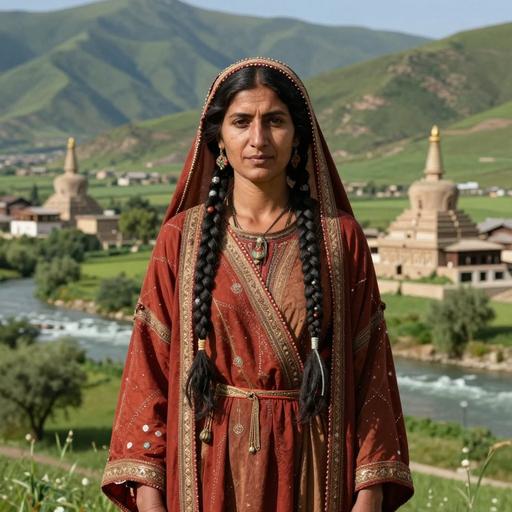
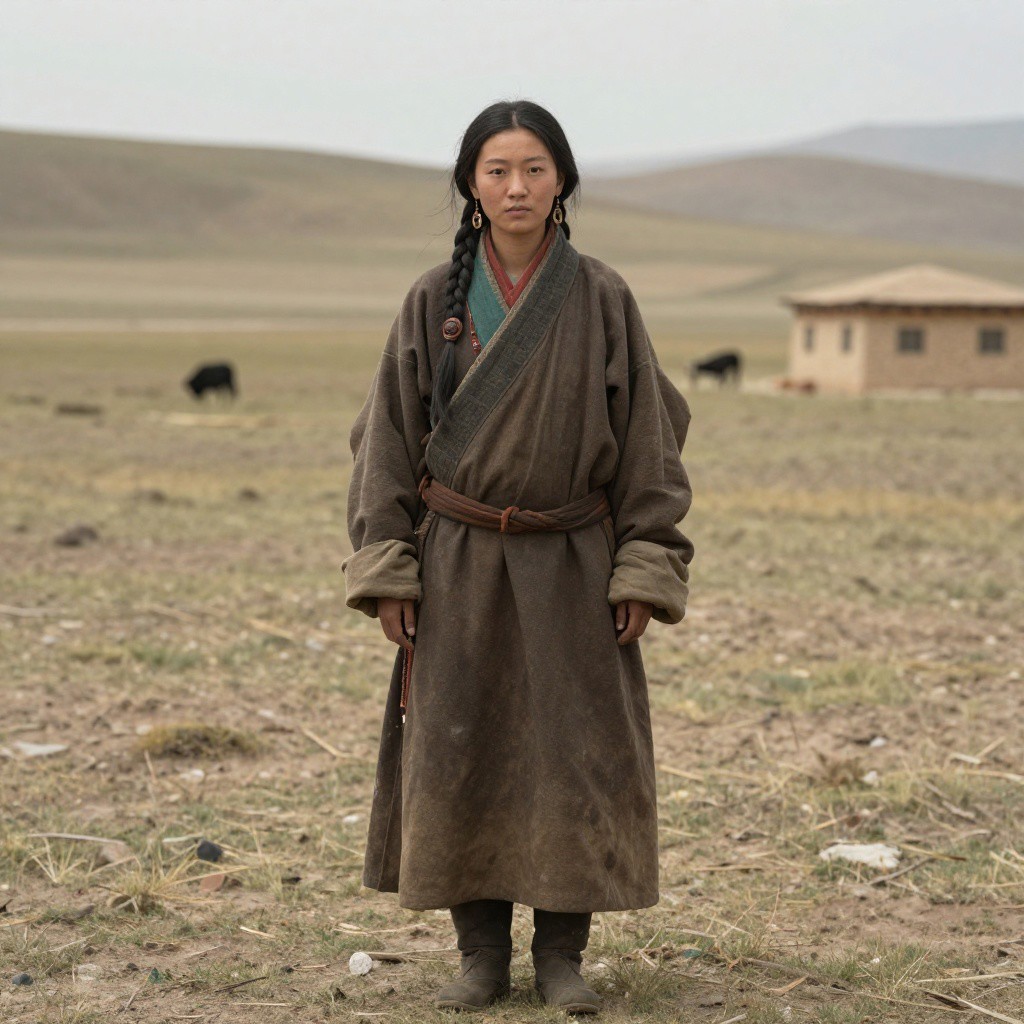
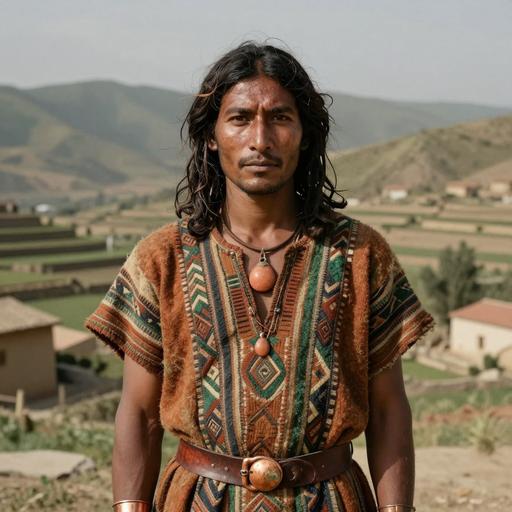
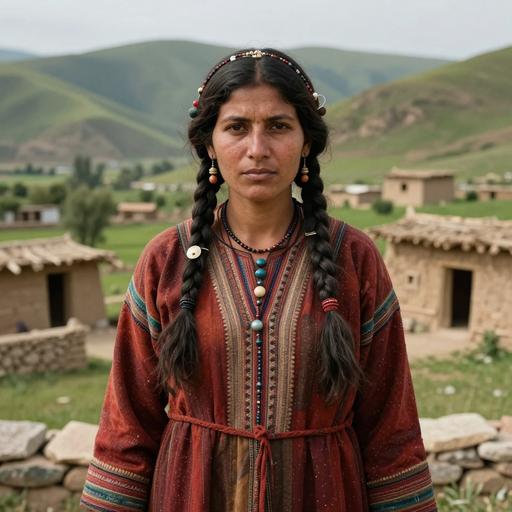
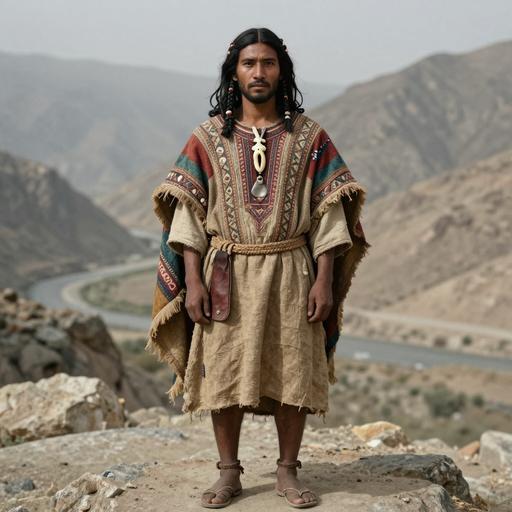
Porträts sind KI-generierte Illustrationen. Probenbezeichnungen und Zugangs-IDs identifizieren die Referenzdatensätze.

Porträt Probe Land Epoche Datum Kultur mtDNA Übereinstimmung
KI-generiertes illustratives Porträt von Historic H individual, Swat Valley. Barikot, Pakistan (45 BCE-66 CE)
Proben-ID: I7714
Pakistan Historic Barikot 46 calBCE - 66 calCE (2005±20 BP, PSUAMS-6207) Barikot R30b1 Direkt
KI-generiertes illustratives Porträt von Tibet Sangdalongguo IA individual, Sangdalongguo (Tibet, Ngari Prefecture), China (374-26 BCE)
Proben-ID: SDLG8
China China Tibet Sangdalongguo IA 350-50 BCE China_Tibet_Sangdalongguo_IA R30b1 Direkt
KI-generiertes illustratives Porträt von IA individual, Swat Valley. Loebanr, Pakistan (1,000-800 BCE)
Proben-ID: I10001
Pakistan The Loebanr Iron Age Culture of Pakistan 1000-800 BCE Loebanr Culture R30b1 Direkt
KI-generiertes illustratives Porträt von IA individual, Swat Valley. Loebanr, Pakistan (1,000-800 BCE)
Proben-ID: I12985
Pakistan The Loebanr Iron Age Culture of Pakistan 1000-800 BCE Loebanr Culture R30b1 Direkt
KI-generiertes illustratives Porträt von IA individual, Swat Valley. Katelai, Pakistan (1,000-800 BCE)
Proben-ID: I12447
Pakistan The Pakistan Katelai Iron Age Culture 1000-800 BCE Katelai Culture R30b1 Direkt
MATERNAL LINEAGE · ANCIENT DNA

Ancient lineage evidence map

Follow parent clades toward this branch and explore where ancient carriers were found.

Loading ancient observations…

Markers are archaeological find locations. A dashed connector is an uncertain, proposed geographic transition between consecutive branches supported by multiple dated observations; it is not an exact travel route, birthplace or proof of direct descent. Parent-clade samples may belong to other descendant branches. Gaps remain where evidence is insufficient. Sample dates differ from haplogroup formation dates.

Referenzprofil

Trägerverteilungskarte

Geografische Verteilung von 5 antiken DNA-Proben (direkte und Subkladen-Träger von R30B1)

Direkter Träger
Zeitraumfilter
Alle Zeiträume
Alle Proben werden angezeigt
Referenzprofil

Zeitliche Verteilung

Verteilung der Träger über archäologische Epochen

Referenzprofil

Geografische Verteilung

Anzahlen nach erfasstem Probenland. Sie spiegeln die verfügbare Referenzauswahl wider, nicht Bevölkerungshäufigkeiten.

Referenzprofil

Verteilung Land × Epoche

Vergleichen Sie erfasste Probenanzahlen nach Ländern und archäologischen Epochen. Wählen Sie eine belegte Zelle, um eine Probe anzusehen.

Daten

Daten und Herkunft

Quellenangaben und Datenqualität

Zuletzt aktualisiert 2026-02-16
Konfidenzwert 50/100
Abdeckung Low

Datenquelle

Klassifikation, geschätzte Daten und geografischer Kontext spiegeln die erfassten Referenzdaten wider und können sich bei überarbeiteten Belegen ändern. Die Probenabdeckung ist ungleichmäßig; erfasste Orte und archäologische Zuordnungen begründen weder persönliche Herkunft noch kulturelle Identität.