Saltar al contenido principal
mtDNA · Materno linaje

A14

mtDNA Haplogroup A14

Un perfil de referencia de una rama de linaje. Compartir haplogrupos no demuestra una relación familiar ni una identidad cultural.

Perfil de referencia

Contexto de la rama

Contexto histórico de la rama de linaje mtDNA A14

Origins and Evolution

mtDNA haplogroup A14 sits as a subclade beneath the parent lineage AA1A and therefore belongs to the broader mitochondrial A clade, a major East Asian/Siberian maternal lineage. Based on its phylogenetic position under AA1A and comparisons with time estimates for nearby A subclades, a reasonable estimate places the divergence of A14 in the early Holocene (roughly 10–15 kya), a period of post-glacial population reorganization in northern Eurasia. The lineage likely represents a local differentiation event in Northeast Asia or adjacent Siberia following the Last Glacial Maximum.

Because A14 is presently rare in published modern datasets and only tentatively observed in a small number of ancient samples, the internal branching (downstream subclades) of A14 is not yet well characterized in public phylogenies; continued sequencing of complete mitogenomes from the region is needed to resolve its internal structure and age more precisely.

Subclades

At present, A14 is best treated as an intermediate clade with limited publicly reported downstream diversity. No well-supported, extensively sampled sublineages of A14 have been described in the broader literature, which suggests either (a) A14 diversified only modestly and remains rare, or (b) deeper sampling (especially of complete mtDNA genomes from Northeast Asia and Siberia) will reveal additional subclades. As more mitogenomes from the Amur, Okhotsk, and adjacent Siberian regions are reported, the topology beneath A14 may become clearer.

Geographical Distribution

Published and unpublished data that include candidate A14 mitotypes point to a northeast Asian / southern Siberian distribution, often at low frequency. Putative occurrences appear in:

  • Indigenous groups of the Amur River basin and adjacent coastal regions
  • Some northern Japanese (Jomon-derived) or Hokkaido-related populations in small numbers
  • Scattered records in north-central Siberian groups and in Holocene ancient remains from northeastern Eurasia

The pattern is consistent with a lineage that evolved in situ in northern East Asia and was maintained by local hunter-gatherer and early fishing/foraging communities, sometimes surviving into modern populations at low frequency.

Historical and Cultural Significance

Because A14 is rare and under-sampled, its direct association with specific archaeological cultures remains tentative. Reasonable inferences based on geography and time depth suggest links to post-glacial Neolithic hunter-gatherer populations of the Amur/Okhotsk region and possibly to Jomon-related groups in northern Japan. If confirmed in additional ancient samples, A14 could help document regional continuity across the Holocene and the maternal ancestry of coastal and riverine forager communities. The lineage does not currently appear to be a major maternal founder in large-scale migrations (for example, it is not a principal Amerindian founder haplogroup), but it contributes to the mosaic of maternal diversity that informs studies of northern Eurasian population structure.

Conclusion

mtDNA haplogroup A14 is an informative but under-characterized maternal clade within the AA1A branch. Its early Holocene origin in Northeast Asia / Siberia and its occurrence at low frequencies in modern and ancient northern populations make it valuable for fine-scale phylogeographic studies of post-glacial recolonization and regional continuity. Increased mitogenome sampling from the Amur basin, Sakhalin, Hokkaido and neighboring Siberian regions is the most direct path to refining age estimates, resolving subclades, and clarifying archaeological associations.

Puntos clave

  • Origins and Evolution
  • Subclades
  • Geographical Distribution
  • Historical and Cultural Significance
  • Conclusion
Perfil de referencia

Árbol y relaciones

Contexto filogenético y subclados

Trayectoria evolutiva

Sigue las ramas superiores registradas hasta A14. Las fechas son estimaciones y pueden cambiar al revisarse los datos de referencia.

Pasos Haplogrupo Antigüedad estimada Época arqueológica Tiempo transcurrido Subclados inmediatos Portadores modernos analizados Referencias antiguas
1 A14 Actual ~12,000 years ago Neolithic 12,000 years 0 2 0
2 AA1A - - - 2 6 0
3 AA1 - - - 14 942 0
4 AA - - - 4 947 0
5 A ~30,000 years ago Paleolithic 30,000 years 4 997 192
6 N ~60,000 years ago Paleolithic 60,000 years 16 26,150 13
7 L3 ~70,000 years ago Paleolithic 70,000 years 7 30,162 6
8 L3'4 - - - 2 30,212 0
9 L3'4'6 - - - 2 30,216 0
10 L2'3'4'6 - - - 2 31,333 0
11 L2'3'4'5'6'7 - - - 2 31,349 0
12 L1'2'3'4'5'6'7 - - - 2 31,852 0
13 L ~160,000 years ago Paleolithic 160,000 years 2 32,236 5

Subclados (0)

Rama terminal: no hay subclados registrados

Ramas hermanas (1)

Otras ramas del mismo haplogrupo superior

Perfil de referencia

En el mundo

Distribución geográfica y presencia moderna

Origen registrado

Northeast Asia / Siberia

Distribución moderna

The populations where mtDNA haplogroup mtDNA haplogroup A14 is found include:

  1. Indigenous groups of the Amur River basin (e.g., Nivkh, Ulchi) and adjacent coastal populations
  2. Northern Japanese / Jomon-related populations (Hokkaido, Ainu-related groups) in small numbers
  3. North-central Siberian groups (e.g., Evenki, Yakut regions) and scattered Holocene ancient remains
Contexto histórico

Una rama a través del tiempo

Formación estimada en una cronología histórica amplia. Los marcadores temporales aportan contexto y no implican relación con culturas concretas.

  1. ~12k años de antigüedad

    Haplogrupo A14

    Formación estimada de esta rama de mtDNA; las fechas y ubicaciones son estimaciones de referencia.

    Esta rama
  2. ~10k años de antigüedad

    Revolución neolítica

    Inicio de la agricultura y formación de comunidades sedentarias

  3. ~5k años de antigüedad

    Edad del Bronce

    Metalurgia, escritura y primeras civilizaciones

  4. ~3k años de antigüedad

    Edad del Hierro

    Herramientas de hierro y ampliación de redes comerciales

  5. ~2.5k años de antigüedad

    Antigüedad clásica

    Desarrollo de las civilizaciones griega y romana

  6. Actualidad

    Actualidad

    Época moderna

Perfil de referencia

Contexto arqueológico

Asociaciones arqueológicas registradas para la rama mtDNA A14

Asociaciones registradas

Estas etiquetas describen contextos arqueológicos registrados para las muestras de referencia enlazadas a A14. Una asociación no demuestra que todos los portadores pertenecieran a una cultura ni siguieran una ruta migratoria concreta.

Kitoi Kuenga Culture Lokomotiv Culture Miaozigou Culture Ob River Culture Russia_AltaiKrai_N Russia_Novosibirsk_N-1 Turkic Period Wutulan Culture
Las atribuciones culturales se basan en el contexto arqueológico de las muestras de ADN antiguo y pueden representar asociaciones regionales de periodos concretos.
Perfil de referencia

Catálogo de muestras

5 portadores directos del haplogrupo A14

5 mostradas · 5 muestras coincidentes

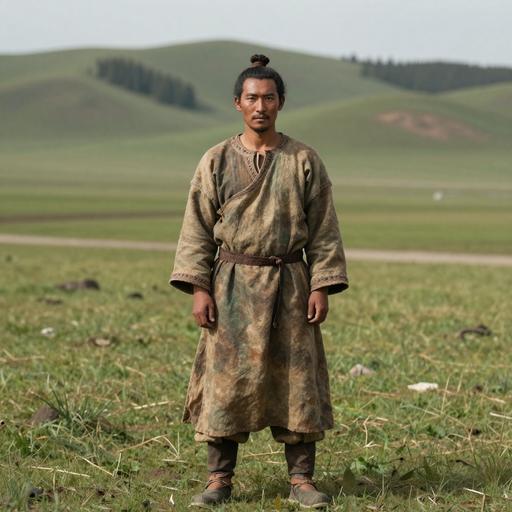
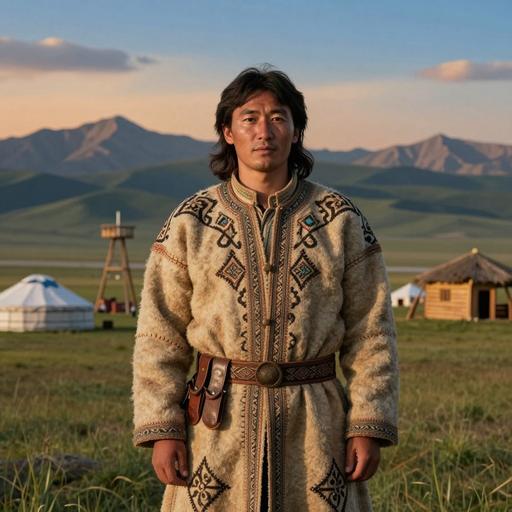
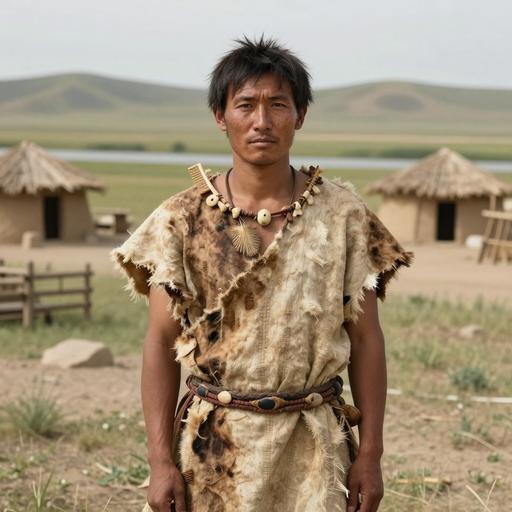
Los retratos son ilustraciones generadas con IA. Las etiquetas de muestra y los identificadores de acceso identifican los registros de referencia.

Retrato Muestra País Época Fecha Cultura mtDNA Coincidencia
Retrato ilustrativo de Xinjiang Wutulan IA possible individual, Xinjiang. Yili Region. Nileke County. Wutulan, China (403-57 BCE) generado con IA
Identificador de muestra: C1647
China China Xinjiang Wutulan IA 450-50 BCE Wutulan Culture A14 Direct
Retrato ilustrativo de Turkic Civilization individual, Tian Shan. Central Steppe, Kazakhstan (645-822 CE) generado con IA
Identificador de muestra: DA89
Kazakhstan Turkic Period Kazakhstan 645 CE - 822 CE Turkic Period A14 Direct
Retrato ilustrativo de Turkic individual, Tian Shan. Central Steppe, Kazakhstan (645-822 CE) generado con IA
Identificador de muestra: DA89
Kazakhstan Medieval Turkic Tribes 645 CE - 822 CE A14 Direct
Retrato ilustrativo de Ancient Chinese Civilization individual, Inner Mongolia. Qahar Youyi Qianqi. Uraharura. Miaozigou site, China (3,550-3,050 BCE) generado con IA
Identificador de muestra: MZGM10-1
China Middle Neolithic Miaozigou, China 3550 BCE - 3050 BCE Miaozigou Culture A14 Direct
Retrato ilustrativo de China Mn individual, Inner Mongolia. Qahar Youyi Qianqi. Uraharura. Miaozigou site, China (3,550-3,050 BCE) generado con IA
Identificador de muestra: MZGM10-1
China Middle Neolithic China 3550 BCE - 3050 BCE A14 Direct
MATERNAL LINAJE · ADN ANTIGUO

Mapa de pruebas de linajes antiguos

Sigue los clados superiores hasta esta rama y explora dónde se encontraron portadores antiguos.

Cargando observaciones antiguas...

Los marcadores son ubicaciones de hallazgos arqueológicos. Una línea discontinua representa una transición geográfica propuesta e incierta entre ramas consecutivas, apoyada en varias observaciones fechadas; no es una ruta de viaje exacta, un lugar de nacimiento ni una prueba de descendencia directa. Las muestras del clado parental pueden pertenecer a otras ramas descendientes. Se mantienen huecos cuando las pruebas son insuficientes. Las fechas de las muestras son distintas de las fechas de formación de los haplogrupos.

Perfil de referencia

Mapa de distribución de portadores

Distribución geográfica de muestras de ADN antiguo (5), portadores directos o de subclados de A14

Portador directo
Filtro de periodo temporal
Todos los periodos
Mostrando todas las muestras
Perfil de referencia

Distribución temporal

Distribución de portadores por periodos arqueológicos

Perfil de referencia

Distribución geográfica

Recuentos por país registrado de las muestras. Reflejan la selección de referencia disponible, no frecuencias de población.

Perfil de referencia

Distribución por país y época

Compara los recuentos de muestras registradas por países y periodos arqueológicos. Selecciona una celda con datos para examinar una muestra.

Datos

Datos y procedencia

Información sobre las fuentes y la calidad de los datos

Última actualización 2026-06-14
Puntuación de confianza 50/100
Cobertura Low

Fuente de datos

La clasificación, las fechas estimadas y el contexto geográfico reflejan los datos de referencia registrados y pueden cambiar al revisarse las pruebas. La cobertura de muestras es desigual; las ubicaciones registradas y las asociaciones arqueológicas no establecen el origen personal ni la identidad cultural.