Saltar al contenido principal
mtDNA · Materno linaje

N

mtDNA Haplogroup N

Un perfil de referencia de una rama de linaje. Compartir haplogrupos no demuestra una relación familiar ni una identidad cultural.

Perfil de referencia

Contexto de la rama

Contexto histórico de la rama de linaje mtDNA N

Origins and Evolution

Haplogroup N is a primary non-African mitochondrial lineage that branched from L3 during the Late Pleistocene associated with the initial Out-of-Africa migration(s). Genetic dating and phylogenetic patterns place the origin of N at roughly ~55–65 thousand years ago (kya), probably in the Near East or northeastern Africa as modern humans expanded into Eurasia. N is a sister clade to haplogroup M; together M and N encompass nearly all non-African maternal diversity.

N itself rapidly diversified soon after its origin. One of its most important descendants is haplogroup R, which in turn gave rise to many of the well-known European, West Asian, South Asian and some Native American lineages. In addition to R, N also produced several independent branches (for example, lineages leading to A, X, N9, Y and others) that were important in early colonization and later regional differentiation across Eurasia and into the Americas and Oceania.

Subclades

Major subclades and descendant groups include:

  • R (descendant of N) — a hugely successful clade that generated many Eurasian and Native American haplogroups (H, V, J, T, U, B, etc.).
  • N1, N2, N9, and other basal N lineages — present in varying frequencies across West Eurasia and East Asia.
  • A and X — lineages derived from or placed within the broader N topology; these are important in East Asia and Native American prehistory (A widespread in Native Americans; X present in some North American groups).

Because many Eurasian haplogroups are downstream of N, the clinical and anthropological significance of N is mainly reflected via its descendants rather than a single common diagnostic mutation present across all populations.

Geographical Distribution

Haplogroup N and its descendant branches are broadly distributed across the non-African world. N-derived haplogroups dominate maternal lineages in Europe, West Asia, South Asia, East Asia, Southeast Asia, Oceania (via derived clades), and the Americas (via derived clades like A and B). Frequencies of basal N (N*) are often low or localized, but the combined presence of N and its descendants (especially R) makes this clade a major component of modern Eurasian and many Oceanian and Native American maternal gene pools.

Within Africa, true N lineages are generally rare but detectable at low frequencies in North Africa and northeastern Africa as a result of early migrations out of Africa and later back-migrations.

Historical and Cultural Significance

  • Upper Paleolithic expansion: N marks the maternal genetic signature of early modern human expansions into Eurasia during the Upper Paleolithic and is linked to coastal and inland dispersal routes taken by anatomically modern humans after leaving Africa.
  • Formation of regional populations: Descendants of N (particularly R and its subclades) were central to the formation of later Eurasian populations, contributing to the maternal makeup of hunter-gatherers and subsequent Neolithic farmer and Bronze Age groups across Europe and Asia.
  • Austronesian and Oceanic dispersals: N-derived lineages are part of the maternal signature carried by Austronesian-speaking peoples and were involved in the colonization of Island Southeast Asia, Near Oceania, and Remote Oceania (Lapita-related expansions).
  • Native American peopling: Some haplogroups important in the peopling of the Americas (A and B, which derive from the N/R lineage complex) trace their ultimate origin to this N-derived Eurasian maternal pool.

Ancient DNA studies repeatedly find lineages derived from N and R in early Eurasian remains, supporting the role of N-lineages in Paleolithic and later population movements.

Conclusion

Haplogroup N is a foundational maternal lineage outside Africa: it represents one of the key branching points immediately after the emergence of L3 and is ancestral to a large portion of present-day Eurasian, Oceanian, and Native American mtDNA diversity. Studies of N and its descendants illuminate major prehistoric migrations — the initial Out-of-Africa dispersal, Upper Paleolithic colonization of Eurasia, later Neolithic and Bronze Age movements, and island-hopping expansions into Oceania and the Americas.

Puntos clave

  • Origins and Evolution
  • Subclades
  • Geographical Distribution
  • Historical and Cultural Significance
  • Conclusion
Perfil de referencia

Árbol y relaciones

Contexto filogenético y subclados

Trayectoria evolutiva

Sigue las ramas superiores registradas hasta N. Las fechas son estimaciones y pueden cambiar al revisarse los datos de referencia.

Pasos Haplogrupo Antigüedad estimada Época arqueológica Tiempo transcurrido Subclados inmediatos Portadores modernos analizados Referencias antiguas
1 N Actual ~60,000 years ago Paleolithic 60,000 years 16 26,150 13
2 L3 ~70,000 years ago Paleolithic 70,000 years 7 30,162 6
3 L3'4 - - - 2 30,212 0
4 L3'4'6 - - - 2 30,216 0
5 L2'3'4'6 - - - 2 31,333 0
6 L2'3'4'5'6'7 - - - 2 31,349 0
7 L1'2'3'4'5'6'7 - - - 2 31,852 0
8 L ~160,000 years ago Paleolithic 160,000 years 2 32,236 5

Ramas hermanas (6)

Otras ramas del mismo haplogrupo superior

Perfil de referencia

En el mundo

Distribución geográfica y presencia moderna

Origen registrado

Near East / Northeast Africa

Distribución moderna

The populations where mtDNA haplogroup N haplogroup N is found include:

  1. Western Europeans (e.g., populations with high R-derived haplogroups such as H, V)
  2. Near Eastern populations (Levant, Arabian Peninsula, Iran)
  3. South Asians (diverse Indian subcontinent groups)
  4. East Asians (Han Chinese, Japanese, Koreans)
  5. Southeast Asians and Austronesian-speaking populations (Philippines, Indonesia, Madagascar via Austronesian link)
  6. Indigenous Australians and Papuan groups (via derived N/R clades)
  7. Native American groups (through N-derived lineages such as A and B)
  8. North African populations (low frequencies due to ancient and historic gene flow)
  9. Central Asian and Siberian groups (various N-lineages including N9, Y, A)
  10. Ancient Eurasian hunter-gatherer and early farmer remains (archaeogenetic contexts)
Contexto histórico

Una rama a través del tiempo

Formación estimada en una cronología histórica amplia. Los marcadores temporales aportan contexto y no implican relación con culturas concretas.

  1. ~70k años de antigüedad

    Expansión fuera de África

    Migración importante de humanos modernos fuera de África

  2. ~60k años de antigüedad

    Haplogrupo N

    Formación estimada de esta rama de mtDNA; las fechas y ubicaciones son estimaciones de referencia.

    Esta rama
  3. ~50k años de antigüedad

    Paleolítico superior

    Desarrollo de herramientas, arte y diversidad cultural

  4. ~20k años de antigüedad

    Último máximo glacial

    Máxima extensión de la última glaciación y aislamiento de poblaciones

  5. ~10k años de antigüedad

    Revolución neolítica

    Inicio de la agricultura y formación de comunidades sedentarias

  6. ~5k años de antigüedad

    Edad del Bronce

    Metalurgia, escritura y primeras civilizaciones

  7. ~3k años de antigüedad

    Edad del Hierro

    Herramientas de hierro y ampliación de redes comerciales

  8. ~2.5k años de antigüedad

    Antigüedad clásica

    Desarrollo de las civilizaciones griega y romana

  9. Actualidad

    Actualidad

    Época moderna

Perfil de referencia

Contexto arqueológico

Asociaciones arqueológicas registradas para la rama mtDNA N

Asociaciones registradas

Estas etiquetas describen contextos arqueológicos registrados para las muestras de referencia enlazadas a N. Una asociación no demuestra que todos los portadores pertenecieran a una cultura ni siguieran una ruta migratoria concreta.

Austria_Avar Bohemian Hunter-Gatherer Buran-Kaya Corded Ware Dzudzuana Early Avar Early Bronze Anatolia France_Megalithic_MN Funnel Beaker Culture Gonur Culture Hetian Culture Iraqi PPN Peștera cu Oase Welsh Neolithic
Las atribuciones culturales se basan en el contexto arqueológico de las muestras de ADN antiguo y pueden representar asociaciones regionales de periodos concretos.
Perfil de referencia

Catálogo de muestras

7 portadores directos y 6 portadores de subclados del haplogrupo N

10 mostradas · 13 muestras coincidentes

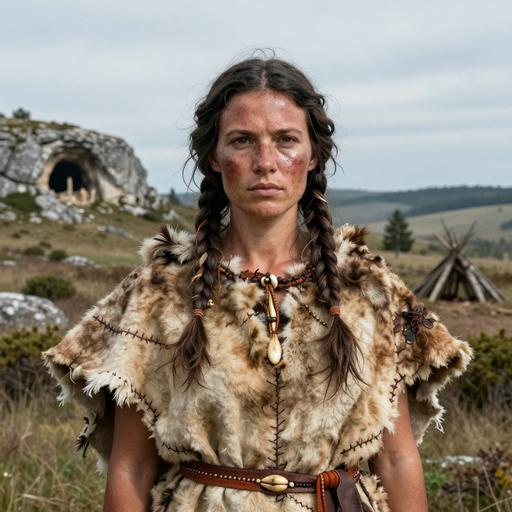
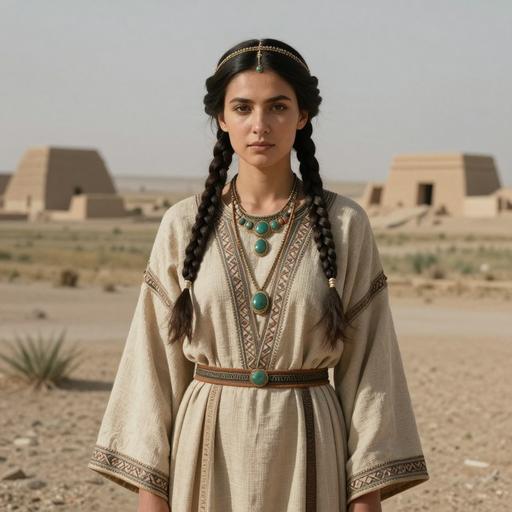
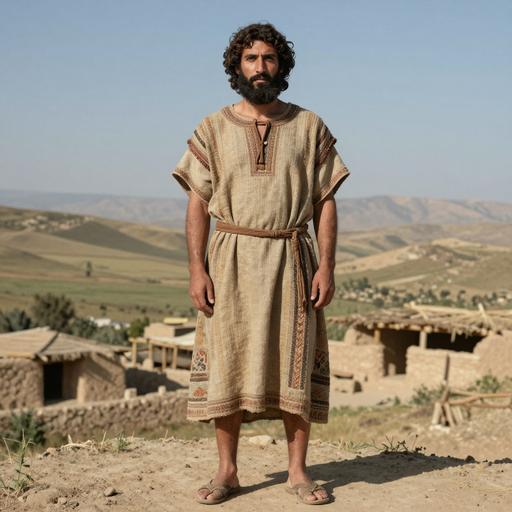
Los retratos son ilustraciones generadas con IA. Las etiquetas de muestra y los identificadores de acceso identifican los registros de referencia.

Retrato Muestra País Época Fecha Cultura mtDNA Coincidencia
Retrato ilustrativo de Silk Road Civilizations individual, Xinjiang. Hetian Region. Luopu County. Hetian, China (1-400 CE) generado con IA
Identificador de muestra: C391
China Historical Period Hetian, Xinjiang, China 1 CE - 400 CE Hetian Culture N Direct
Retrato ilustrativo de Elite Early Avar-o High East Asia individual, Bács-Kiskun County. Kunpeszér-Felsőpeszériút. Homokbánya, Hungary (541-643 CE) generado con IA
Identificador de muestra: KFP-7
Hungary Hungary EarlyAvar 541-643 calCE (1495±30 BP) Early Avar N Direct
Retrato ilustrativo de European Neolithic individual, Bohemia. Kolín-Šťáralka, Czech Republic (3,800-3,500 BCE) generado con IA
Identificador de muestra: KOB003
Czech Republic Neolithic Funnel Beaker Culture, Bohemia, Czech Republic 3800 BCE - 3500 BCE Funnel Beaker Culture N Direct
Retrato ilustrativo de Fertile Crescent Civilization individual, Bestansur, Iraq (8,000-7,000 BCE) generado con IA
Identificador de muestra: I8959
Iraq Iraq PPN 8000 BCE - 7000 BCE Iraqi PPN N Direct
Retrato ilustrativo de Pre-Agricultural Caucasian individual, Dzudzuana Cave (Imereti, Raion Chiatura, Chiatura), Georgia (25,550-23,250 BCE) generado con IA
Identificador de muestra: I11857
Georgia Dzudzuana Cave Culture 25550 BCE - 23250 BCE Dzudzuana N Direct
Retrato ilustrativo de Pre-Agricultural Caucasian individual, Dzudzuana Cave (Imereti, Raion Chiatura, Chiatura), Georgia (25,550-23,250 BCE) generado con IA
Identificador de muestra: I11857
Georgia Dzudzuana Cave Culture 25550 BCE - 23250 BCE Dzudzuana N Direct
Retrato ilustrativo de European Hunter-Gatherers individual, Bohemia. Koněprusy Caves. Zlatý kůň, Czech Republic (33,749-30,151 BCE) generado con IA
Identificador de muestra: ZKU002
Czech Republic Upper Paleolithic to Hunter-Gatherer in Bohemia 33749 BCE - 30151 BCE Bohemian Hunter-Gatherer N Direct
Retrato ilustrativo de Grand Est Bas Rhin EBA individual, Alsace. Lingolsheim, France (2,461-2,206 BCE) generado con IA
Identificador de muestra: TU918(SX32)
France Early Bronze Age Lingolsheim, Alsace, France 2461-2206 calBCE (3862±34 BP, BE-8009.1.1) Lingolsheim Culture N1 Subclado
Retrato ilustrativo de BA1-1 individual, Gonur, Turkmenistan (2,500-1,600 BCE) generado con IA
Identificador de muestra: I6126
Turkmenistan Bronze Age Gonur 2500-1600 BCE Gonur Culture N2 Subclado
Retrato ilustrativo de Czechia EBA Corded Ware individual, Bohemia. Vliněves, Czech Republic (2,880-2,670 BCE) generado con IA
Identificador de muestra: VLI015
Czech Republic Corded Ware Culture, Bohemia, Czech Republic 2900-2650 BCE Corded Ware N2 Subclado
MATERNAL LINAJE · ADN ANTIGUO

Mapa de pruebas de linajes antiguos

Sigue los clados superiores hasta esta rama y explora dónde se encontraron portadores antiguos.

Cargando observaciones antiguas...

Los marcadores son ubicaciones de hallazgos arqueológicos. Una línea discontinua representa una transición geográfica propuesta e incierta entre ramas consecutivas, apoyada en varias observaciones fechadas; no es una ruta de viaje exacta, un lugar de nacimiento ni una prueba de descendencia directa. Las muestras del clado parental pueden pertenecer a otras ramas descendientes. Se mantienen huecos cuando las pruebas son insuficientes. Las fechas de las muestras son distintas de las fechas de formación de los haplogrupos.

Perfil de referencia

Mapa de distribución de portadores

Distribución geográfica de muestras de ADN antiguo (13), portadores directos o de subclados de N

Portador directo Portador de un subclado
Filtro de periodo temporal
Todos los periodos
Mostrando todas las muestras
Perfil de referencia

Distribución temporal

Distribución de portadores por periodos arqueológicos

Perfil de referencia

Distribución geográfica

Recuentos por país registrado de las muestras. Reflejan la selección de referencia disponible, no frecuencias de población.

Perfil de referencia

Distribución por país y época

Compara los recuentos de muestras registradas por países y periodos arqueológicos. Selecciona una celda con datos para examinar una muestra.

Datos

Datos y procedencia

Información sobre las fuentes y la calidad de los datos

Última actualización 2026-02-09

Fuente de datos

La clasificación, las fechas estimadas y el contexto geográfico reflejan los datos de referencia registrados y pueden cambiar al revisarse las pruebas. La cobertura de muestras es desigual; las ubicaciones registradas y las asociaciones arqueológicas no establecen el origen personal ni la identidad cultural.