Saltar al contenido principal
mtDNA · Materno linaje

B5

mtDNA Haplogroup B5

Un perfil de referencia de una rama de linaje. Compartir haplogrupos no demuestra una relación familiar ni una identidad cultural.

Perfil de referencia

Contexto de la rama

Contexto histórico de la rama de linaje mtDNA B5

Origins and Evolution

mtDNA haplogroup B5 is a descendant branch of haplogroup B, which itself dates back to the Upper Paleolithic in East/Southeast Asia. While parent haplogroup B is commonly dated to ~50 kya, B5 represents a later diversification event likely occurring in the Late Pleistocene to early Holocene (roughly 15–20 kya). This timing is consistent with post-Last Glacial Maximum (LGM) demographic expansions and regional refugial survivals on mainland East Asia and adjacent coastal zones. B5 diversified locally into multiple sublineages as human groups expanded along coastal and riverine corridors and adapted to changing climates and resource bases.

Subclades (if applicable)

B5 contains several recognized subclades (commonly reported as B5a, B5b, B5c, etc.) that show differing geographic focuses and relative ages. B5a is often reported at appreciable frequencies in northern and central East Asia (including Han Chinese, Koreans, and Japanese), while other B5 sublineages show stronger representation in Southeast Asia, Taiwan, and populations associated with Austronesian-speaking groups. The internal branching patterns indicate multiple regional radiations rather than a single rapid long-range dispersal, although later human movements (notably Neolithic coastal migrations and the Austronesian expansion) redistributed some B5 lineages across islands of Island Southeast Asia and into parts of Oceania.

Geographical Distribution

B5 is primarily an East and Southeast Asian maternal lineage with highest prevalence and diversity on the Asian mainland and island margins. It is found in:

  • Mainland East Asia (China, Korea, Japan) with several subclades concentrated in different provinces and population groups.
  • Mainland Southeast Asia (Vietnam, Thailand, Myanmar) where B5 co-occurs with other East/Southeast Asian mtDNA lineages.
  • Island Southeast Asia and Taiwan, including some Austronesian-speaking indigenous groups, where B5 subclades are part of the maternal mix carried during prehistoric maritime movements.
  • Lower-frequency occurrences in parts of Near Oceania and Remote Oceania tied to later island-hopping and Austronesian-mediated contacts.

Overall, the highest diversity of B5 lineages on the mainland supports an origin and early diversification there, with subsequent island dispersals.

Historical and Cultural Significance

B5 lineages likely accompanied coastal forager and early farming communities in East and Southeast Asia. The clade's timing and geography make it compatible with involvement in postglacial re-expansions, the spread of early Holocene coastal adaptations, and later Neolithic/Maritime expansions, including the Austronesian dispersal from Taiwan and coastal southern China into Island Southeast Asia and the Pacific (~4–5 kya). In continental contexts, B5 is found among populations associated with early rice and other agricultural systems, where maternal lineages were reshaped by demographic growth and local admixture.

Conclusion

mtDNA haplogroup B5 is an informative regional maternal branch of haplogroup B that records episodes of Late Pleistocene survival and Holocene expansion in East and Southeast Asia. Its pattern of internal diversity on the mainland combined with presence in island populations makes B5 useful for reconstructing coastal and maritime prehistoric movements, including aspects of the Austronesian expansion and regional Neolithic processes.

Puntos clave

  • Origins and Evolution
  • Subclades (if applicable)
  • Geographical Distribution
  • Historical and Cultural Significance
  • Conclusion
Perfil de referencia

Árbol y relaciones

Contexto filogenético y subclados

Trayectoria evolutiva

Sigue las ramas superiores registradas hasta B5. Las fechas son estimaciones y pueden cambiar al revisarse los datos de referencia.

Pasos Haplogrupo Antigüedad estimada Época arqueológica Tiempo transcurrido Subclados inmediatos Portadores modernos analizados Referencias antiguas
1 B5 Actual ~18,000 years ago Mesolithic 18,000 years 3 88 2
2 B4'5 ~40,000 years ago Paleolithic 40,000 years 2 1,432 0
3 RA - - - 3 1,452 0
4 R ~55,000 years ago Paleolithic 55,000 years 17 22,830 57
5 NA - - - 1 22,830 0
6 N ~60,000 years ago Paleolithic 60,000 years 16 26,150 13
7 L3 ~70,000 years ago Paleolithic 70,000 years 7 30,162 6
8 L3'4 - - - 2 30,212 0
9 L3'4'6 - - - 2 30,216 0
10 L2'3'4'6 - - - 2 31,333 0
11 L2'3'4'5'6'7 - - - 2 31,349 0
12 L1'2'3'4'5'6'7 - - - 2 31,852 0
13 L ~160,000 years ago Paleolithic 160,000 years 2 32,236 5

Ramas hermanas (1)

Otras ramas del mismo haplogrupo superior

Perfil de referencia

En el mundo

Distribución geográfica y presencia moderna

Origen registrado

East and Southeast Asia

Distribución moderna

The populations where mtDNA haplogroup B5 is found include:

  1. Han Chinese and other East Asian populations (China, Korea, Japan)
  2. Southeast Asian groups (Vietnamese, Thai, Burmese, Malay peoples, some Filipino groups)
  3. Indigenous Taiwanese (Austronesian-speaking groups)
  4. Austronesian-speaking Pacific Islanders (selected Polynesians and Micronesians via maritime dispersals)
  5. Island Southeast Asian populations (Borneo, Sulawesi, Lesser Sunda islands)
  6. Coastal and riverine communities involved in Holocene maritime and coastal dispersals
  7. Mainland hunter–gatherer and early farming populations in parts of Indochina
  8. Low-frequency occurrences in parts of Near Oceania tied to later contact
Contexto histórico

Una rama a través del tiempo

Formación estimada en una cronología histórica amplia. Los marcadores temporales aportan contexto y no implican relación con culturas concretas.

  1. ~20k años de antigüedad

    Último máximo glacial

    Máxima extensión de la última glaciación y aislamiento de poblaciones

  2. ~18k años de antigüedad

    Haplogrupo B5

    Formación estimada de esta rama de mtDNA; las fechas y ubicaciones son estimaciones de referencia.

    Esta rama
  3. ~10k años de antigüedad

    Revolución neolítica

    Inicio de la agricultura y formación de comunidades sedentarias

  4. ~5k años de antigüedad

    Edad del Bronce

    Metalurgia, escritura y primeras civilizaciones

  5. ~3k años de antigüedad

    Edad del Hierro

    Herramientas de hierro y ampliación de redes comerciales

  6. ~2.5k años de antigüedad

    Antigüedad clásica

    Desarrollo de las civilizaciones griega y romana

  7. Actualidad

    Actualidad

    Época moderna

Perfil de referencia

Contexto arqueológico

Asociaciones arqueológicas registradas para la rama mtDNA B5

Asociaciones registradas

Estas etiquetas describen contextos arqueológicos registrados para las muestras de referencia enlazadas a B5. Una asociación no demuestra que todos los portadores pertenecieran a una cultura ni siguieran una ruta migratoria concreta.

Ancient Beringian Chinese Paleolithic Coastal Neolithic Lapa do Santo Mesolithic British Slab Grave Culture Tianyuan Culture Trail Creek Culture
Las atribuciones culturales se basan en el contexto arqueológico de las muestras de ADN antiguo y pueden representar asociaciones regionales de periodos concretos.
Perfil de referencia

Catálogo de muestras

2 portadores de subclados del haplogrupo B5 (sin portadores directos en la selección de referencia actual)

2 mostradas · 2 muestras coincidentes

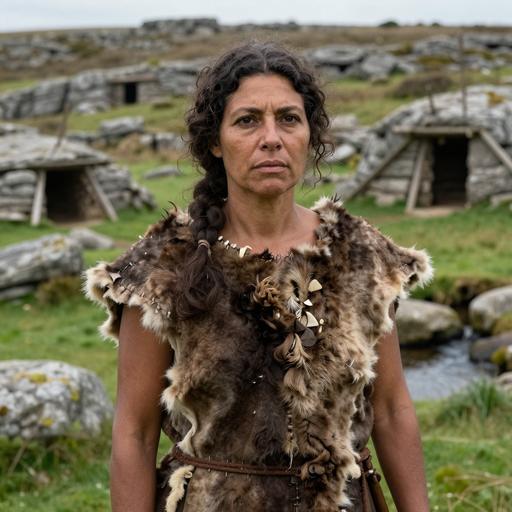
Los retratos son ilustraciones generadas con IA. Las etiquetas de muestra y los identificadores de acceso identifican los registros de referencia.

Retrato Muestra País Época Fecha Cultura mtDNA Coincidencia
Retrato ilustrativo de Western European Hunter-Gatherers individual, England. Somerset. Burrington Combe. Aveline's Hole, United Kingdom (8,751-8,433 BCE) generado con IA
Identificador de muestra: I6745
United Kingdom England Mesolithic 8751 BCE - 8433 BCE Mesolithic British B5/H13/HV Subclado
Retrato ilustrativo de Britain Hg individual, England. Somerset. Burrington Combe. Aveline's Hole, United Kingdom (8,751-8,433 BCE) generado con IA
Identificador de muestra: I6745
United Kingdom Ancient Hunter-Gatherers of Britain 8751 BCE - 8433 BCE B5/H13/HV Subclado
MATERNAL LINAJE · ADN ANTIGUO

Mapa de pruebas de linajes antiguos

Sigue los clados superiores hasta esta rama y explora dónde se encontraron portadores antiguos.

Cargando observaciones antiguas...

Los marcadores son ubicaciones de hallazgos arqueológicos. Una línea discontinua representa una transición geográfica propuesta e incierta entre ramas consecutivas, apoyada en varias observaciones fechadas; no es una ruta de viaje exacta, un lugar de nacimiento ni una prueba de descendencia directa. Las muestras del clado parental pueden pertenecer a otras ramas descendientes. Se mantienen huecos cuando las pruebas son insuficientes. Las fechas de las muestras son distintas de las fechas de formación de los haplogrupos.

Perfil de referencia

Mapa de distribución de portadores

Distribución geográfica de muestras de ADN antiguo (2), portadores directos o de subclados de B5

Portador de un subclado
Filtro de periodo temporal
Todos los periodos
Mostrando todas las muestras
Perfil de referencia

Distribución temporal

Distribución de portadores por periodos arqueológicos

Perfil de referencia

Distribución geográfica

Recuentos por país registrado de las muestras. Reflejan la selección de referencia disponible, no frecuencias de población.

Perfil de referencia

Distribución por país y época

Compara los recuentos de muestras registradas por países y periodos arqueológicos. Selecciona una celda con datos para examinar una muestra.

Datos

Datos y procedencia

Información sobre las fuentes y la calidad de los datos

Última actualización 2026-02-09

Fuente de datos

La clasificación, las fechas estimadas y el contexto geográfico reflejan los datos de referencia registrados y pueden cambiar al revisarse las pruebas. La cobertura de muestras es desigual; las ubicaciones registradas y las asociaciones arqueológicas no establecen el origen personal ni la identidad cultural.