Saltar al contenido principal
mtDNA · Materno linaje

H1BD

mtDNA Haplogroup H1BD

Un perfil de referencia de una rama de linaje. Compartir haplogrupos no demuestra una relación familiar ni una identidad cultural.

Perfil de referencia

Contexto de la rama

Contexto histórico de la rama de linaje mtDNA H1BD

Origins and Evolution

mtDNA haplogroup H1BD is a downstream branch of H1B, itself a subclade of the widespread Western European lineage H1. Based on the phylogenetic position within H1 and the known age of H1B (early Holocene, roughly ~9 kya), H1BD most plausibly arose later, during the Neolithic or Chalcolithic period on the Iberian/Atlantic fringe (estimated here at ~6 kya). As with other H1 subclades, H1BD likely reflects local continuity of maternal lineages that expanded regionally after the Last Glacial Maximum and persisted through subsequent cultural transitions.

Because H1BD is rare in modern datasets and has been observed in only a small number of ancient samples (two in the referenced database), its internal diversity is limited in current public data; this constrains precise coalescence estimates and fine-scale phylogeographic reconstruction. Nevertheless, its placement as a descendant of H1B ties it to the broader pattern of Western European maternal lineages that show strong ties to Iberian and Atlantic refuge populations and later Neolithic dispersals.

Subclades

At present, H1BD is itself a relatively narrowly defined subclade with little publicly documented downstream diversity. Few identified sub-branches have been robustly reported in large mtDNA trees, likely reflecting its low frequency and limited sampling. Future sequencing of complete mitogenomes from Iberian and adjacent populations, as well as additional ancient DNA, could reveal further internal structure and allow refinement of its age and migration history.

Geographical Distribution

H1BD is geographically concentrated in Western Iberia and the nearby Atlantic fringe, with low-frequency occurrences elsewhere in Western and Southern Europe and detectable traces in Northwest Africa. Modern sampling shows the highest relative incidence in Iberian populations (including some Basque samples), while sporadic occurrences appear in France, the British Isles, Mediterranean islands, parts of Italy, and in Maghrebi Berber groups. The haplogroup also appears at very low frequencies in parts of Northern and Central Europe and occasionally in datasets from the Near East, consistent with long‑term mobility around the western Mediterranean.

The small number of ancient occurrences (two in the referenced database) indicates H1BD was present in archaeological contexts, supporting continuity of some maternal lineages from prehistoric to modern populations in the region, but the rarity of detections means geographic inferences are tentative.

Historical and Cultural Significance

Because H1BD is a rare derivative of a typical Western European maternal lineage, its broader significance is as part of the genetic signature of post‑glacial recolonization and later Neolithic and metal‑age demographic processes along the Atlantic and Mediterranean margins. It may have been carried by early farmers or by local hunter‑gatherer-descended women who assimilated into expanding farming societies.

H1BD could also have been moved in smaller numbers during later episodes of mobility — for example, Bronze Age migrations (including maritime networks and Bell Beaker contacts), Roman and Phoenician movements across the Mediterranean, and historic period flows between Iberia and Northwest Africa. However, because H1BD is uncommon, it is not diagnostic of any single archaeological culture and is best interpreted as part of a mosaic of maternal lineages reflecting local continuity with episodic external contacts.

Conclusion

H1BD is a low-frequency, regionally concentrated mtDNA subclade best understood as a localized offshoot of H1B on the Iberian/Atlantic fringe, arising during the later Neolithic/Chalcolithic. Current evidence points to Iberian roots with limited spread into adjacent European and North African regions; improving mitogenome sampling and more ancient DNA will be necessary to clarify its origin date, internal structure, and precise migratory history. For now, H1BD serves as an example of how rare maternal subclades preserve fine-scale signals of past demography in Western Europe.

Puntos clave

  • Origins and Evolution
  • Subclades
  • Geographical Distribution
  • Historical and Cultural Significance
  • Conclusion
Perfil de referencia

Árbol y relaciones

Contexto filogenético y subclados

Trayectoria evolutiva

Sigue las ramas superiores registradas hasta H1BD. Las fechas son estimaciones y pueden cambiar al revisarse los datos de referencia.

Pasos Haplogrupo Antigüedad estimada Época arqueológica Tiempo transcurrido Subclados inmediatos Portadores modernos analizados Referencias antiguas
1 H1BD Actual ~6,000 years ago Chalcolithic 6,000 years 0 4 2
2 H1 ~15,000 years ago Mesolithic 15,000 years 56 2,667 74
3 H ~25,000 years ago Paleolithic 25,000 years 78 9,404 991
4 HV ~30,000 years ago Paleolithic 30,000 years 14 11,092 228
5 R0 ~15,000 years ago Mesolithic 15,000 years 2 11,230 4
6 R ~55,000 years ago Paleolithic 55,000 years 17 22,830 57
7 NA - - - 1 22,830 0
8 N ~60,000 years ago Paleolithic 60,000 years 16 26,150 13
9 L3 ~70,000 years ago Paleolithic 70,000 years 7 30,162 6
10 L3'4 - - - 2 30,212 0
11 L3'4'6 - - - 2 30,216 0
12 L2'3'4'6 - - - 2 31,333 0
13 L2'3'4'5'6'7 - - - 2 31,349 0
14 L1'2'3'4'5'6'7 - - - 2 31,852 0
15 L ~160,000 years ago Paleolithic 160,000 years 2 32,236 5

Subclados (0)

Rama terminal: no hay subclados registrados

Perfil de referencia

En el mundo

Distribución geográfica y presencia moderna

Origen registrado

Iberian Peninsula / Western Europe

Distribución moderna

The populations where MTDNA haplogroup H1BD is found include:

  1. Iberian populations (Spain, Portugal, including Basques)
  2. Western European populations (France, Britain, Ireland)
  3. Southern Europe (Italy, Sardinia, Sicily)
  4. Northwest African populations (Morocco, Algeria, Berber groups)
  5. Scandinavian populations (Norway, Sweden, Denmark) at low frequencies
  6. Central and Eastern European populations (Germany, Poland) at lower frequencies
  7. Near Eastern populations (Anatolia, Levant) at very low frequencies
  8. Mediterranean island communities and sporadic occurrences in some Jewish communities
Contexto histórico

Una rama a través del tiempo

Formación estimada en una cronología histórica amplia. Los marcadores temporales aportan contexto y no implican relación con culturas concretas.

  1. ~10k años de antigüedad

    Revolución neolítica

    Inicio de la agricultura y formación de comunidades sedentarias

  2. ~6k años de antigüedad

    Haplogrupo H1BD

    Formación estimada de esta rama de mtDNA; las fechas y ubicaciones son estimaciones de referencia.

    Esta rama
  3. ~5k años de antigüedad

    Edad del Bronce

    Metalurgia, escritura y primeras civilizaciones

  4. ~3k años de antigüedad

    Edad del Hierro

    Herramientas de hierro y ampliación de redes comerciales

  5. ~2.5k años de antigüedad

    Antigüedad clásica

    Desarrollo de las civilizaciones griega y romana

  6. Actualidad

    Actualidad

    Época moderna

Perfil de referencia

Contexto arqueológico

Asociaciones arqueológicas registradas para la rama mtDNA H1BD

Asociaciones registradas

Estas etiquetas describen contextos arqueológicos registrados para las muestras de referencia enlazadas a H1BD. Una asociación no demuestra que todos los portadores pertenecieran a una cultura ni siguieran una ruta migratoria concreta.

Austria_Avar Bell Beaker El Argar Fatyanovo Culture Globular Amphora Kilteasheen Russia_Omsk_EMBA_Irtysh_SeimaTurbino-oYamnaya Russia_Tatarstan_EarlyMedieval_Karayakupovo Saxon Drantum Unetice Culture Viking Denmark Zealand Saxon
Las atribuciones culturales se basan en el contexto arqueológico de las muestras de ADN antiguo y pueden representar asociaciones regionales de periodos concretos.
Perfil de referencia

Catálogo de muestras

2 portadores directos del haplogrupo H1BD

2 mostradas · 2 muestras coincidentes

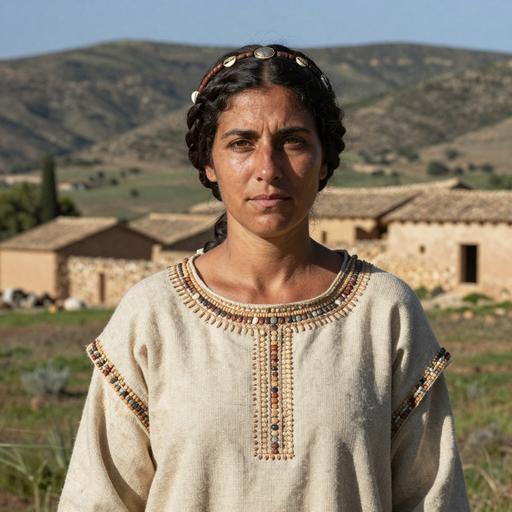
Los retratos son ilustraciones generadas con IA. Las etiquetas de muestra y los identificadores de acceso identifican los registros de referencia.

Retrato Muestra País Época Fecha Cultura mtDNA Coincidencia
Retrato ilustrativo de Drantum Medieval Saxon individual, Lower Saxony. Drantum, Germany (600-900 CE) generado con IA
Identificador de muestra: DRU017
Germany Saxon Medieval Drantum, Germany 600-900 CE Saxon Drantum H1bd Direct
Retrato ilustrativo de EBA individual, Murcia. Pliego. La Almoloya, Spain (2,000-1,750 BCE) generado con IA
Identificador de muestra: ALM029
Spain The Argaric Culture of Spain 2000-1750 BCE El Argar H1bd Direct
MATERNAL LINAJE · ADN ANTIGUO

Mapa de pruebas de linajes antiguos

Sigue los clados superiores hasta esta rama y explora dónde se encontraron portadores antiguos.

Cargando observaciones antiguas...

Los marcadores son ubicaciones de hallazgos arqueológicos. Una línea discontinua representa una transición geográfica propuesta e incierta entre ramas consecutivas, apoyada en varias observaciones fechadas; no es una ruta de viaje exacta, un lugar de nacimiento ni una prueba de descendencia directa. Las muestras del clado parental pueden pertenecer a otras ramas descendientes. Se mantienen huecos cuando las pruebas son insuficientes. Las fechas de las muestras son distintas de las fechas de formación de los haplogrupos.

Perfil de referencia

Mapa de distribución de portadores

Distribución geográfica de muestras de ADN antiguo (2), portadores directos o de subclados de H1BD

Portador directo
Filtro de periodo temporal
Todos los periodos
Mostrando todas las muestras
Perfil de referencia

Distribución temporal

Distribución de portadores por periodos arqueológicos

Perfil de referencia

Distribución geográfica

Recuentos por país registrado de las muestras. Reflejan la selección de referencia disponible, no frecuencias de población.

Perfil de referencia

Distribución por país y época

Compara los recuentos de muestras registradas por países y periodos arqueológicos. Selecciona una celda con datos para examinar una muestra.

Datos

Datos y procedencia

Información sobre las fuentes y la calidad de los datos

Última actualización 2026-02-16
Puntuación de confianza 50/100
Cobertura Low

Fuente de datos

La clasificación, las fechas estimadas y el contexto geográfico reflejan los datos de referencia registrados y pueden cambiar al revisarse las pruebas. La cobertura de muestras es desigual; las ubicaciones registradas y las asociaciones arqueológicas no establecen el origen personal ni la identidad cultural.