Saltar al contenido principal
mtDNA · Materno linaje

T1A3

mtDNA Haplogroup T1A3

Un perfil de referencia de una rama de linaje. Compartir haplogrupos no demuestra una relación familiar ni una identidad cultural.

Perfil de referencia

Contexto de la rama

Contexto histórico de la rama de linaje mtDNA T1A3

Origins and Evolution

mtDNA haplogroup T1A3 is a subclade of T1A, itself a daughter lineage of haplogroup T1 that is associated with early Near Eastern farming populations. Based on the phylogenetic position of T1A3 beneath T1A and comparative coalescent estimates for related T1A subclades, T1A3 most likely arose after the initial Neolithic expansions from the Near East, plausibly in the mid to late Holocene (on the order of ~4–6 kya). Its emergence fits a pattern in which early Near Eastern maternal lineages diversified further as they dispersed into the Mediterranean basin and adjacent regions.

Subclades

T1A3 sits beneath the T1A node; depending on the resolution of available sequencing data, T1A3 can contain further downstream branches defined by private coding-region or control-region mutations. High-resolution mitogenomes are required to resolve internal structure fully; at present T1A3 is treated as a coherent subclade in phylogenies but may be split into additional named subbranches as more whole-mtDNA sequences become available.

Geographical Distribution

T1A3 shows a distribution that mirrors that of many Near Eastern-derived maternal lineages: it is most commonly observed in the Near East and the Mediterranean rim, with occurrences in Southern Europe (Italy, Greece, Iberia), parts of the Balkans and Black Sea region, and sporadic detections in North Africa and Central Asia. Frequencies are generally low to moderate at the population level, and the clade is often encountered as isolated lineages rather than as a dominant maternal component. A small number of ancient DNA and modern mitogenome samples place T1A3 in archaeological and historical contexts tied to Mediterranean and Near Eastern population movements.

Historical and Cultural Significance

The phylogeographic pattern of T1A3 is consistent with expansion scenarios tied to Neolithic farming dispersals from the Near East followed by continued movement and gene flow across the Mediterranean during the Bronze Age and later historical periods (trade, colonization, and empire-era migrations). Because T1A (the parent clade) is known from some Jewish communities (including certain Ashkenazi lineages), T1A3 may also appear occasionally in Jewish maternal lineages, although it is not a defining or high-frequency marker of any single modern ethnoreligious group. In archaeological terms, T1A3 is thus best interpreted as part of the ensemble of Near Eastern maternal lineages that contributed to the mitochondrial diversity of Neolithic farmers and their descendants in Europe and North Africa.

Conclusion

T1A3 is a moderately young mtDNA subclade derived from Near Eastern Neolithic maternal diversity. It is informative for tracing Mediterranean and Near Eastern maternal connections in both modern and ancient populations, but its relatively low frequency and limited ancient representation mean that robust population-level inferences require larger mitogenome sample sets. Continued whole-mitogenome sequencing and targeted ancient DNA sampling across the Mediterranean and Near East will clarify the finer-scale history and substructure of T1A3.

Puntos clave

  • Origins and Evolution
  • Subclades
  • Geographical Distribution
  • Historical and Cultural Significance
  • Conclusion
Perfil de referencia

Árbol y relaciones

Contexto filogenético y subclados

Trayectoria evolutiva

Sigue las ramas superiores registradas hasta T1A3. Las fechas son estimaciones y pueden cambiar al revisarse los datos de referencia.

Pasos Haplogrupo Antigüedad estimada Época arqueológica Tiempo transcurrido Subclados inmediatos Portadores modernos analizados Referencias antiguas
1 T1A3 Actual ~4,000 years ago Bronze Age 4,500 years 1 5 0
2 T1A ~9,000 years ago Neolithic 9,000 years 8 243 175
3 T1 ~10,000 years ago Neolithic 10,000 years 3 245 28
4 T ~27,000 years ago Paleolithic 27,000 years 3 1,950 84
5 JT ~40,000 years ago Paleolithic 40,000 years 2 4,094 1
6 R2'JT - - - 2 4,133 0
7 R ~55,000 years ago Paleolithic 55,000 years 17 22,830 57
8 NA - - - 1 22,830 0
9 N ~60,000 years ago Paleolithic 60,000 years 16 26,150 13
10 L3 ~70,000 years ago Paleolithic 70,000 years 7 30,162 6
11 L3'4 - - - 2 30,212 0
12 L3'4'6 - - - 2 30,216 0
13 L2'3'4'6 - - - 2 31,333 0
14 L2'3'4'5'6'7 - - - 2 31,349 0
15 L1'2'3'4'5'6'7 - - - 2 31,852 0
16 L ~160,000 years ago Paleolithic 160,000 years 2 32,236 5

Ramas hermanas (7)

Otras ramas del mismo haplogrupo superior

Perfil de referencia

En el mundo

Distribución geográfica y presencia moderna

Origen registrado

Near East

Distribución moderna

The populations where mtDNA haplogroup T1A3 is found include:

  1. Middle Eastern populations
  2. North African populations (Mediterranean coast)
  3. Southern European populations (Italy, Greece, Iberia)
  4. Eastern European populations (Balkans, parts of the Black Sea region)
  5. Central Asian populations (sporadic occurrence)
  6. Jewish populations, notably some Ashkenazi maternal lineages (occasional)
Contexto histórico

Una rama a través del tiempo

Formación estimada en una cronología histórica amplia. Los marcadores temporales aportan contexto y no implican relación con culturas concretas.

  1. ~10k años de antigüedad

    Revolución neolítica

    Inicio de la agricultura y formación de comunidades sedentarias

  2. ~5k años de antigüedad

    Edad del Bronce

    Metalurgia, escritura y primeras civilizaciones

  3. ~4.5k años de antigüedad

    Haplogrupo T1A3

    Formación estimada de esta rama de mtDNA; las fechas y ubicaciones son estimaciones de referencia.

    Esta rama
  4. ~3k años de antigüedad

    Edad del Hierro

    Herramientas de hierro y ampliación de redes comerciales

  5. ~2.5k años de antigüedad

    Antigüedad clásica

    Desarrollo de las civilizaciones griega y romana

  6. Actualidad

    Actualidad

    Época moderna

Perfil de referencia

Contexto arqueológico

Asociaciones arqueológicas registradas para la rama mtDNA T1A3

Asociaciones registradas

Estas etiquetas describen contextos arqueológicos registrados para las muestras de referencia enlazadas a T1A3. Una asociación no demuestra que todos los portadores pertenecieran a una cultura ni siguieran una ruta migratoria concreta.

Alföld Linear Pottery Armenian Neolithic Avar Belgium_HighMedieval_LateMedieval Bulgarian Neolithic Linear Pottery Culture Peloponnesian Neolithic PPNB Shahr-i Sokhta Culture Tisza Culture
Las atribuciones culturales se basan en el contexto arqueológico de las muestras de ADN antiguo y pueden representar asociaciones regionales de periodos concretos.
Perfil de referencia

Catálogo de muestras

3 portadores directos y 2 portadores de subclados del haplogrupo T1A3

5 mostradas · 5 muestras coincidentes

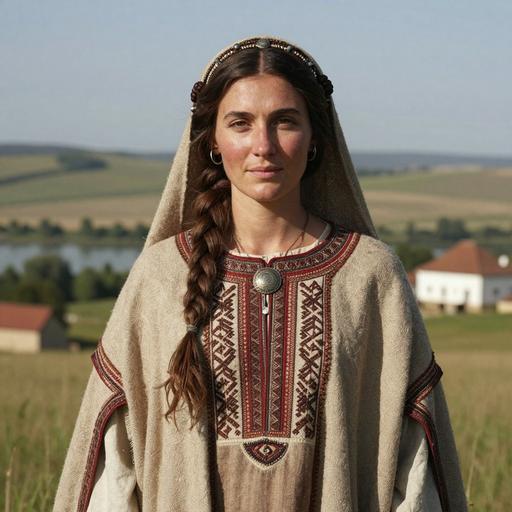
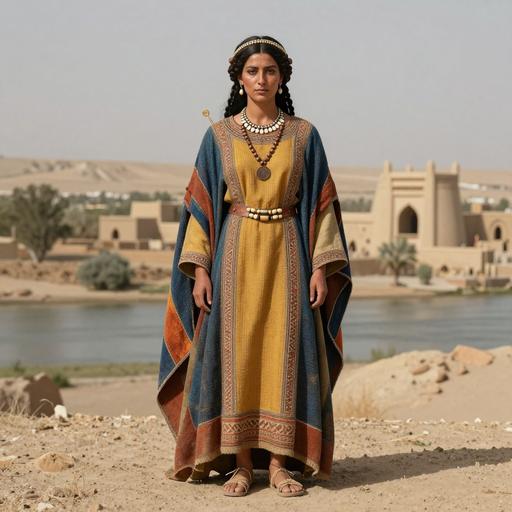
Los retratos son ilustraciones generadas con IA. Las etiquetas de muestra y los identificadores de acceso identifican los registros de referencia.

Retrato Muestra País Época Fecha Cultura mtDNA Coincidencia
Retrato ilustrativo de Early Middle Avar-o Low East Asia individual, Rákóczifalva-Bagi-földek (Jász-Nagykun-Szolnok Coiunty, Szolnok), Hungary (580-720 CE) generado con IA
Identificador de muestra: RKF091
Hungary Early Middle Avar Period 550-750 CE Avar T1a3 Direct
Retrato ilustrativo de High Medieval Late Medieval individual, St Rombout's (Vlaams Gewest, Antwerpen, Malines, Mechelen), Belgium (1,076-1,424 CE) generado con IA
Identificador de muestra: STR162
Belgium Belgium HighMedieval LateMedieval 1100-1400 CE Belgium_HighMedieval_LateMedieval T1a3 Direct
Retrato ilustrativo de Shahri Sokhta BA1-1 individual, Seistan. Shahr-i Sokhta, Iran (3,200-2,100 BCE) generado con IA
Identificador de muestra: I11476
Iran Shahr-i Sokhta Bronze Age 3200-2100 BCE Shahr-i Sokhta Culture T1a3 Direct
Retrato ilustrativo de England Early Medieval Saxon individual, England. North Yorkshire. Vale of Pickering. West Heslerton, United Kingdom (400-600 CE) generado con IA
Identificador de muestra: I20654
United Kingdom England EarlyMedieval Saxon 400-600 CE Anglo-Saxon T1a3a Subclado
Retrato ilustrativo de IA individual, Ostrów Lednicki (Greater Poland Province, Gniezno, Łubowo), Poland (1,000-1,200 CE) generado con IA
Identificador de muestra: PCA0337
Poland Iron Age Ostrów Lednicki Culture 1000-1200 CE Ostrów Lednicki Culture T1a3a Subclado
MATERNAL LINAJE · ADN ANTIGUO

Mapa de pruebas de linajes antiguos

Sigue los clados superiores hasta esta rama y explora dónde se encontraron portadores antiguos.

Cargando observaciones antiguas...

Los marcadores son ubicaciones de hallazgos arqueológicos. Una línea discontinua representa una transición geográfica propuesta e incierta entre ramas consecutivas, apoyada en varias observaciones fechadas; no es una ruta de viaje exacta, un lugar de nacimiento ni una prueba de descendencia directa. Las muestras del clado parental pueden pertenecer a otras ramas descendientes. Se mantienen huecos cuando las pruebas son insuficientes. Las fechas de las muestras son distintas de las fechas de formación de los haplogrupos.

Perfil de referencia

Mapa de distribución de portadores

Distribución geográfica de muestras de ADN antiguo (5), portadores directos o de subclados de T1A3

Portador directo Portador de un subclado
Filtro de periodo temporal
Todos los periodos
Mostrando todas las muestras
Perfil de referencia

Distribución temporal

Distribución de portadores por periodos arqueológicos

Perfil de referencia

Distribución geográfica

Recuentos por país registrado de las muestras. Reflejan la selección de referencia disponible, no frecuencias de población.

Perfil de referencia

Distribución por país y época

Compara los recuentos de muestras registradas por países y periodos arqueológicos. Selecciona una celda con datos para examinar una muestra.

Datos

Datos y procedencia

Información sobre las fuentes y la calidad de los datos

Última actualización 2026-02-16
Puntuación de confianza 50/100
Cobertura Low

Fuente de datos

La clasificación, las fechas estimadas y el contexto geográfico reflejan los datos de referencia registrados y pueden cambiar al revisarse las pruebas. La cobertura de muestras es desigual; las ubicaciones registradas y las asociaciones arqueológicas no establecen el origen personal ni la identidad cultural.