Saltar al contenido principal
Y-DNA · Paterno linaje

N

Y-DNA Haplogroup N

Un perfil de referencia de una rama de linaje. Compartir haplogrupos no demuestra una relación familiar ni una identidad cultural.

Perfil de referencia

Contexto de la rama

Contexto histórico de la rama de linaje Y-DNA N

Origins and Evolution

Y-DNA haplogroup N is a major descendant of haplogroup NO, itself a branch of the broader K2 paternal lineage tree. Based on its phylogenetic position and the geographic pattern of its descendant clades, haplogroup N is generally interpreted as having arisen in northern Eurasia or adjacent eastern Eurasian steppe/forest zones during the Upper Paleolithic, roughly 45 thousand years ago.

The deepest branches of haplogroup N likely formed during a period of climatic instability when human groups were dispersed across northern Asia. Over time, N gave rise to a number of successful subclades that expanded widely across Siberia, the Ural region, the Baltic region, and northern Fennoscandia. Its distribution reflects multiple episodes of population movement, founder effects, and later expansions associated with forest-steppe, taiga, and Uralic-speaking populations.

Subclades

Haplogroup N is a broad and diverse clade, and several downstream branches are especially important in population history:

  • N1a and related lineages: found at notable frequencies in northeastern Europe, the Baltic region, and among some Uralic-speaking populations.
  • N-M231: one of the most widespread and best-known branches of N, common in Siberia, central/northern Eurasia, and parts of northern Europe.
  • Further downstream subclades within N show strong regional structure, including lineages associated with Finns, Estonians, Sámi, Nenets, Khanty, Mansi, Yakuts, Buryats, and other populations across northern Asia and the circum-Baltic zone.

Because haplogroup N is old and deeply structured, its internal phylogeny records multiple population expansions rather than a single migratory event.

Geographical Distribution

Haplogroup N is distributed primarily across northern Eurasia, with the highest frequencies often observed in Siberia, the Volga-Ural region, Finland, Estonia, Latvia, Lithuania, and parts of northeastern Europe. It is also present, usually at lower frequencies, across Russia, Mongolia, northern China, and other regions of East Eurasia due to the broader spread of its older and younger subclades.

In modern population genetics, N is especially associated with Uralic-speaking populations and with some Siberian indigenous groups, where founder effects and demographic expansions increased its frequency. Ancient DNA studies have also detected N in prehistoric individuals from the Baltic region, steppe-forest interface, and eastern Europe, helping to clarify its role in northern Eurasian prehistory.

Historical and Cultural Significance

Haplogroup N is important for reconstructing the peopling of northern Eurasia and the spread of language families and cultures across the forest zone. Its modern distribution strongly overlaps with the historical spread of Uralic-speaking peoples, although the haplogroup itself predates those languages by a very long time and should not be equated with any single language family.

In ancient DNA research, N has been informative for studying:

  • Post-glacial recolonization of northern Eurasia
  • Forest-zone demographic expansions
  • The formation of Balto-Finnic and Uralic-associated paternal pools
  • Connections between Siberian, Volga-Ural, and Baltic populations

Haplogroup N also highlights the deep historical links between Europe and Asia, since its ancestry is rooted in an ancient northern Eurasian population structure that long predates the clear division between modern continental regions.

Conclusion

Y-DNA haplogroup N is one of the most significant paternal lineages of northern Eurasia. Its deep Upper Paleolithic origins, broad Siberian and European distribution, and strong association with Uralic and other northern populations make it a central lineage in studies of Eurasian population history, migration, and prehistoric demographic change.

Puntos clave

  • Origins and Evolution
  • Subclades
  • Geographical Distribution
  • Historical and Cultural Significance
  • Conclusion
Perfil de referencia

Árbol y relaciones

Contexto filogenético y subclados

Trayectoria evolutiva

Sigue las ramas superiores registradas hasta N. Las fechas son estimaciones y pueden cambiar al revisarse los datos de referencia.

Pasos Haplogrupo Antigüedad estimada Época arqueológica Tiempo transcurrido Subclados inmediatos Portadores modernos analizados Referencias antiguas
1 N Actual ~45,000 years ago Paleolithic 45,000 years 2 172 17
2 NO ~45,000 years ago Paleolithic 45,000 years 4 801 12

Ramas hermanas (3)

Otras ramas del mismo haplogrupo superior

Perfil de referencia

En el mundo

Distribución geográfica y presencia moderna

Origen registrado

North Eurasia

Distribución moderna

The populations where Y-DNA haplogroup N is found include:

  1. Finnish and other Baltic-Finnic populations
  2. Estonian, Latvian, and Lithuanian populations
  3. Sámi populations of northern Fennoscandia
  4. Uralic-speaking populations such as the Khanty, Mansi, Nenets, and Komi
  5. Siberian populations including Yakuts and other northern Asian groups
  6. Ancient and modern populations of northern and northeastern Europe
  7. Some East Asian and Central Asian populations through deeper and downstream branches

Presencia regional

Northern Europe High
Eastern Europe Moderate
Siberia High
Baltic Region High
Central Asia Low
East Asia Low
Contexto histórico

Una rama a través del tiempo

Formación estimada en una cronología histórica amplia. Los marcadores temporales aportan contexto y no implican relación con culturas concretas.

  1. ~50k años de antigüedad

    Paleolítico superior

    Desarrollo de herramientas, arte y diversidad cultural

  2. ~45k años de antigüedad

    Haplogrupo N

    Formación estimada de esta rama de Y-DNA; las fechas y ubicaciones son estimaciones de referencia.

    Esta rama
  3. ~20k años de antigüedad

    Último máximo glacial

    Máxima extensión de la última glaciación y aislamiento de poblaciones

  4. ~10k años de antigüedad

    Revolución neolítica

    Inicio de la agricultura y formación de comunidades sedentarias

  5. ~5k años de antigüedad

    Edad del Bronce

    Metalurgia, escritura y primeras civilizaciones

  6. ~3k años de antigüedad

    Edad del Hierro

    Herramientas de hierro y ampliación de redes comerciales

  7. ~2.5k años de antigüedad

    Antigüedad clásica

    Desarrollo de las civilizaciones griega y romana

  8. Actualidad

    Actualidad

    Época moderna

Perfil de referencia

Contexto arqueológico

Asociaciones arqueológicas registradas para la rama Y-DNA N

Asociaciones registradas

Estas etiquetas describen contextos arqueológicos registrados para las muestras de referencia enlazadas a N. Una asociación no demuestra que todos los portadores pertenecieran a una cultura ni siguieran una ruta migratoria concreta.

China_Sitaimengguying_EN Early Buryat Lena River Culture Lokomotiv Culture Russia_AltaiKrai_N Shamanka Culture
Las atribuciones culturales se basan en el contexto arqueológico de las muestras de ADN antiguo y pueden representar asociaciones regionales de periodos concretos.
Perfil de referencia

Catálogo de muestras

17 portadores directos del haplogrupo N

10 mostradas · 17 muestras coincidentes

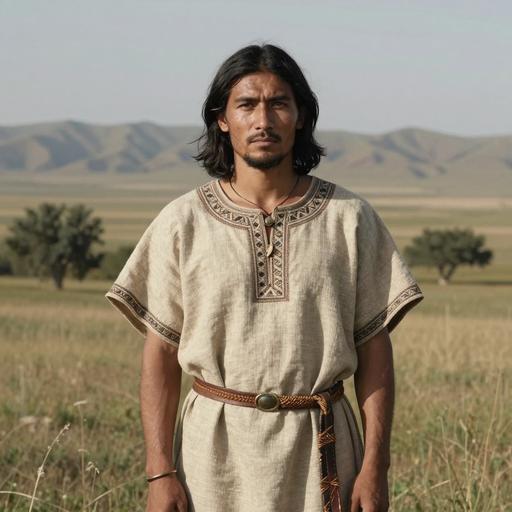
Los retratos son ilustraciones generadas con IA. Las etiquetas de muestra y los identificadores de acceso identifican los registros de referencia.

Retrato Muestra País Época Fecha Cultura Y-DNA Coincidencia
Retrato ilustrativo de Viking individual, Fullero (Uppsala län, Uppsala), Sweden (242-385 CE) generado con IA
Identificador de muestra: ful001
Sweden Vendel Culture 242-385 calCE Vendel N Direct
Retrato ilustrativo de Sicily Himera IA b Greek individual, Himera (Sicily, Palermo, Termini Imerese), Italy (c. 480 BCE) generado con IA
Identificador de muestra: I10944
Italy Sicilian Greek (Himeran) 480 BCE Himeran Greek N Direct
Retrato ilustrativo de Steppe Cultures individual, Ludas-Varju-Dulo, Hungary (983-831 BCE) generado con IA
Identificador de muestra: I1503
Hungary Iron Age Pre-Scythian Culture, Hungary 983 BCE - 831 BCE Pre-Scythian Culture N Direct
Retrato ilustrativo de Post Medieval individual, Kronan (Kalmar län, Mörbylånga), Sweden (c. 1,676 CE) generado con IA
Identificador de muestra: kro006
Sweden Southern Swedish Post-Medieval Culture 1676 CE Post-Medieval Swedish N Direct
Retrato ilustrativo de Contemporary individual, Tibetic. Bodish. Sino-Tibetan. Gannan. Gansu. Y.haplogroup=N, China (c. 2,000 CE) generado con IA
Identificador de muestra: GN03
China Modern China 2000 CE Chinese N Direct
Retrato ilustrativo de Contemporary individual, Tibetic. Bodish. Sino-Tibetan. Gannan. Gansu. Y.haplogroup=N, China (c. 2,000 CE) generado con IA
Identificador de muestra: GN10
China Modern China 2000 CE Chinese N Direct
Retrato ilustrativo de Contemporary individual, Mongolic. Sunan. Gansu. Y.haplogroup=N, China (c. 2,000 CE) generado con IA
Identificador de muestra: EYG48
China Modern China 2000 CE Chinese N Direct
Retrato ilustrativo de Contemporary individual, Chinese. Sino-Tibetan. Jiangsu. Y.haplogroup=N, China (c. 2,000 CE) generado con IA
Identificador de muestra: Han2058
China Modern China 2000 CE Chinese N Direct
Retrato ilustrativo de Contemporary individual, Tamangic. Sino-Tibetan. . Y.haplogroup=N, Nepal (c. 2,000 CE) generado con IA
Identificador de muestra: Ta80
Nepal Modern Nepal 2000 CE Nepali N Direct
Retrato ilustrativo de Contemporary individual, Kipchak. Turkic. Urumqi. Xinjiang. Y.haplogroup=N, China (c. 2,000 CE) generado con IA
Identificador de muestra: KZ52
China Modern China 2000 CE Chinese N Direct
PATERNAL LINAJE · ADN ANTIGUO

Mapa de pruebas de linajes antiguos

Sigue los clados superiores hasta esta rama y explora dónde se encontraron portadores antiguos.

Cargando observaciones antiguas...

Los marcadores son ubicaciones de hallazgos arqueológicos. Una línea discontinua representa una transición geográfica propuesta e incierta entre ramas consecutivas, apoyada en varias observaciones fechadas; no es una ruta de viaje exacta, un lugar de nacimiento ni una prueba de descendencia directa. Las muestras del clado parental pueden pertenecer a otras ramas descendientes. Se mantienen huecos cuando las pruebas son insuficientes. Las fechas de las muestras son distintas de las fechas de formación de los haplogrupos.

Perfil de referencia

Mapa de distribución de portadores

Distribución geográfica de muestras de ADN antiguo (17), portadores directos o de subclados de N

Portador directo
Filtro de periodo temporal
Todos los periodos
Mostrando todas las muestras
Perfil de referencia

Distribución temporal

Distribución de portadores por periodos arqueológicos

Perfil de referencia

Distribución geográfica

Recuentos por país registrado de las muestras. Reflejan la selección de referencia disponible, no frecuencias de población.

Perfil de referencia

Distribución por país y época

Compara los recuentos de muestras registradas por países y periodos arqueológicos. Selecciona una celda con datos para examinar una muestra.

Datos

Datos y procedencia

Información sobre las fuentes y la calidad de los datos

Última actualización 2026-06-17

Fuente de datos

La clasificación, las fechas estimadas y el contexto geográfico reflejan los datos de referencia registrados y pueden cambiar al revisarse las pruebas. La cobertura de muestras es desigual; las ubicaciones registradas y las asociaciones arqueológicas no establecen el origen personal ni la identidad cultural.