Saltar al contenido principal
Y-DNA · Paterno linaje

R1B1A1B1A1A2C1A5

Y-DNA Haplogroup R1B1A1B1A1A2C1A5

Un perfil de referencia de una rama de linaje. Compartir haplogrupos no demuestra una relación familiar ni una identidad cultural.

Perfil de referencia

Contexto de la rama

Contexto histórico de la rama de linaje Y-DNA R1B1A1B1A1A2C1A5

Origins and Evolution

Y-DNA haplogroup R1b1a1b1a1a2c1a5 is a deeply nested subclade within the broader R1b paternal lineage, one of the most prominent Y-chromosome branches in western Eurasia. Because it sits far downstream in the phylogenetic tree, this lineage likely arose from a small surviving paternal line within an older western Eurasian R1b reservoir rather than from the major expansion that produced the dominant western European R1b-M269 spectrum.

The estimated origin is best placed in West Eurasia during the Late Upper Paleolithic to early Mesolithic transition, roughly 14 kya, though as with many rare Y-DNA branches, the precise timing and location remain uncertain and should be treated as approximate. Its present-day rarity and discontinuous distribution are consistent with long-term drift, local founder effects, and repeated bottlenecks across prehistoric and historic periods.

Subclades

As an intermediate clade, R1b1a1b1a1a2c1a5 helps connect its parent and child lineages in the phylogeny. Specific downstream substructure may still be incompletely resolved in public datasets, but the branch is important because it preserves a distinct paternal line within a broader regional R1b framework. Such rare subclades often become more visible as high-resolution Y-chromosome sequencing expands.

Geographical Distribution

This haplogroup is found at low frequency across a broad but patchy area of western Eurasia. Reported occurrences in Irish and British populations, French, Iberian, and Low Countries populations, Italian and Balkan populations, and Caucasus and Anatolian populations indicate an old lineage that survived in multiple regions rather than one confined homeland in the historical era.

The presence in Levantine and North African populations may reflect ancient gene flow around the Mediterranean, including prehistoric movements, classical-era contacts, and later admixture. Occasional findings in some Central Asian and steppe-related populations suggest either deeper West Eurasian ancestry connections or secondary dispersal through steppe networks and historical mobility.

Historical and Cultural Significance

Because this is a rare lineage, it is not strongly tied to a single well-defined archaeological culture the way some major Y-chromosome clades are. Instead, it is best understood as a surviving relic lineage that may have been present among multiple prehistoric populations of western Eurasia.

Its broader parent clade, R1b, is often discussed in relation to Mesolithic hunter-gatherers, Neolithic and Chalcolithic population turnover, and later Bronze Age mobility in Europe and the steppe. However, for R1b1a1b1a1a2c1a5 specifically, the safest inference is long-term regional persistence through demographic contractions, with possible re-expansions during later prehistoric and historic periods in Europe and adjacent parts of West Asia and North Africa.

Population Genetics Context

Rare downstream Y-DNA branches often survive because of a combination of geographic isolation, genetic drift, and founder effects. In western Eurasia, where multiple major population movements occurred over the last 15,000 years, some lineages remained at low frequency even when other Y-chromosome branches expanded dramatically.

The patchy distribution of R1b1a1b1a1a2c1a5 is therefore informative: it suggests that the lineage may have been more widespread in the past, but only a few pockets of paternal continuity survived into the present. Such lineages can be especially useful for reconstructing fine-scale demographic history when paired with ancient DNA.

Conclusion

R1b1a1b1a1a2c1a5 is a rare, informative subclade of western Eurasian R1b that likely originated in West Eurasia around the end of the last Ice Age. Its scattered modern distribution across Europe, the Mediterranean, the Caucasus, and adjacent regions points to ancient persistence, localized expansion, and extensive drift rather than a single major population replacement event.

Puntos clave

  • Origins and Evolution
  • Subclades
  • Geographical Distribution
  • Historical and Cultural Significance
  • Population Genetics Context

Perfil de referencia

Árbol y relaciones

Contexto filogenético y subclados

Trayectoria evolutiva

Sigue las ramas superiores registradas hasta R1B1A1B1A1A2C1A5. Las fechas son estimaciones y pueden cambiar al revisarse los datos de referencia.

Pasos Haplogrupo Antigüedad estimada Época arqueológica Tiempo transcurrido Subclados inmediatos Portadores modernos analizados Referencias antiguas
1 R1B1A1B1A1A2C1A5 Actual ~14,000 years ago Mesolithic 14,000 years 2 26 0
2 R1B1A1B1A1A2C1A ~14,000 years ago Mesolithic 14,000 years 6 435 9
3 R1B1A1B1A1A2C1 ~14,000 years ago Mesolithic 14,000 years 2 761 0
4 R1B1A1B1A1A2C ~14,000 years ago Mesolithic 14,000 years 1 763 111
5 R1B1A1B1A1A2 ~14,000 years ago Mesolithic 14,000 years 6 1,260 0
6 R1B1A1B1A1A ~14,000 years ago Mesolithic 14,000 years 4 1,715 70
7 R1B1A1B1A1 ~14,000 years ago Mesolithic 14,000 years 1 1,789 0
8 R1B1A1B1A ~14,000 years ago Mesolithic 14,000 years 2 1,796 15
9 R1B1A1B1 ~18,000 years ago Mesolithic 18,000 years 2 2,085 0
10 R1B1A1B ~18,000 years ago Mesolithic 18,000 years 2 2,317 31
11 R1B1A1 ~18,000 years ago Mesolithic 18,000 years 2 2,321 0
12 R1B1A ~18,000 years ago Mesolithic 18,000 years 2 4,020 39
13 R1B1 ~18,000 years ago Mesolithic 18,000 years 2 4,166 0
14 R1b ~20,000 years ago Mesolithic 20,000 years 2 4,262 126
Perfil de referencia

En el mundo

Distribución geográfica y presencia moderna

Origen registrado

West Eurasia

Distribución moderna

The populations where Y-DNA haplogroup R1b1a1b1a1a2c1a5 is found include:

  1. Irish and British populations
  2. French, Iberian, and Low Countries populations
  3. Italian and Balkan populations
  4. Caucasus and Anatolian populations
  5. Levantine and North African populations
  6. Some Central Asian and steppe-related populations

Presencia regional

Western Europe High
Northern Europe High
Southwestern Europe Low
North Africa Low
North America (diaspora) Low
Southern Europe Low
Eastern Europe Low
Western Asia Low
North Africa Low
Central Asia Low
Contexto histórico

Una rama a través del tiempo

Formación estimada en una cronología histórica amplia. Los marcadores temporales aportan contexto y no implican relación con culturas concretas.

  1. ~20k años de antigüedad

    Último máximo glacial

    Máxima extensión de la última glaciación y aislamiento de poblaciones

  2. ~14k años de antigüedad

    Haplogrupo R1B1A1B1A1A2C1A5

    Formación estimada de esta rama de Y-DNA; las fechas y ubicaciones son estimaciones de referencia.

    Esta rama
  3. ~10k años de antigüedad

    Revolución neolítica

    Inicio de la agricultura y formación de comunidades sedentarias

  4. ~5k años de antigüedad

    Edad del Bronce

    Metalurgia, escritura y primeras civilizaciones

  5. ~3k años de antigüedad

    Edad del Hierro

    Herramientas de hierro y ampliación de redes comerciales

  6. ~2.5k años de antigüedad

    Antigüedad clásica

    Desarrollo de las civilizaciones griega y romana

  7. Actualidad

    Actualidad

    Época moderna

Perfil de referencia

Contexto arqueológico

Asociaciones arqueológicas registradas para la rama Y-DNA R1B1A1B1A1A2C1A5

Asociaciones registradas

Estas etiquetas describen contextos arqueológicos registrados para las muestras de referencia enlazadas a R1B1A1B1A1A2C1A5. Una asociación no demuestra que todos los portadores pertenecieran a una cultura ni siguieran una ruta migratoria concreta.

Anglo-Saxon British Late Bronze Age British Late Iron Age Early British Iron Age Irish Bronze Age Late Iron Age British Middle Iron Age British Northumbrian Bronze Age Scottish Bronze Age
Las atribuciones culturales se basan en el contexto arqueológico de las muestras de ADN antiguo y pueden representar asociaciones regionales de periodos concretos.
Perfil de referencia

Catálogo de muestras

5 portadores directos y 9 portadores de subclados del haplogrupo R1B1A1B1A1A2C1A5

10 mostradas · 14 muestras coincidentes

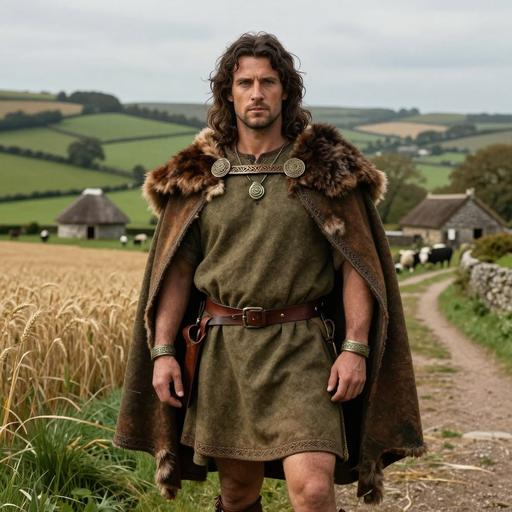
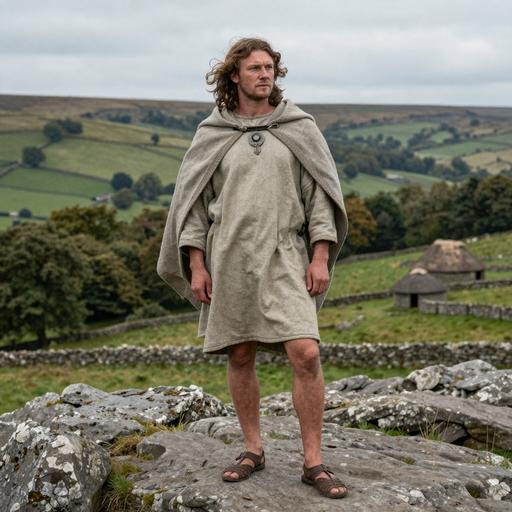
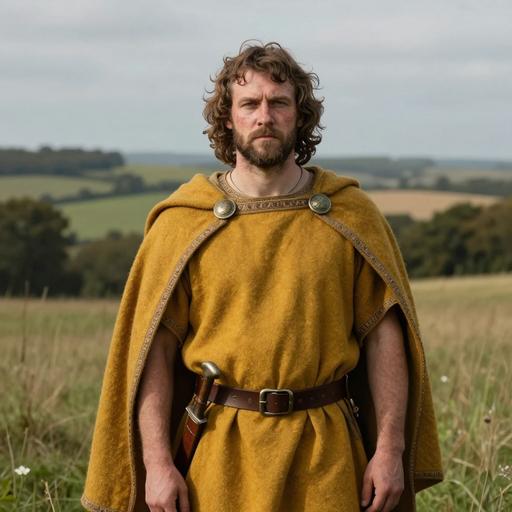
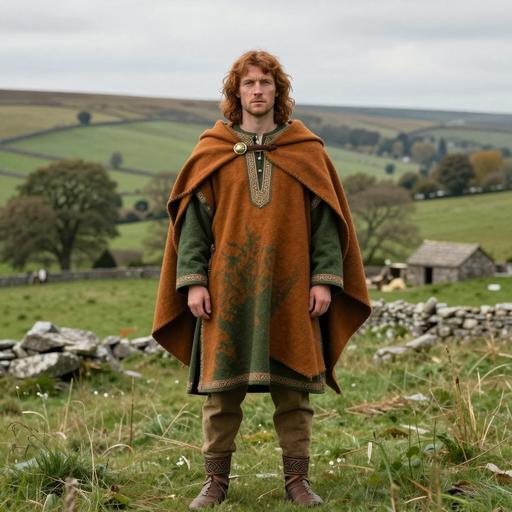
Los retratos son ilustraciones generadas con IA. Las etiquetas de muestra y los identificadores de acceso identifican los registros de referencia.

Retrato Muestra País Época Fecha Cultura Y-DNA Coincidencia
Retrato ilustrativo de England LIA individual, England. Gloucestershire. Bourton-on-the-water. Greystones Farm, United Kingdom (200-1 BCE) generado con IA
Identificador de muestra: I12785
United Kingdom England LIA 200-1 BCE British Late Iron Age R1b1a1b1a1a2c1a5 Direct
Retrato ilustrativo de England MIA individual, England. Derbyshire. Brassington. Carsington Pasture Cave, United Kingdom (361-177 BCE) generado con IA
Identificador de muestra: I12775
United Kingdom England MIA 361-177 calBCE (2200±20 BP, PSUAMS-8287) Middle Iron Age British R1b1a1b1a1a2c1a5 Direct
Retrato ilustrativo de England MIA individual, England. Cambridgeshire. Whittlesey. Bradley Fen, United Kingdom (382-200 BCE) generado con IA
Identificador de muestra: I11156
United Kingdom England MIA 382-200 calBCE (2223±26 BP, BRAMS-1695) Middle Iron Age British R1b1a1b1a1a2c1a5 Direct
Retrato ilustrativo de England EIA individual, England. Gloucestershire. Lechlade-on-Thames. Lechlade Memorial Hall/Skate Park, United Kingdom (783-541 BCE) generado con IA
Identificador de muestra: I12783
United Kingdom England EIA 783-541 calBCE (2510±29 BP, SUERC-80169) Early British Iron Age R1b1a1b1a1a2c1a5 Direct
Retrato ilustrativo de Celtic individual, Rathlin Island. County Antrim, Ireland (2,031-1,830 BCE) generado con IA
Identificador de muestra: rath1
Ireland Ireland EBA 2031 BCE - 1830 BCE Irish Bronze Age R1b1a1b1a1a2c1a5 Direct
Retrato ilustrativo de England IA individual, England. South Cambridgeshire. East Anglia. Hinxton, United Kingdom (166 BCE-116 CE) generado con IA
Identificador de muestra: I0160
United Kingdom England IA 166 calBCE - 116 calCE (2029±49 BP, Wk- - 12599) British Iron Age R1b1a1b1a1a2c1a5b1a1a Subclado
Retrato ilustrativo de England LIA MIA individual, England. Derbyshire. Fin Cop, United Kingdom (351-52 BCE) generado con IA
Identificador de muestra: I20628
United Kingdom Middle to Late Iron Age England 351-52 calBCE (2140±30 BP, SUERC-31499) Late Iron Age British R1b1a1b1a1a2c1a5c Subclado
Retrato ilustrativo de England MIA individual, England. Oxfordshire. Stanton Harcourt. Gravelly Guy, United Kingdom (359-54 BCE) generado con IA
Identificador de muestra: I21277
United Kingdom England MIA 359-54 calBCE (2204±24 BP, SUERC-104570) Middle Iron Age British R1b1a1b1a1a2c1a5c Subclado
Retrato ilustrativo de England MIA individual, England. Derbyshire. Brassington. Carsington Pasture Cave, United Kingdom (381-203 BCE) generado con IA
Identificador de muestra: I12778
United Kingdom England MIA 381-203 calBCE (2230±20 BP, PSUAMS-8289) Middle Iron Age British R1b1a1b1a1a2c1a5b1a1a Subclado
Retrato ilustrativo de England LIA MIA individual, England. Oxfordshire. Stanton Harcourt. Gravelly Guy, United Kingdom (400-100 BCE) generado con IA
Identificador de muestra: I21272
United Kingdom Middle to Late Iron Age England 400-100 BCE Late Iron Age British R1b1a1b1a1a2c1a5c Subclado
PATERNAL LINAJE · ADN ANTIGUO

Mapa de pruebas de linajes antiguos

Sigue los clados superiores hasta esta rama y explora dónde se encontraron portadores antiguos.

Cargando observaciones antiguas...

Los marcadores son ubicaciones de hallazgos arqueológicos. Una línea discontinua representa una transición geográfica propuesta e incierta entre ramas consecutivas, apoyada en varias observaciones fechadas; no es una ruta de viaje exacta, un lugar de nacimiento ni una prueba de descendencia directa. Las muestras del clado parental pueden pertenecer a otras ramas descendientes. Se mantienen huecos cuando las pruebas son insuficientes. Las fechas de las muestras son distintas de las fechas de formación de los haplogrupos.

Perfil de referencia

Mapa de distribución de portadores

Distribución geográfica de muestras de ADN antiguo (14), portadores directos o de subclados de R1B1A1B1A1A2C1A5

Portador directo Portador de un subclado
Filtro de periodo temporal
Todos los periodos
Mostrando todas las muestras
Perfil de referencia

Distribución temporal

Distribución de portadores por periodos arqueológicos

Perfil de referencia

Distribución geográfica

Recuentos por país registrado de las muestras. Reflejan la selección de referencia disponible, no frecuencias de población.

Perfil de referencia

Distribución por país y época

Compara los recuentos de muestras registradas por países y periodos arqueológicos. Selecciona una celda con datos para examinar una muestra.

Datos

Datos y procedencia

Información sobre las fuentes y la calidad de los datos

Última actualización 2026-06-17
Puntuación de confianza 50/100
Cobertura Low

Fuente de datos

La clasificación, las fechas estimadas y el contexto geográfico reflejan los datos de referencia registrados y pueden cambiar al revisarse las pruebas. La cobertura de muestras es desigual; las ubicaciones registradas y las asociaciones arqueológicas no establecen el origen personal ni la identidad cultural.