Preparando el informe

Cargando la información y las referencias disponibles

Consultando el registro arqueológico...

Recopilando registros antiguos

Saltar al contenido principal
Aegean Ottoman Arab Graves
Cultura destacada

Aegean Ottoman Arab Graves

Twelve graves from Çapalıbağ reveal movement and mixture in the Ottoman Aegean (1300–1650 CE).

1300 CE - 1650 CE
Aegean, Muğla (Turkey)
Desplázate para empezar
Capítulo I

La historia

Comprender la cultura Aegean Ottoman Arab Graves

Archaeological and aDNA results from 12 individuals at Çapalıbağ (Muğla, Turkey) illuminate Ottoman-period mobility along the Aegean coast. mtDNA diversity hints at West Eurasian and Near Eastern maternal lineages; Y-DNA is not consistently reported. Interpretations remain cautious.

Time Period

1300–1650 CE

Region

Aegean, Muğla (Turkey)

Common Y-DNA

Undetermined / not reported

Common mtDNA

K (2), W9 (1), H (1), HV (1), T (1)

Capítulo II

Cronología

Momentos clave de la historia de esta cultura

1300 CE

Early Ottoman presence in the Aegean

The Ottoman state expands in western Anatolia, increasing movement of peoples and goods along the Aegean coast.

1453 CE

Transformation of imperial networks

Fall of Constantinople reshapes trade and administrative flows that affect coastal communities across the Aegean.

1600 CE

Cemetery use at Çapalıbağ

Archaeological context places many burials in this interval, reflecting ongoing occupation and burial practice.

Capítulo III

Origins & Emergence

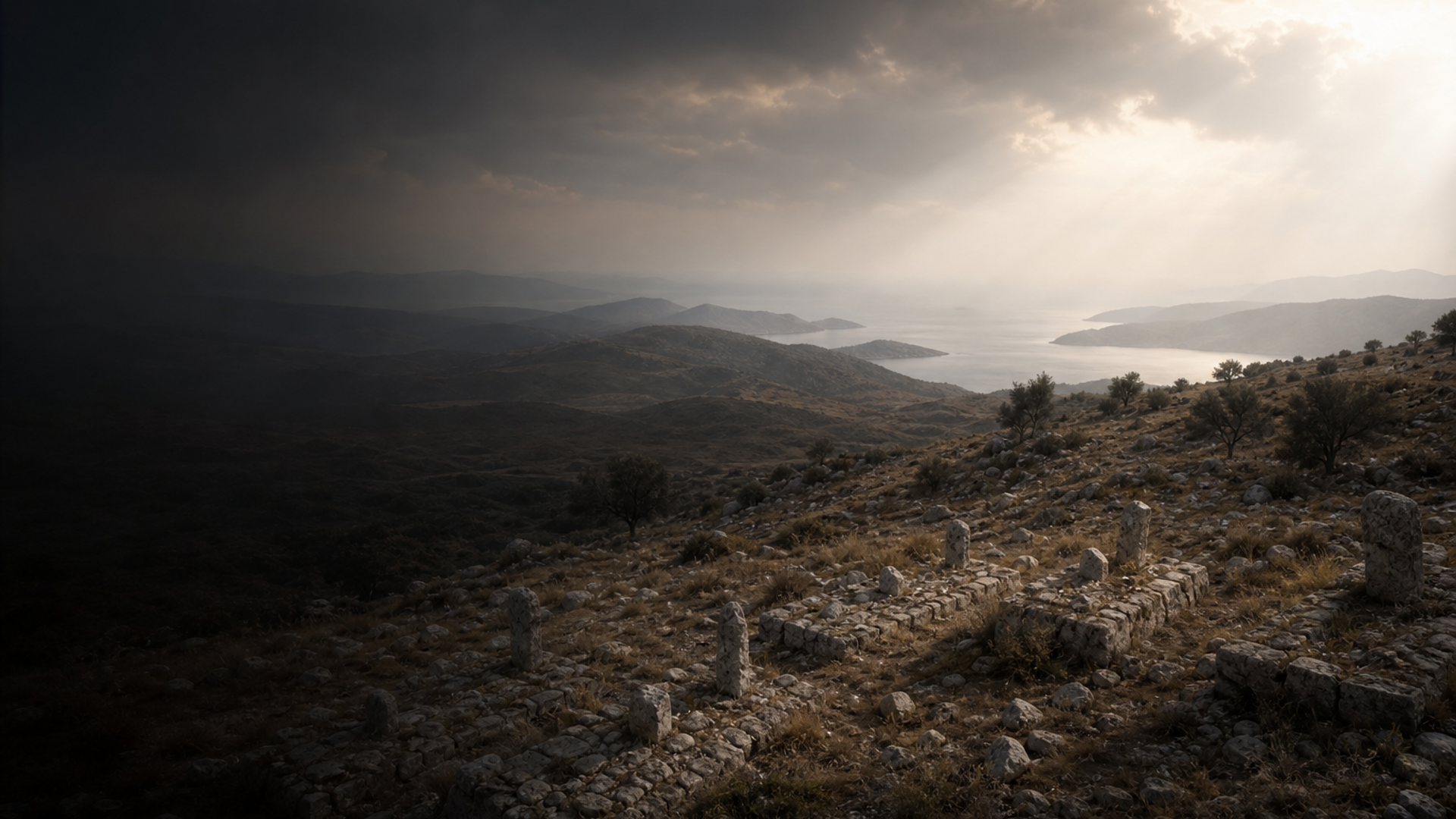
Along the sun‑bleached slopes near Çapalıbağ, in the modern district of Yatağan (Muğla province), modest graves labeled as "Arab" in museum inventories evoke the Ottoman Empire’s cosmopolitan currents. Dated by contextual stratigraphy and associated finds to roughly 1300–1650 CE, these burials belong to a period when the Aegean shoreline was a corridor for soldiers, merchants, pilgrims and maritime crews. Archaeological data indicates that the graves cluster in a discrete locus at Yeşilbağcılar-YTEUAS, suggesting a community or cemetery used by people who were perceived in local records or oral tradition as Arab or Arabic‑speaking.

The term "Arab graves" in Ottoman and later archaeological contexts is complex: it can reflect language, family origin, religious affiliation, or outsider status recorded by local populations. The material record at Çapalıbağ is fragmentary; grave goods are modest, and inscriptions or clearly diagnostic artifacts are scarce. Limited evidence suggests a mix of Anatolian and Levantine burial customs, but the dataset is small. Combining archaeological context with aDNA sampling from 12 individuals allows a new window on identity — not as a single origin story, but as a scene of movement and mixture within an imperial landscape.

  • Site: Çapalıbağ, Yeşilbağcılar-YTEUAS (Yatağan, Muğla)
  • Dates: ca. 1300–1650 CE (Ottoman period)
  • Interpretation cautious: 'Arab' may denote language, origin, or social labeling
Capítulo IV

Daily Life & Society

The archaeological silhouette of life in the Ottoman Aegean is one of mobility: markets, coastal trade, and seasonal labor knit together people from Anatolia, the Balkans, the Levant and beyond. At Çapalıbağ, funerary evidence—simple shroud burials, occasional personal items, and cemetery layout—points to modest, possibly maritime‑connected households. Archaeological data indicates proximity to agricultural terraces and coastal routes, implying livelihoods that combined farming, local craft, and service to passing fleets.

Social life under Ottoman rule in this region layered imperial institutions over longstanding local networks. Linguistic pluralism and religious plurality were common; Arabic speakers could be traders, clerics, soldiers, or families long settled in Anatolia. The cemeteries reflect social memory as much as biology: who was counted as "Arab" in registers or remembered as such by neighbors. Material culture in these graves is not lavish, which aligns with documentary patterns of small coastal settlements where identity was negotiated through mobility, marriage, and economic ties rather than monumental display.

Archaeological preservation is variable. Soil acidity, later agricultural disturbance, and selective excavation mean that everyday objects that would illuminate diet, craft, and domestic layout are underrepresented. Therefore, conclusions about daily life draw on regional comparisons as much as on the Çapalıbağ assemblage itself.

  • Economy likely combined agriculture, coastal trade, and maritime labor
  • Cultural identity in daily life was fluid; labels like 'Arab' could be social or linguistic
Capítulo V

Genetic Profile

The aDNA dataset from Çapalıbağ comprises 12 sampled individuals. Mitochondrial haplogroups detected include K (2 individuals), W9 (1), H (1), HV (1) and T (1); the remaining maternal lineages were either unresolved or less frequent in the reported set. These mtDNA types are broadly distributed across West Eurasia: haplogroup H and K are common across Europe and Anatolia; HV links to Near Eastern and Mediterranean ancestries; W subclades and T also occur in both Anatolia and the Levant. Collectively, the maternal signal fits expectations for an Aegean‑coastal population in the Ottoman era, reflecting connections to both Anatolian and Near Eastern maternal pools.

Notably, common Y‑chromosome haplogroups were not consistently reported for this assemblage, leaving the paterlineal picture unresolved. Without robust Y‑DNA data it is premature to characterize male‑line ancestry or deduce migration directions. Genome‑wide data (if available) would better capture admixture proportions; in the wider field, Ottoman‑period samples often show layered ancestry from Anatolian, Balkan, and Levantine sources due to imperial mobility.

With 12 samples, statistical power is limited but informative: the presence of multiple mtDNA lineages suggests maternal diversity rather than a single founder group. Interpretations must remain tentative; further sampling across nearby cemeteries and comparison with published Ottoman‑period genomes are needed to move from suggestion to robust inference.

  • mtDNA diversity (K, W9, H, HV, T) reflects West Eurasian and Near Eastern maternal links
  • Y‑DNA largely unreported here—paternal ancestry remains unresolved
Capítulo VI

Legacy & Modern Connections

The Çapalıbağ burials register one small chapter in a longer story of movement across the eastern Mediterranean. Archaeology and genetics together suggest a tapestry in which Anatolian, Aegean and Levantine threads are interwoven—people who lived, traded, married, and were buried along the coast. For modern communities in Muğla and across western Anatolia, such findings illuminate deep patterns of connection rather than simple ancestry labels.

Genetic links detected in the mtDNA pool are not claims of direct ancestry for any individual living today, but they do reflect maternal lineages that persist across the region. As ancient DNA sampling increases, researchers can place these Çapalıbağ individuals into a broader map of Ottoman‑era mobility. For museums and the public, the graves prompt reflection on how identity is recorded: by names, tongues, or bones—and on the limits of each record. The result is a more textured narrative: one of empire, sea lanes, and everyday people whose lives straddled borders.

  • Findings point to regional continuity and mobility rather than a single-origin population
  • Caution: small sample set (12 individuals) limits broad population claims
Con IA

Asistente de IA

Haz preguntas sobre la cultura Aegean Ottoman Arab Graves

Asistente de IA por DNAGENICS

Desbloquear esta función
Pregunta sobre la cultura Aegean Ottoman Arab Graves. El asistente con IA puede explicar hallazgos genéticos, contexto histórico, pruebas arqueológicas y conexiones modernas, con sus límites de interpretación.
Ejemplo de análisis con IA

La cultura Aegean Ottoman Arab Graves representa un capítulo de la historia humana...

El análisis genético permite estudiar similitudes con poblaciones anteriores y posibles adaptaciones. Las muestras de ADN antiguo aportan información para investigar patrones migratorios y relaciones entre poblaciones, con límites que dependen del estudio y del contexto arqueológico.

Esta es una vista previa del análisis con IA. Accede al asistente completo para explorar información sobre:

  • Composición y similitud genética
  • Patrones migratorios y orígenes
  • Vida cotidiana y prácticas culturales
  • Contexto genético moderno

Explora más culturas antiguas

Descubre la historia de civilizaciones de distintas partes del mundo antiguo