Preparando el informe

Cargando la información y las referencias disponibles

Consultando el registro arqueológico...

Recopilando registros antiguos

Saltar al contenido principal
Baden Echoes in the Carpathian Basin
Cultura destacada

Baden Echoes in the Carpathian Basin

Late Chalcolithic communities (3600–2850 BCE) around Lake Balaton and the Hungarian plains

3600 CE - 2850 BCE
Carpathian Basin (Hungary)
Desplázate para empezar
Capítulo I

La historia

Comprender la cultura Baden Echoes in the Carpathian Basin

Archaeogenetic and archaeological evidence from 13 Late Chalcolithic Baden individuals (3600–2850 BCE) in Hungary reveals a mixed farmer–forager ancestry, with paternal haplogroups G and I and diverse maternal lineages. Archaeology and DNA together illuminate regional networks and emerging social complexity.

Time Period

3600–2850 BCE

Region

Carpathian Basin (Hungary)

Common Y-DNA

G (5/13 ≈ 38%), I (4/13 ≈ 31%)

Common mtDNA

U (3), H (2), U5b, J, T2b

Capítulo II

Cronología

Momentos clave de la historia de esta cultura

3600 BCE

Emergence of Late Chalcolithic Baden horizons

Around 3600 BCE, distinct Baden material traditions appear across the Carpathian Basin, reflected in varied settlements and burial practices documented in Hungary.

Capítulo III

Origins & Emergence

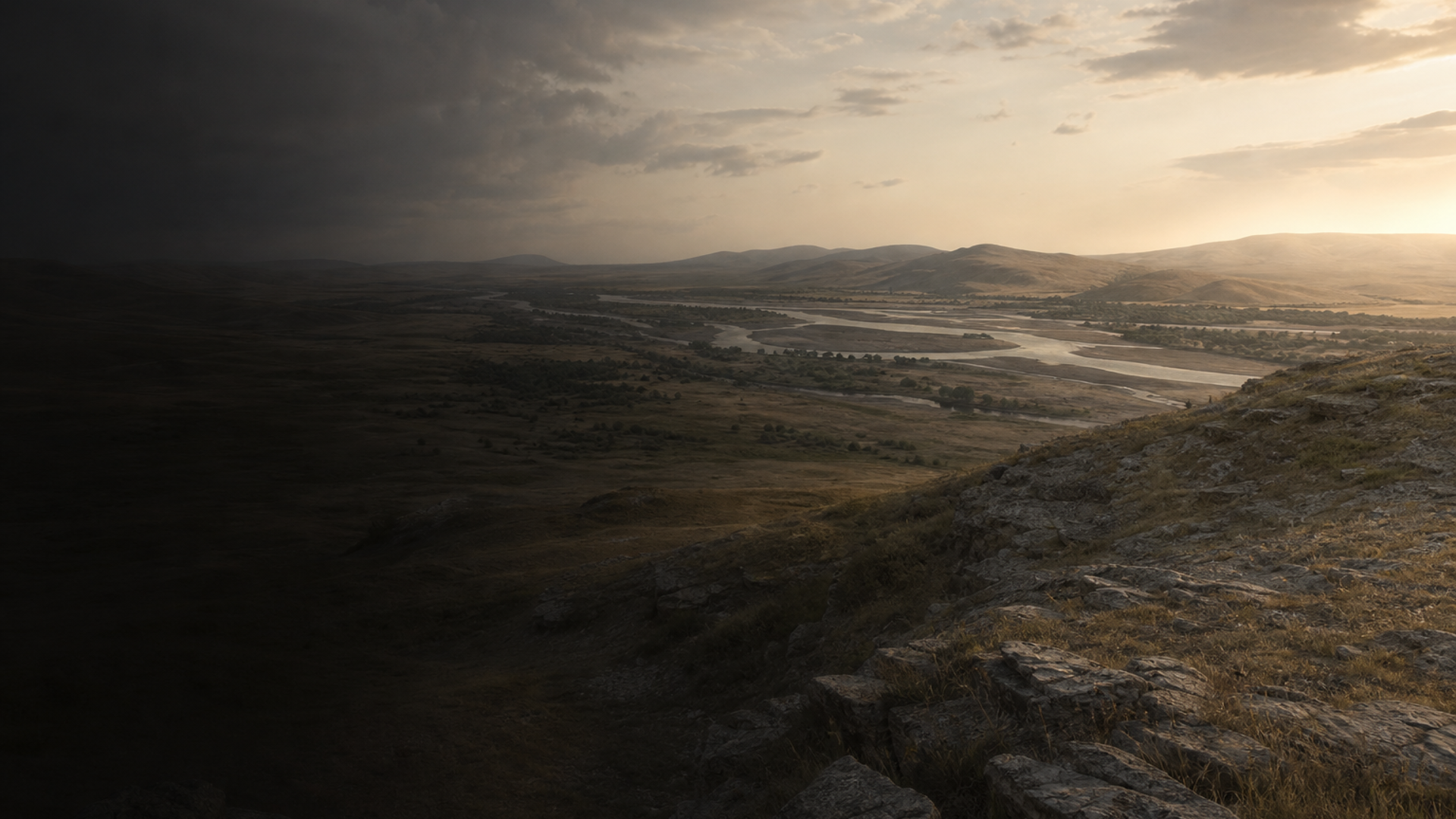
The Baden phenomenon in Hungary unfolds across a liminal landscape of lakes, plains and rolling hills between ca. 3600 and 2850 BCE. Archaeological horizons labeled “Baden” encompass diverse local expressions rather than a single monolithic society. Excavations at sites in this dataset — Apc-Berekalya I, Budakalász-Luppa csárda, Alsónémedi, Balatonlelle-Felső-Gamász, Vörs and Vámosgyörk MHAT telep — capture a patchwork of settlements, cemeteries and ritual locales.

Archaeological data indicates increasing social complexity: more varied pottery forms, distinctive burial treatments and evidence for long‑distance exchange in raw materials and finished objects. Material culture suggests continuities with earlier Neolithic farmer traditions while also incorporating local innovations. The cinematic image is of villages clustered near arable lowlands and wetlands, nodes in networks that threaded the Carpathian Basin.

Genetic data from 13 individuals provides a biological dimension to these archaeological patterns. The genetic profile shows a mixture consistent with descendant Neolithic farmer lineages combined with elevated local hunter‑gatherer ancestry in places. While the sample is substantial enough to identify broad patterns, regional heterogeneity is clear — archaeological variation corresponds to genetic diversity, and some interpretations remain tentative pending larger datasets.

  • Dates: ca. 3600–2850 BCE in the Carpathian Basin
  • Key sites sampled: Apc-Berekalya I; Balatonlelle-Felső-Gamász; Vámosgyörk
  • Archaeological variation suggests multiple local traditions under a common Baden label
Capítulo IV

Daily Life & Society

Archaeological remains evoke a lived landscape of farmers, herders and craft specialists. Botanical and faunal assemblages from contemporaneous Baden contexts in Hungary indicate mixed farming of cereals and pulses, with domestic cattle, sheep/goat and pig as primary animals. Proximity to lakes and wetlands — especially around the Balaton area — supplemented diets with fish and gathered resources.

Craftspeople shaped clay into distinctive Baden pottery, and early copper use in the region signals the beginnings of more complex metallurgical knowledge. Exchange of raw materials and stylistic motifs suggests networks reaching beyond immediate valleys. Burial evidence is notably variable: inhumations, collective graves, and mortuary deposits with personal objects point to differentiated social identities and potentially varied ritual roles.

Household archaeology paints an image of interlocking domestic units: places of food processing, craft production and social interaction. Yet many details remain ephemeral in the record. Limited site preservation and the patchy nature of excavation mean that reconstructions of settlement layout, household size or social hierarchy must be treated with caution. The combined lens of artifacts and DNA, however, helps map kinship, mobility and community boundaries in ways that material remains alone cannot.

  • Economy: mixed agriculture, animal husbandry, and wetland resources
  • Material culture: diverse pottery, early copper use, and long‑distance exchange
Capítulo V

Genetic Profile

Thirteen individuals from Late Chalcolithic Baden contexts in Hungary offer a window into population history during 3600–2850 BCE. The paternal lineages are dominated by haplogroups G (5/13) and I (4/13). Haplogroup G is frequently associated in Europe with Neolithic farmer expansions from Anatolia and the Aegean; its presence here aligns with archaeological continuity from early farming communities. Haplogroup I has deeper Mesolithic and local European associations, consistent with elevated ancestry from indigenous hunter‑gatherer groups in parts of the region.

Mitochondrial diversity includes U (3 individuals, including U5b in one), H (2), J (1) and T2b (1). Maternal U and particularly U5b are often interpreted as markers enriched in European hunter‑gatherer lineages, while H, J and T2b are common in Neolithic farming populations. The mixed mtDNA signal therefore matches a biological mosaic of farmer‑derived and forager‑derived maternal ancestry.

Population genomic patterns inferred from these samples point to admixture between incoming farming communities and local foragers, producing regionally variable genetic landscapes. Because the dataset is 13 individuals, it is robust enough to identify major trends but still limited for fine‑grained demographic modeling. Archaeogenetics here complements archaeology: shared burial contexts and kin groups can now be tested against biological relatedness, mobility and sex‑biased ancestry flows. Where the genetic signal is patchy, we state uncertainty and emphasize the need for more sampling across space and time.

  • Paternal dominance of G and I suggests farmer ancestry with local hunter‑gatherer continuity
  • Maternal mix (U, H, J, T2b) indicates both hunter‑gatherer and farmer lineages
Capítulo VI

Legacy & Modern Connections

Baden communities helped weave cultural and biological threads into the later tapestry of the Carpathian Basin. Archaeological continuities suggest that some settlement patterns and material traditions persisted into subsequent Bronze Age horizons, while genetic data indicate partial continuity alongside new influxes in later millennia.

Modern populations in Central Europe are the product of many layered migrations and local survivals; the Baden signal is one early chapter. Ancient DNA from Baden individuals contributes a baseline for comparing later gene flows — for example, to trace how steppe‑derived ancestry and Bronze Age dynamics overprinted earlier Chalcolithic ancestries. Caution is essential: later demographic events dilute and reshape these early signals.

By pairing evocative archaeological narratives with genetic evidence, we recover human lives in motion: families cultivating fields, exchanging goods across watery plains, and leaving biological traces that persist in fragments of bone. These pieces allow museums and researchers to tell richly textured, evidence‑based stories about the origins of populations in Hungary and the broader Carpathian Basin.

  • Partial continuity: Baden contributes to the genetic background of later regional populations
  • Ancient DNA provides a baseline to track later migrations and demographic change
Con IA

Asistente de IA

Haz preguntas sobre la cultura Baden Echoes in the Carpathian Basin

Asistente de IA por DNAGENICS

Desbloquear esta función
Pregunta sobre la cultura Baden Echoes in the Carpathian Basin. El asistente con IA puede explicar hallazgos genéticos, contexto histórico, pruebas arqueológicas y conexiones modernas, con sus límites de interpretación.
Ejemplo de análisis con IA

La cultura Baden Echoes in the Carpathian Basin representa un capítulo de la historia humana...

El análisis genético permite estudiar similitudes con poblaciones anteriores y posibles adaptaciones. Las muestras de ADN antiguo aportan información para investigar patrones migratorios y relaciones entre poblaciones, con límites que dependen del estudio y del contexto arqueológico.

Esta es una vista previa del análisis con IA. Accede al asistente completo para explorar información sobre:

  • Composición y similitud genética
  • Patrones migratorios y orígenes
  • Vida cotidiana y prácticas culturales
  • Contexto genético moderno

Explora más culturas antiguas

Descubre la historia de civilizaciones de distintas partes del mundo antiguo