Preparando el informe

Cargando la información y las referencias disponibles

Consultando el registro arqueológico...

Recopilando registros antiguos

Saltar al contenido principal
Ban Chiang Bronze Echoes
Cultura destacada

Ban Chiang Bronze Echoes

A concise portrait of Thailand_BA from Ban Chiang linking archaeology and ancient DNA

1200 CE - 547 BCE
Ban Chiang, Thailand (Southeast Asia)
Desplázate para empezar
Capítulo I

La historia

Comprender la cultura Ban Chiang Bronze Echoes

Preliminary genetic and archaeological portrait of Bronze Age communities at Ban Chiang, Thailand (1200–547 BCE). Four ancient genomes reveal East/Southeast Asian maternal lineages (M, R, B) and a single NO Y-lineage—insights are limited but suggest continuity with regional populations.

Time Period

c. 1200–547 BCE

Region

Ban Chiang, Thailand (Southeast Asia)

Common Y-DNA

NO (observed in 1 of 4)

Common mtDNA

M (2), R (1), B (1)

Capítulo II

Cronología

Momentos clave de la historia de esta cultura

1200 BCE

Early Bronze Age emergence at Ban Chiang

Local adoption of copper-alloy technology and distinctive painted pottery appears at Ban Chiang.

700 BCE

Community complexity increases

Variation in grave goods and household artifacts suggests craft specialization and social differentiation.

547 BCE

Terminal date of sampled sequence

The archaeological sequence sampled for these genomes extends to approximately 547 BCE, marking the end of this dataset's span.

Capítulo III

Origins & Emergence

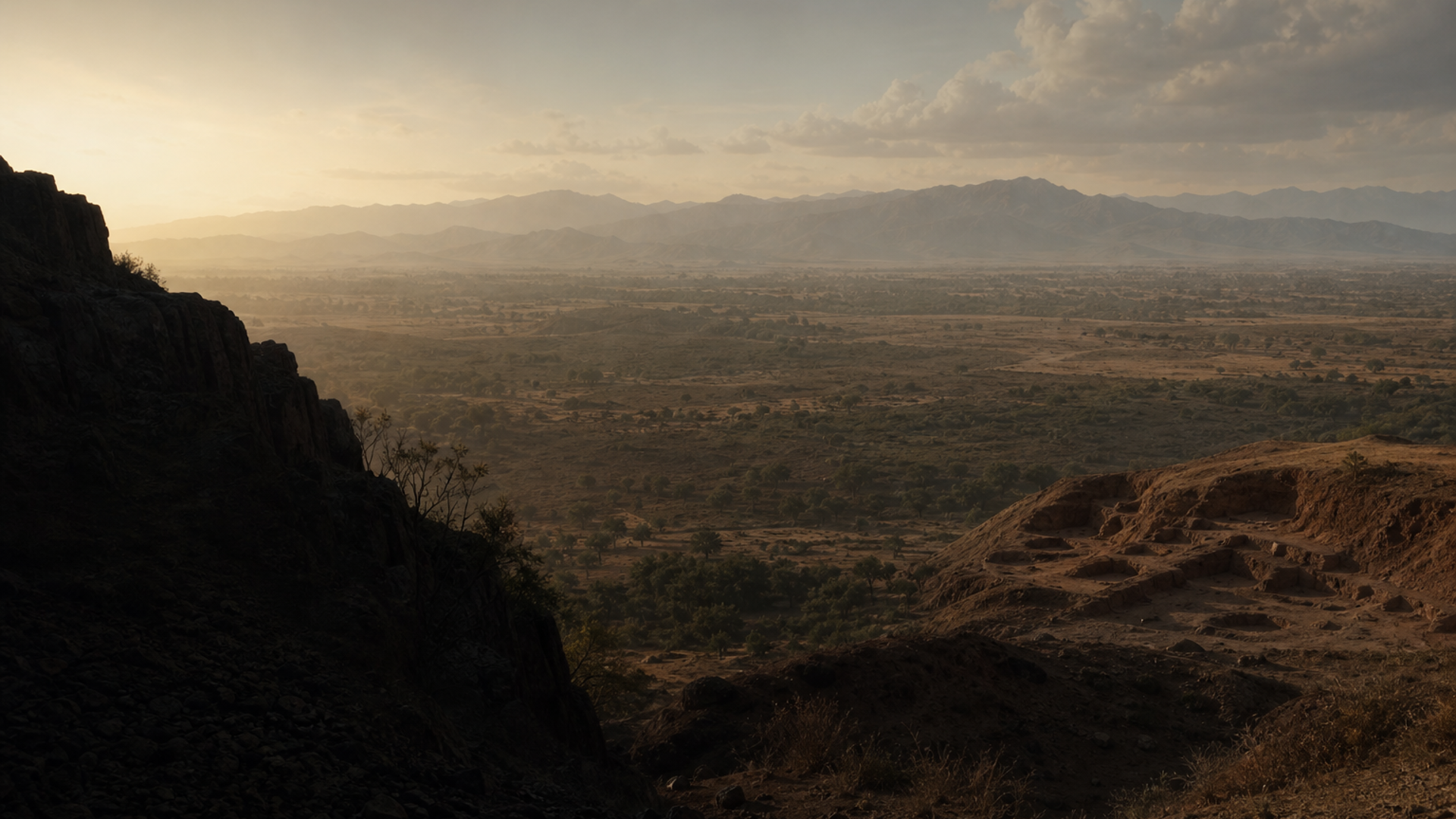
Ban Chiang sits like a bright jewel in the red earth of northeastern Thailand, its stratified mounds whispering the emergence of Bronze Age lifeways between roughly 1200 and 547 BCE. Archaeological data indicates a long sequence of occupation marked by painted pottery, early copper-alloy experimentation, and varied burial treatments at the eponymous site of Ban Chiang (Udon Thani province). Cultural continuity in ceramic styles and metallurgy suggests local innovation rather than wholesale population replacement. The modest set of four ancient genomes from this period provides a first molecular window: maternal lineages (mtDNA haplogroups M, R, and B) align with lineages common across prehistoric Mainland Southeast Asia, while a single observed Y-DNA NO lineage indicates paternal affinity with broader East/Southeast Asian clades. Limited evidence suggests these people were part of a dynamic tapestry of local foragers, incoming agriculturalists, and regional networks of exchange. Because the genetic sample size is very small, any narrative about migration, demographic shifts, or language spread must remain provisional. Still, when bones, bronzes, and genomes are read together, Ban Chiang emerges as a place where technological creativity and deep ancestral ties to Southeast Asian maternal and paternal lineages coalesced into recognizable Bronze Age communities.

  • Ban Chiang (Udon Thani) dates c. 1200–547 BCE, early Bronze Age in Thailand
  • Archaeology shows painted pottery, copper use, and varied burials
  • Genetic signal is preliminary but links to broader Southeast Asian lineages
Capítulo IV

Daily Life & Society

Archaeological contexts at Ban Chiang paint evocative scenes: households arranged around activity areas, pottery vessels for storage and cooking, and grave assemblages that include ornaments and copper items. Botanical and zooarchaeological remains indicate mixed farming economies—cultivated rice and domesticated animals—alongside foraging for wild resources. Social differentiation appears subtle; some burials contain richer grave goods and copper objects, suggesting emerging status distinctions, craft specialization, and possibly long-distance networks for raw materials. The material culture shows skilled metalworking that is integrated into domestic and funerary life rather than restricted to elite tombs. Osteological evidence from burials points to varied diet and workload patterns consistent with mixed agricultural subsistence. When the skeletal record is paired with the handful of ancient genomes, a human picture emerges: local family groups practicing agriculture and metallurgy, connected by marriage and exchange to neighboring communities. However, with only four genomes, population-level statements about kinship patterns, residence rules (patrilocality/matrilocality), or social stratification are speculative. Future aDNA sampling across more graves and settlement contexts would be required to resolve these social dynamics with confidence.

  • Mixed farming economy with rice and animal husbandry alongside foraging
  • Copper objects and pottery integrated into daily and funerary practices
Capítulo V

Genetic Profile

The genetic dataset for Thailand_BA is modest—four individuals from Ban Chiang—so interpretations must be cautious. Maternal lineages in this set are dominated by haplogroup M (2 samples), with single instances of R and B. These mtDNA clades are widespread in prehistoric and modern populations across South and Southeast Asia and indicate deep maternal continuity in the region. On the paternal side, one individual carries Y-DNA assigned to haplogroup NO. Haplogroup NO is ancestral to the modern N and O lineages common in East and Southeast Asia; its presence here is consistent with regional patterns seen in later populations but cannot alone resolve migration routes. When compared qualitatively to broader ancient DNA datasets from Mainland Southeast Asia, the Ban Chiang profiles fit within the expected diversity of Bronze Age foragers and farmers in the area—no overwhelming signal of far‑flung Steppe or West Eurasian ancestry is detected in these samples. Because the sample count is fewer than ten, statistical analyses (admixture proportions, formal tests) have limited power; observed haplogroups should be treated as initial signals rather than definitive demographic models. The most robust takeaway is that Ban Chiang's people carried maternal and paternal lineages that connect them to the larger genetic landscape of prehistoric Southeast Asia, complementing the archaeological narrative of localized development and regional interaction.


  • mtDNA: M (2), R (1), B (1) — consistent with regional maternal continuity
  • Y-DNA: NO (1) — suggests East/Southeast Asian paternal affinity; preliminary
Capítulo VI

Legacy & Modern Connections

Ban Chiang’s bronze-clad past resonates in the genetic continuity that threads through Southeast Asia. The mitochondrial and Y‑chromosome lineages observed—while based on only four individuals—mirror haplogroups present in many modern populations of the region, hinting that aspects of ancestry persisted through millennia of cultural change. Archaeologically, Ban Chiang influenced regional craft traditions and may have contributed technological knowledge to later societies across mainland Southeast Asia. Genetically, the site offers an anchor point: it shows that Bronze Age people in northeast Thailand shared genetic affinities with broader Southeast Asian groups rather than showing strong input from distant western sources. This does not preclude later migrations or language shifts; rather it situates Ban Chiang as part of an enduring local substrate. Continuing aDNA work, expanded sampling, and integration with isotopic and material studies will refine how these ancient people connect to present-day communities and cultural landscapes.

  • Observed haplogroups align with modern Southeast Asian genetic diversity
  • Ban Chiang represents a durable local legacy of technology and ancestry
Con IA

Asistente de IA

Haz preguntas sobre la cultura Ban Chiang Bronze Echoes

Asistente de IA por DNAGENICS

Desbloquear esta función
Pregunta sobre la cultura Ban Chiang Bronze Echoes. El asistente con IA puede explicar hallazgos genéticos, contexto histórico, pruebas arqueológicas y conexiones modernas, con sus límites de interpretación.
Ejemplo de análisis con IA

La cultura Ban Chiang Bronze Echoes representa un capítulo de la historia humana...

El análisis genético permite estudiar similitudes con poblaciones anteriores y posibles adaptaciones. Las muestras de ADN antiguo aportan información para investigar patrones migratorios y relaciones entre poblaciones, con límites que dependen del estudio y del contexto arqueológico.

Esta es una vista previa del análisis con IA. Accede al asistente completo para explorar información sobre:

  • Composición y similitud genética
  • Patrones migratorios y orígenes
  • Vida cotidiana y prácticas culturales
  • Contexto genético moderno

Explora más culturas antiguas

Descubre la historia de civilizaciones de distintas partes del mundo antiguo