Preparando el informe

Cargando la información y las referencias disponibles

Consultando el registro arqueológico...

Recopilando registros antiguos

Saltar al contenido principal
Cist-Shaft Echoes of Bronze-Age Estonia
Cultura destacada

Cist-Shaft Echoes of Bronze-Age Estonia

Stone cists, bronze echoes and a genetic signature linking the eastern Baltic to wider Bronze Age networks.

1274 CE - 398 BCE
Estonia (Harju, Tartu, Ida-Viru)
Desplázate para empezar
Capítulo I

La historia

Comprender la cultura Cist-Shaft Echoes of Bronze-Age Estonia

Archaeological and genetic data from 20 cist burials in Estonia (1274–398 BCE) reveal a male-skewed Y-DNA profile dominated by haplogroup R and diverse maternal lineages (U, T, J, K, H), suggesting interaction between local Baltic communities and broader Bronze Age networks. Preliminary conclusions emphasize continuity and mobility.

Time Period

1274–398 BCE

Region

Estonia (Harju, Tartu, Ida-Viru)

Common Y-DNA

R (18), P (1)

Common mtDNA

U (6), T (3), J (3), K (2), H (2) (others present)

Capítulo II

Cronología

Momentos clave de la historia de esta cultura

2500 BCE

Bronze technology spreads into the Baltic

Bronze metallurgy and new exchange networks reach the eastern Baltic, setting the stage for the regional Bronze Age cultural mosaic preserved in cist burials.

Capítulo III

Origins & Emergence

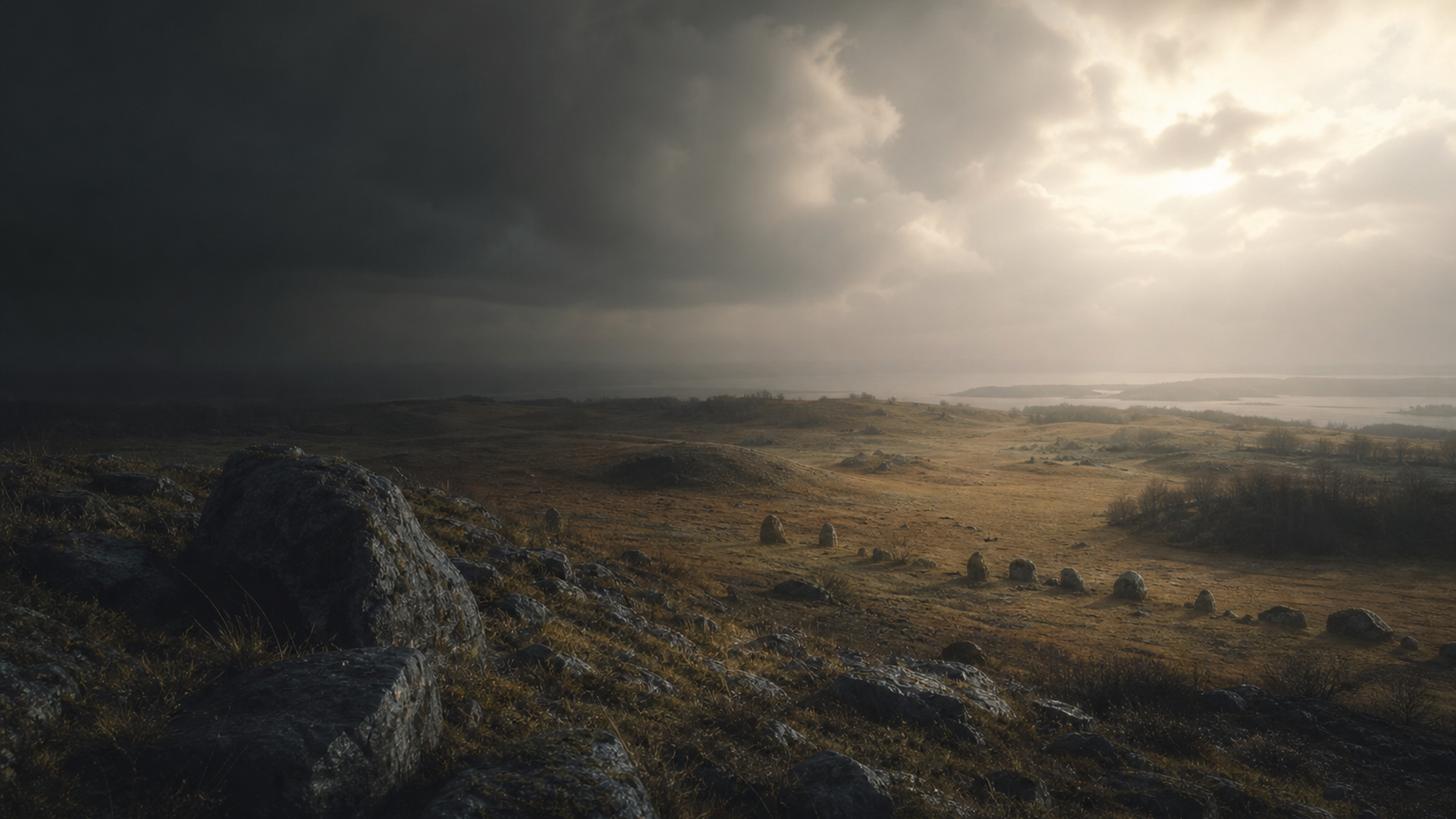
The Bronze Age landscape of Estonia unfolds in the carved stone of cist graves and the shimmer of imported metal. Archaeological data indicates continued local development from Late Neolithic roots alongside growing contacts across the Baltic Sea and into southern Scandinavia and central Europe. The twenty sampled individuals (1274–398 BCE) come from coastal and near-coastal burial complexes—Muuksi (Toomani, Lõokese), Jõelähtme, Väo (Jaani, Kangru), Rebala (Lastekangur), Vehendi and Napa—sites where stone cists and small cairns preserve human remains and grave goods.

Material culture—bronze pins, ornaments and occasional weapon fragments—documents exchange and adoption of new technologies. The funerary architecture (stone cists, secondary deposits) suggests a culture attentive to ancestry and place. Limited evidence suggests some regional variation in burial practice; for example, Muuksi and Rebala cemeteries preserve denser clusters of cists while inland finds are rarer.

Genetically, the sampled communities show signals that align with broader Bronze Age movements in northern Europe, but the full picture is complex: continuity from Mesolithic/Neolithic Baltic populations, incoming influences carrying Steppe-related lineages, and sustained maritime exchange likely all contributed. Archaeology and genetics together paint a portrait of a society grounded in local landscapes yet tied into an expanding Bronze Age world.

  • Samples drawn from cist cemeteries across Harju, Tartu and Ida-Viru counties
  • Material culture shows local continuity plus external contacts (bronze items)
  • Genetic evidence suggests both local persistence and incoming lineages
Capítulo IV

Daily Life & Society

Daily life for people who used stone-cist burials in Bronze-Age Estonia was shaped by seasonality, coastal resources and small-scale farming. Archaeobotanical and zooarchaeological indicators from comparable Baltic sites imply mixed economies: cereal cultivation, animal husbandry (cattle, sheep/goat), hunting, and extensive use of fish and seal resources in coastal zones. Stone cists, often reused or clustered in cairn fields, mark kin groups or ritual landscapes more than urban settlement.

Grave assemblages—simple bronze tools, pins and occasional personal ornaments—suggest communities where metal objects were valued but not ubiquitous, reflecting hierarchical differences that remained modest compared with later societies. Communal work on field systems, craft specialization in bronze-working or bone and antler, and long-distance exchange (amber, metal) likely structured social relations.

Archaeological data indicates a rhythm of life tethered to both land and sea: seasonal ferries, shoreline dwellings and inland fields. Stone cist graves provide a cinematic, intimate archive—bones, teeth and artifacts—allowing modern science to reconstruct lifeways, diets and social choices from a fragmentary but evocative record. Interpretations remain cautious: preservation bias toward burials and coastal sites can overrepresent certain activities and social segments.

  • Economy: mixed farming, husbandry, fishing and coastal resources
  • Burials emphasize kin or community identity with modest material inequality
Capítulo V

Genetic Profile

Genome-wide and uniparental data from 20 Estonia_BA individuals offer a rare genetic window into the eastern Baltic Bronze Age. Y-chromosome results are heavily skewed: 18 samples belong to haplogroup R and 1 to P. This dominance of R is consistent with the prevalence of Steppe-related paternal lineages across much of Bronze Age Europe, suggesting either a sizable male-line contribution from incoming groups or continuity of local R-lineage carriers who participated in Bronze Age cultural transformations.

Mitochondrial diversity is notable: U (6), T (3), J (3), K (2), H (2) account for most maternally inherited haplogroups among these samples, with remaining individuals carrying other lineages. The mix of U (often associated with pre-Neolithic and northern hunter‑gatherer matrilines) and T/J/K/H (linked to early farmers and later European populations) implies that maternal ancestry in Estonia_BA was heterogeneous—likely the result of long-term admixture between local hunter-gatherer descendants and Neolithic farmer-derived groups.

Caveats are important. The sample set (n=20) is moderate and drawn primarily from cist interments, which may bias toward particular social or kin groups. Y-haplogroup R covers multiple subclades with different histories; without higher-resolution subclade data, interpretations about precise migration routes remain provisional. Nevertheless, the genetic signal complements archaeology: a landscape of both continuity and connection to broader Bronze Age demographic flows.

  • Strong male-line dominance of haplogroup R (18/20) with one P
  • Maternal lineages show mixed hunter-gatherer and farmer-derived ancestry
Capítulo VI

Legacy & Modern Connections

These Bronze Age genomes form part of the deep ancestry that contributes to modern populations of the eastern Baltic. Haplogroup R is common in present-day Estonians, and many maternal haplogroups detected among the cist burials (U, H, J, K, T) persist in the region—evoking genetic threads that run from stone cists to contemporary DNA. Archaeological continuities in place-names, burial mounds and ritual landscapes preserve cultural memory even where material forms changed.

However, direct continuity is complex: later migrations, medieval population shifts and genetic drift have reshaped the gene pool. The Estonia_BA data suggest meaningful connections but should not be read as direct one-to-one ancestry claims for specific modern families. Ongoing and higher-resolution genomic sampling, paired with careful archaeological context, will clarify how Bronze Age communities contributed to the genetic fabric of the Baltic. For now, the cists remain evocative interlocutors—silent, durable links between people of the past and the genetic echoes in the present.

  • Genetic markers from Estonia_BA overlap with haplogroups found in modern Estonians
  • Continuity is plausible but mediated by later migrations and genetic change
Con IA

Asistente de IA

Haz preguntas sobre la cultura Cist-Shaft Echoes of Bronze-Age Estonia

Asistente de IA por DNAGENICS

Desbloquear esta función
Pregunta sobre la cultura Cist-Shaft Echoes of Bronze-Age Estonia. El asistente con IA puede explicar hallazgos genéticos, contexto histórico, pruebas arqueológicas y conexiones modernas, con sus límites de interpretación.
Ejemplo de análisis con IA

La cultura Cist-Shaft Echoes of Bronze-Age Estonia representa un capítulo de la historia humana...

El análisis genético permite estudiar similitudes con poblaciones anteriores y posibles adaptaciones. Las muestras de ADN antiguo aportan información para investigar patrones migratorios y relaciones entre poblaciones, con límites que dependen del estudio y del contexto arqueológico.

Esta es una vista previa del análisis con IA. Accede al asistente completo para explorar información sobre:

  • Composición y similitud genética
  • Patrones migratorios y orígenes
  • Vida cotidiana y prácticas culturales
  • Contexto genético moderno

Explora más culturas antiguas

Descubre la historia de civilizaciones de distintas partes del mundo antiguo