Preparando el informe

Cargando la información y las referencias disponibles

Consultando el registro arqueológico...

Recopilando registros antiguos

Saltar al contenido principal
Echoes from Estonia's Iron Age
Cultura destacada

Echoes from Estonia's Iron Age

Tarand graves, stone circles and a fragile genetic portrait of 800–45 BCE Estonia

800 CE - 45 BCE
Estonia (Lääne-Viru, Saare, Harju, Pärnu)
Desplázate para empezar
Capítulo I

La historia

Comprender la cultura Echoes from Estonia's Iron Age

Archaeological remains from tarand burials and stone circles across Estonia (800–45 BCE) combine with DNA from 10 individuals to reveal a mixed genetic picture: Y haplogroups R and N, and diverse maternal lineages (H, T, W, I). Results are intriguing but preliminary.

Time Period

800–45 BCE (Estonia)

Region

Estonia (Lääne-Viru, Saare, Harju, Pärnu)

Common Y-DNA

R (4), N (3)

Common mtDNA

T (2), H (2), H1a (1), W (1), I (1)

Capítulo II

Cronología

Momentos clave de la historia de esta cultura

800 BCE

Local Iron Age traditions emerge

Tarand graves and stone-built burial enclosures become prominent in coastal and inland Estonia, marking regional funerary practices and long-term site reuse.

Capítulo III

Origins & Emergence

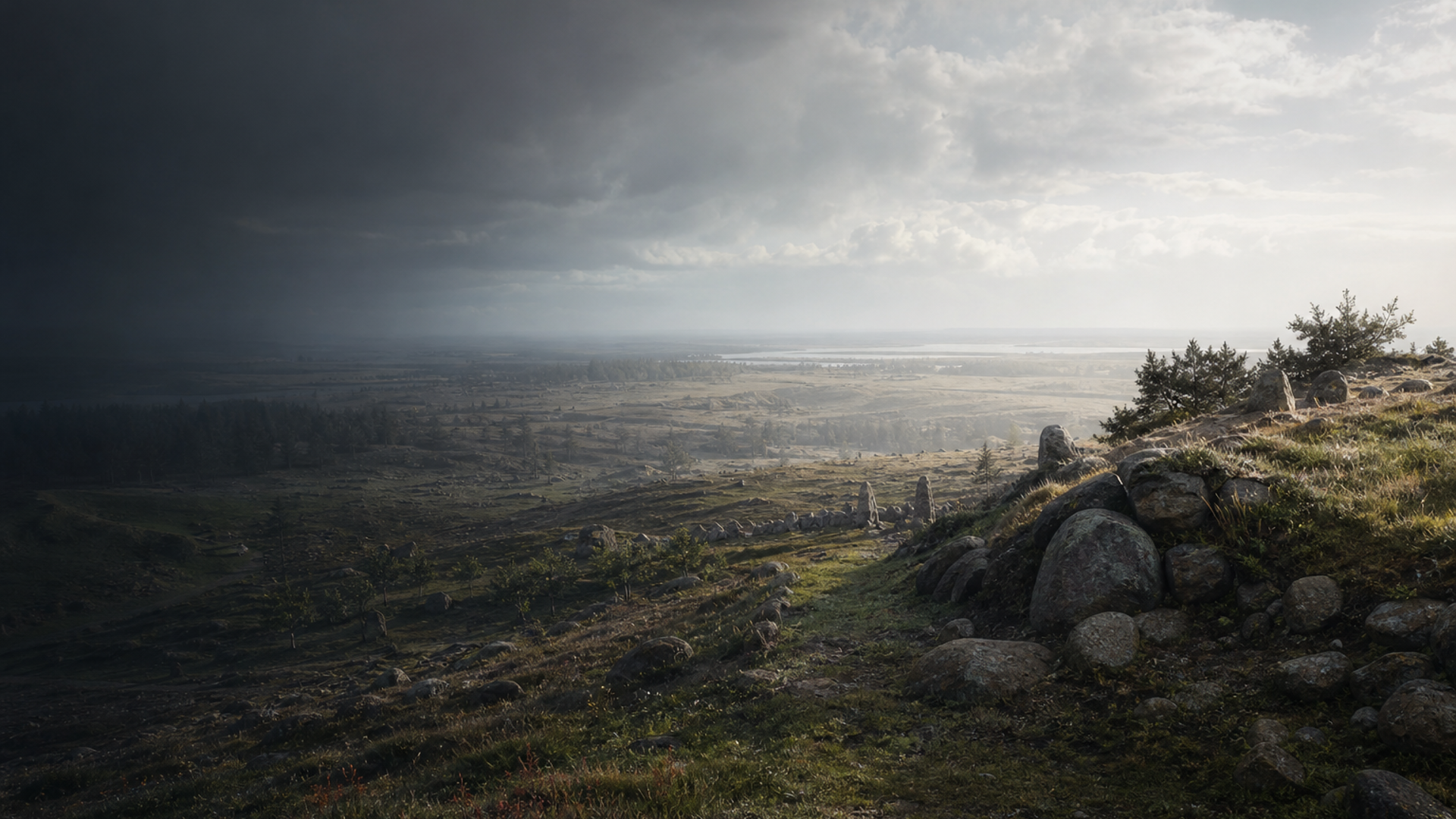
The sites sampled—tarand graves and stone circles at Kunda (Hiiemägi), Ilmandu, Poanse, Loona and Kurevere—sit within a long local trajectory from Bronze Age settlement into the local Iron Age (commonly dated in Estonia from c. 800 BCE onward). Archaeological data indicate the continued use and elaboration of tarand square stone burial enclosures and cist burials across coastal and inland lowlands. These features reflect regional burial traditions rather than a single intrusive population.

Material culture shows ties to neighboring Baltic and Scandinavian zones: stone constructions and certain artifact types imply exchange and shared funerary practices. The genetic snapshot from 10 individuals suggests a composite origin: Y-chromosome lineages associated with steppe-derived populations (haplogroup R) occur alongside haplogroup N, which today is frequent among Uralic-speaking groups. This pattern supports an archaeological picture of cultural connectivity—local continuity shaped by incoming influences. Limited evidence and the small sample set mean these interpretations remain provisional; broader sampling is required to chart population dynamics with confidence.

  • Sites: Hiiemägi (Kunda), Ilmandu, Poanse, Loona, Kurevere
  • Tarand graves and cists mark local Iron Age funerary practice
  • Genetic mix suggests both steppe-derived and Uralic-linked ancestry
Capítulo IV

Daily Life & Society

Excavations at tarand burials and associated settlement traces imply communities organized around mixed economies: small-scale agriculture, stock-keeping, hunting and rich exploitation of coastal fisheries and wetlands. The landscape—estuarine shores, islands like Saaremaa, and fertile river valleys—shaped seasonal mobility, boat use, and trade along the Baltic littoral.

Tarand graves themselves are social statements: rectangular stone enclosures often contain multiple inhumations (for example tarand XI burial 24 at Hiiemägi and tarand 2 at Tandemägi), suggesting family or lineage-based burial plots. The absence of rich grave goods in many burials may reflect organic perishable economies or social choices rather than impoverishment. Stone circles at Kurevere point to communal ritual spaces, visible in the landscape and reused over generations. Craft traditions—bronze and iron tools, textiles, and woodwork—are inferred from tool finds and wear patterns, while house plans and refuse pits indicate tightly structured domestic life.

Archaeological preservation is variable; acidic soils and coastal erosion bias what reaches us. Therefore, reconstructions of daily life combine direct evidence from graves with inference from regional analogies and environmental data.

  • Mixed economy: agriculture, livestock, fishing, and seasonal mobility
  • Tarand enclosures indicate family or lineage burial practices
Capítulo V

Genetic Profile

Ten individuals from across Estonia (dating to 800–45 BCE) provide a first-generation view of local ancestry. On the paternal side, haplogroup R appears in four samples while haplogroup N appears in three. R lineages are often associated in prehistoric Europe with steppe-derived ancestry linked to earlier Bronze Age expansions; haplogroup N is today prominent in Uralic-speaking populations and likely reflects northern Eurasian connections.

Mitochondrial diversity in these samples is notable: haplogroups T (2) and H (2) are common European maternal lineages, with single occurrences of H1a, W and I. This mix indicates multiple maternal ancestries circulating in the region—some widespread in Europe, others more frequent in northern or eastern Europe.

Archaeogenetic interpretation must be cautious. With only 10 individuals, patterns such as a higher frequency of R vs N could reflect local family groups or sampling bias rather than population-wide ratios. The co-occurrence of R and N hints at admixture between groups carrying steppe-derived male lines and communities linked to northern/forest-zone populations. Genome-wide analyses (when available) will clarify proportions of Steppe, Neolithic farmer and local hunter-gatherer ancestry components. For now, the DNA record complements the archaeological picture of Estonia as a crossroads of maritime exchange and inland connections during the Iron Age.

  • Paternal mix: R (4) and N (3) indicate steppe and northern links
  • Maternal lineages (H, T, W, I) show diverse European ancestries
Capítulo VI

Legacy & Modern Connections

The genetic signatures observed in these Iron Age burials resonate with patterns seen in later Baltic and Finnic populations. Haplogroup N’s presence aligns with linguistic and genetic ties that connect modern Estonians and other Uralic-speaking groups to broader northern Eurasian networks. Haplogroup R reflects deeper Bronze Age and steppe-derived threads that are widespread across northern Europe.

However, continuity is complex. Subsequent migrations, trade and demographic shifts across the first millennium CE and later centuries reshaped ancestry in the region. The 10-sample Iron Age snapshot captures part of a mosaic rather than a complete portrait. It highlights how archaeology and ancient DNA together illuminate the layered processes—movement, exchange, and local resilience—that forged the human landscape of prehistoric Estonia.

  • Genetic threads link Iron Age individuals to later Baltic and Uralic populations
  • Findings are an important but partial glimpse; later events reshaped ancestry
Con IA

Asistente de IA

Haz preguntas sobre la cultura Echoes from Estonia's Iron Age

Asistente de IA por DNAGENICS

Desbloquear esta función
Pregunta sobre la cultura Echoes from Estonia's Iron Age. El asistente con IA puede explicar hallazgos genéticos, contexto histórico, pruebas arqueológicas y conexiones modernas, con sus límites de interpretación.
Ejemplo de análisis con IA

La cultura Echoes from Estonia's Iron Age representa un capítulo de la historia humana...

El análisis genético permite estudiar similitudes con poblaciones anteriores y posibles adaptaciones. Las muestras de ADN antiguo aportan información para investigar patrones migratorios y relaciones entre poblaciones, con límites que dependen del estudio y del contexto arqueológico.

Esta es una vista previa del análisis con IA. Accede al asistente completo para explorar información sobre:

  • Composición y similitud genética
  • Patrones migratorios y orígenes
  • Vida cotidiana y prácticas culturales
  • Contexto genético moderno

Explora más culturas antiguas

Descubre la historia de civilizaciones de distintas partes del mundo antiguo