Preparando el informe

Cargando la información y las referencias disponibles

Consultando el registro arqueológico...

Recopilando registros antiguos

Saltar al contenido principal
Echoes of the Hungarian Iron Age
Cultura destacada

Echoes of the Hungarian Iron Age

Small skeletal samples illuminate life in the Carpathian Basin, with tentative genetic hints

978 CE - 400 BCE
Carpathian Basin (modern Hungary)
Desplázate para empezar
Capítulo I

La historia

Comprender la cultura Echoes of the Hungarian Iron Age

Archaeological and DNA data from three Early Iron Age burials in Hungary (978–400 BCE) reveal diverse maternal lineages (H, T, J). Limited samples make conclusions preliminary, but material culture and genetics suggest local continuity with wider Central European networks.

Time Period

978–400 BCE (Early Iron Age)

Region

Carpathian Basin (modern Hungary)

Common Y-DNA

Not reported / limited data

Common mtDNA

T (1), H (1), J (1)

Capítulo II

Cronología

Momentos clave de la historia de esta cultura

978 BCE

Earliest sample date (dataset)

One of the analyzed burials dates to about 978 BCE, placing it in the Early Iron Age horizon.

800 BCE

Hallstatt cultural networks expand

Regional archaeological parallels suggest ties to Hallstatt-era exchange across Central Europe.

400 BCE

Latest sample date (dataset)

The most recent sample in the set is roughly 400 BCE, near the transition to later Iron Age phases.

Capítulo III

Origins & Emergence

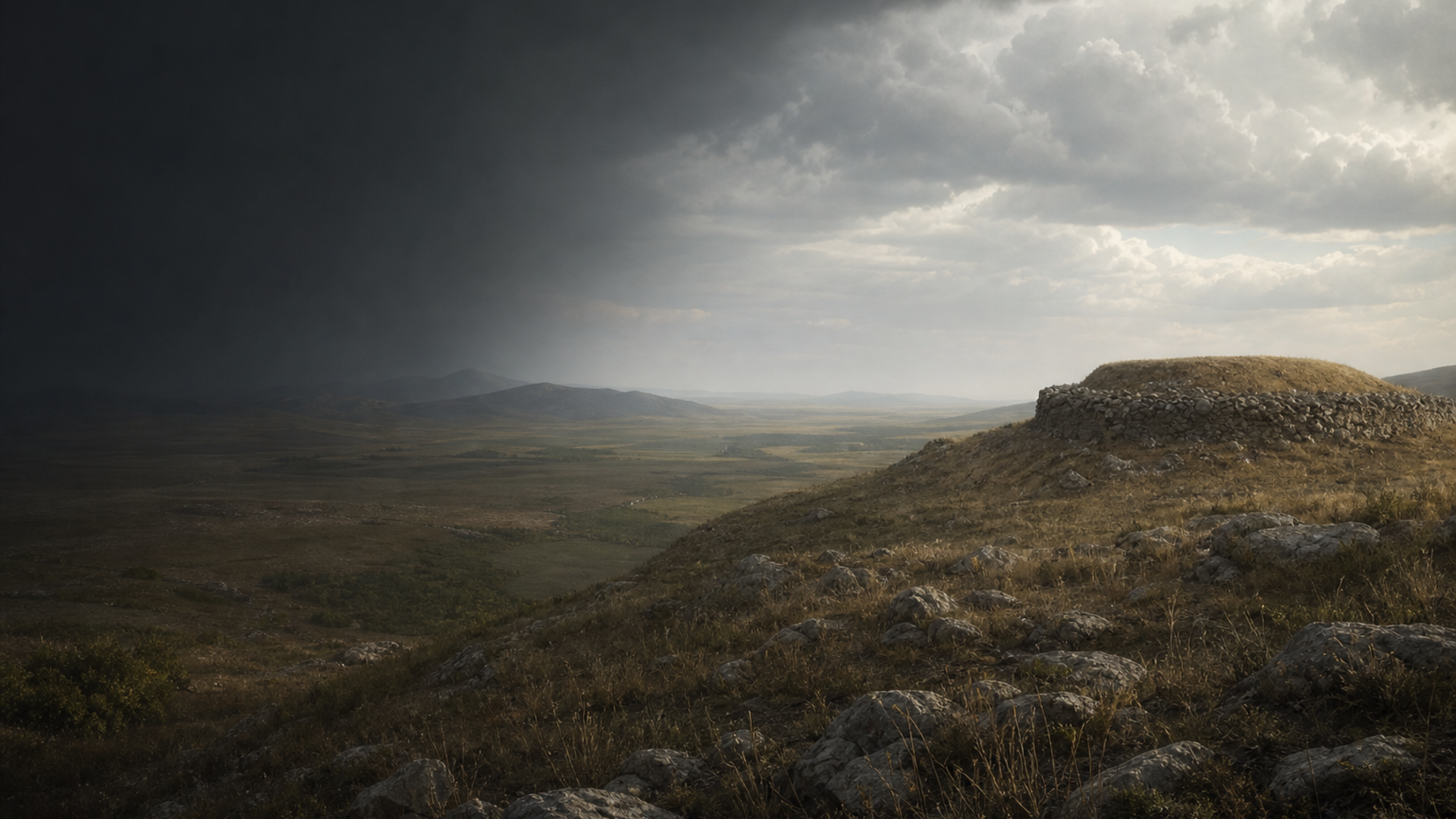
Archaeological data indicates that the Early Iron Age in the Carpathian Basin unfolded as a landscape of hilltop settlements, fortified enclosures and rich burial grounds. The samples in this dataset come from two sites in northwestern and northern Hungary: Kápolnadomb (Gór, Vas county) and Nógrádkövesd-Víztározó (Nógrád county), dated between 978 and 400 BCE. Limited evidence suggests these communities participated in the broader Hallstatt-era networks of Central Europe — exchange of metalwork, decorative motifs and craft techniques appears in regional assemblages.

Material remains at contemporaneous sites show increasing use of iron tools and weapons alongside continuity of Bronze Age ceramic traditions; archaeologists interpret this as a gradual technological and social transition rather than abrupt replacement. While cinematic images of warriors and hilltop strongholds dominate popular imagination, the archaeological record reveals a patchwork of villages, artisanal workshops and ritualized cemeteries spread across river valleys and uplands.

Because only three individuals provide genetic data here, origins inferred from DNA must be treated as provisional. Nevertheless, the combination of place, date and material culture situates these people within an era of shifting networks — local traditions woven together with long-distance contacts across Central Europe and the Carpathian corridor.

  • Sites: Kápolnadomb (Gór, Vas) and Nógrádkövesd-Víztározó (Nógrád)
  • Era: Early Iron Age, 978–400 BCE, Hallstatt-influenced networks
  • Evidence: fortified settlements, cemeteries, metalwork exchange
Capítulo IV

Daily Life & Society

Archaeological excavations across Early Iron Age Hungary suggest communities organized around mixed farming, craft production and seasonal mobility. Pollen and archaeobotanical remains at regional sites indicate cereal cultivation and animal husbandry as economic backbones; archaeologists also find traces of ironworking, bronze reworking and bone craft in settlement layers. Grave inventories vary: some burials contain weapons or decorated fibulae, while others are modest, pointing to social differentiation but not rigid stratification across every community.

Settlement archaeology paints a picture of clustered farmsteads, small fortified hilltops, and riverine hamlets. Timber and earthwork defenses appear at strategic points, hinting at intermittent competition for resources or prestige. Communal rituals — signaled by structured cemetery layouts, grave goods placed in symbolic arrangements, and occasional votive deposits — suggest a society where identity was expressed through objects and performance as much as descent.

Life would have been seasonal and tactile: the hiss of a forge, the rhythm of ploughing, the careful application of pigment to metal and ceramic. Yet these impressions come from material traces; direct testimony of beliefs, language and social roles is absent. The three genetic samples add fragile human faces to this material world, but cannot alone map the full social landscape.

  • Economy: mixed farming, animal husbandry, craft production
  • Social signals: varied grave goods and hilltop enclosures
Capítulo V

Genetic Profile

The genetic dataset for Hungary_EIA is extremely small — three individuals — so conclusions must remain tentative. All three yielded mitochondrial DNA haplogroups: one T, one H, and one J. These maternal lineages are broadly distributed across Europe and West Asia in both ancient and modern populations, and their presence here indicates maternal diversity rather than a single homogeneous origin.

No consistent Y-DNA signal is reported for these samples in this dataset, preventing conclusions about paternal lineages or sex-biased migration. Archaeogenetic studies from adjacent regions show that Early Iron Age central Europe often reflects continuity from local Late Bronze Age populations combined with varying degrees of gene flow from surrounding areas; however, autosomal affinities cannot be inferred from three mtDNA results.

Because the sample count is below ten, any population-level interpretation would be premature. What these three genomes do offer is a concrete reminder: people living in the Carpathian Basin at the turn of the first millennium BCE carried maternal ancestries common across Eurasia, and they participated in demographic histories shaped by long-term continuity and episodic mobility. Future sampling of additional burials from Kápolnadomb, Nógrádkövesd and neighboring sites will be necessary to test whether these haplogroups reflect local norms or individual mobility.

  • mtDNA: T (1), H (1), J (1) — indicates maternal diversity
  • Sample limitations: only 3 individuals; conclusions are preliminary
Capítulo VI

Legacy & Modern Connections

The archaeological footprint of Early Iron Age communities in Hungary endures in the stratigraphy of landscapes and the molecules of modern populations, but the link is complex. Over the subsequent millennium the Carpathian Basin saw Celtic movements, Roman frontiers, Slavic settlements and, much later, the Magyar arrival in the 9th century CE; each wave rearranged cultural and genetic landscapes. Archaeological traditions from the Iron Age — craft techniques, metal styles, settlement patterns — influenced successor cultures, often blending into hybrid forms.

Genetically, the presence of mtDNA haplogroups H, T and J in these Early Iron Age individuals mirrors patterns found across Europe today, but such matches do not prove direct continuity: centuries of migration and admixture intervene. The cinematic image of a single ancestral line flowing unchanged into modern populations is misleading; instead, think of many braided threads. These three genomes are small but valuable stitches in a much larger tapestry. Expanded ancient DNA sampling across the Carpathian Basin will sharpen our view of how people of the Iron Age contributed to the genetic mosaic of subsequent inhabitants.

  • Cultural continuity: material traditions influenced later regional cultures
  • Genetic continuity uncertain: later migrations complicate direct links
Con IA

Asistente de IA

Haz preguntas sobre la cultura Echoes of the Hungarian Iron Age

Asistente de IA por DNAGENICS

Desbloquear esta función
Pregunta sobre la cultura Echoes of the Hungarian Iron Age. El asistente con IA puede explicar hallazgos genéticos, contexto histórico, pruebas arqueológicas y conexiones modernas, con sus límites de interpretación.
Ejemplo de análisis con IA

La cultura Echoes of the Hungarian Iron Age representa un capítulo de la historia humana...

El análisis genético permite estudiar similitudes con poblaciones anteriores y posibles adaptaciones. Las muestras de ADN antiguo aportan información para investigar patrones migratorios y relaciones entre poblaciones, con límites que dependen del estudio y del contexto arqueológico.

Esta es una vista previa del análisis con IA. Accede al asistente completo para explorar información sobre:

  • Composición y similitud genética
  • Patrones migratorios y orígenes
  • Vida cotidiana y prácticas culturales
  • Contexto genético moderno

Explora más culturas antiguas

Descubre la historia de civilizaciones de distintas partes del mundo antiguo