Preparando el informe

Cargando la información y las referencias disponibles

Consultando el registro arqueológico...

Recopilando registros antiguos

Saltar al contenido principal
Iroco of the Titicaca Basin
Cultura destacada

Iroco of the Titicaca Basin

A single-genome glimpse of a Middle Horizon life on the high Andes

775 CE - 1155 CE
Titicaca Basin, Bolivia
Desplázate para empezar
Capítulo I

La historia

Comprender la cultura Iroco of the Titicaca Basin

Archaeogenetic and archaeological evidence from a single Iroco individual (775–1155 CE) in the Titicaca Basin reveals Native American paternal haplogroup Q and maternal B2, hinting at deep Andean continuity amid Middle Horizon cultural dynamics. Conclusions are preliminary.

Time Period

775–1155 CE (Middle Horizon)

Region

Titicaca Basin, Bolivia

Common Y-DNA

Q (1 sample)

Common mtDNA

B2 (1 sample)

Capítulo II

Cronología

Momentos clave de la historia de esta cultura

775 CE

Earliest calibrated sample date

The earliest bound of the sequenced Iroco individual's date range, anchoring the genome in the Middle Horizon period.

1000 CE

Middle Horizon transformations

Regional cultural and political reorganization in the Titicaca Basin, visible in ceramics, architecture, and landscape engineering.

Capítulo III

Origins & Emergence

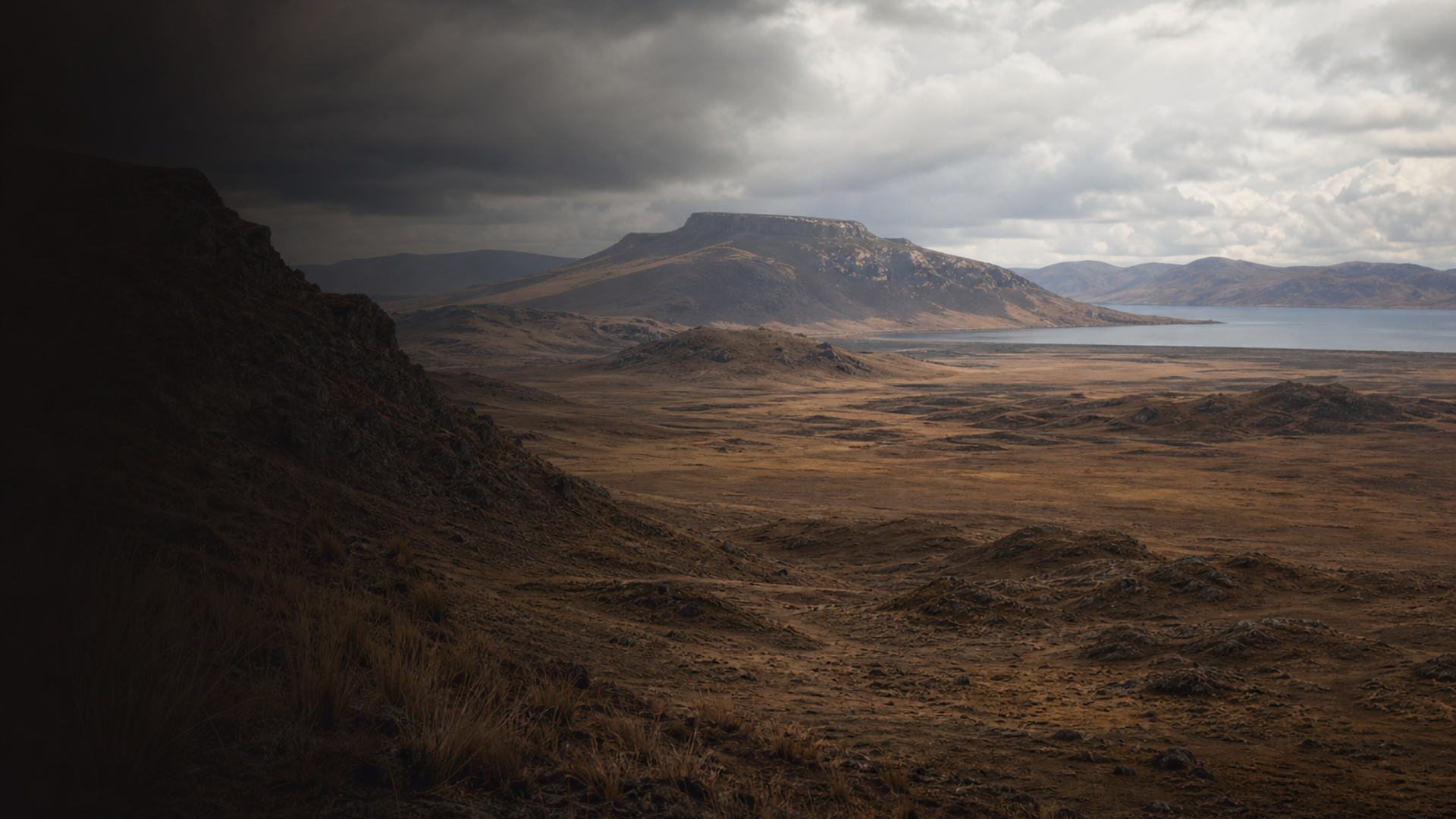
Beneath the thin air of the high plateau, the Iroco designation marks a Middle Horizon presence in the Titicaca Basin between roughly 775 and 1155 CE. Archaeological data indicates this interval overlaps the waning and local transformations of broader Middle Horizon polities that reshaped Andean lifeways. At the scale of the basin, communities practiced intensified agriculture — including raised fields and irrigation — and participated in regional exchange networks that connected lake shores, puna pastures, and intermontane corridors.

Material traces from contemporaneous sites in the Titicaca region commonly include painted and polychrome ceramics, stone architecture, and engineered landscape modifications; however, specific published excavations attributed to an "Iroco" cultural label remain limited. Limited evidence suggests Iroco-associated people lived in settlements that negotiated both highland agricultural productivity and the ritual geography of the lake. The single genomic sample from the Iroco context should be viewed as a narrow window: while it anchors a human presence in time and place, it cannot by itself resolve population origins, migration routes, or the full suite of cultural interactions across the Middle Horizon.

Careful synthesis of material culture, radiocarbon dates, and regional comparisons is required to situate Iroco communities within the complex tapestry of Andean prehistory. Until more samples and stratified excavations are analyzed, interpretations remain provisional.

  • Dates: 775–1155 CE, Middle Horizon timeframe
  • Region: Titicaca Basin highlands, Bolivia
  • Evidence: scarce, inferred from regional material culture and one genomic sample
Capítulo IV

Daily Life & Society

Imagine dawn over a mirror-lake, terraces etched into slopes, and reed boats slipping from shore — an evocative image consistent with ethnographic and archaeological models for Middle Horizon lifeways in the Titicaca Basin. Archaeological data indicates communities combined highland agriculture (potatoes, tubers, quinoa), camelid pastoralism, and engineered wetlands to sustain relatively dense populations. Storage features, middens, and ceramic assemblages at analogous sites point to seasonally organized production and long-distance exchange in obsidian, textiles, and ritual goods.

Social organization during this era could have included community-level leaders, ritual specialists, and ties to wider political-religious systems centered on lake shrines and monumental precincts. Craft specialization is suggested by stylistic ceramic variation and textile techniques seen across the region, but assigning these directly to the Iroco label is tentative given limited archaeological characterization.

Daily life would also have been shaped by verticality — seasonal movement between valley plots and higher puna pastures — and by a cosmology attentive to water, mountain spirits, and ancestral places. The single genetic sample cannot reconstruct household composition or social rank, but when paired with future archaeological sampling it may illuminate who participated in these economic and ritual networks.

  • Mixed economy: agriculture, camelid herding, engineered wetlands
  • Participation in regional exchange and ritual landscapes
Capítulo V

Genetic Profile

The genetic evidence from the Iroco dataset is extremely limited: one sequenced individual from the Titicaca Basin dated 775–1155 CE. This lone genome carries Y-chromosome haplogroup Q and mitochondrial haplogroup B2, both well-established lineages in Native American populations.

Haplogroup Q is the predominant paternal lineage among many indigenous groups in the Americas and reflects deep ancestry tied to initial continental peopling events originating from Beringia thousands of years earlier. Maternal haplogroup B2 likewise traces to early Native American maternal founders and is observed at appreciable frequencies across Andean and lowland populations. Together, these markers suggest that the Iroco individual descends from longstanding American lineages that persisted into the Middle Horizon era in the highlands.

However, with a sample count of one, any population-level inference is preliminary. Archaeogenetic patterns that require broader sampling — such as sex-biased migration, admixture with neighboring groups, or genetic continuity/discontinuity with modern Andean populations — cannot be robustly assessed from this single genome. Future targeted sampling across Iroco-labeled sites and neighboring occupations in the Titicaca Basin will be necessary to test hypotheses about demographic stability, mobility, and the genetic signature of Middle Horizon socio-political change.

  • Observed paternal lineage: Q — common in Native American ancestry
  • Observed maternal lineage: B2 — a widespread Andean maternal clade; conclusions are preliminary (n=1)
Capítulo VI

Legacy & Modern Connections

The Iroco genomic glimpse ties the deep genetic threads of Andean peoples to landscapes still inhabited today. Archaeological data indicates cultural practices from the Middle Horizon shaped later social formations, and genetic markers like haplogroups Q and B2 are part of a continuity that links ancient highland inhabitants with contemporary indigenous communities across the Andes. Yet continuity is not uniform: centuries of local transformations, population movements, and historic contacts reconfigured demography in complex ways.

Because the current dataset includes a single individual, we must avoid overstating direct lineage claims to present-day groups. Instead, the Iroco genome serves as a sentinel: it confirms that lineages characteristic of Native American ancestry were present in the Titicaca Basin during the Middle Horizon and invites further integrated study. Expanded archaeogenetic sampling, combined with careful archaeological excavation of named sites and comparative analysis with Tiwanaku-era materials, will clarify how Iroco peoples contributed to the long human story of the high Andes.

  • Genetic continuity is suggested but not proven — more samples needed
  • Iroco contributes to a broader narrative linking Middle Horizon societies to modern Andean populations
Con IA

Asistente de IA

Haz preguntas sobre la cultura Iroco of the Titicaca Basin

Asistente de IA por DNAGENICS

Desbloquear esta función
Pregunta sobre la cultura Iroco of the Titicaca Basin. El asistente con IA puede explicar hallazgos genéticos, contexto histórico, pruebas arqueológicas y conexiones modernas, con sus límites de interpretación.
Ejemplo de análisis con IA

La cultura Iroco of the Titicaca Basin representa un capítulo de la historia humana...

El análisis genético permite estudiar similitudes con poblaciones anteriores y posibles adaptaciones. Las muestras de ADN antiguo aportan información para investigar patrones migratorios y relaciones entre poblaciones, con límites que dependen del estudio y del contexto arqueológico.

Esta es una vista previa del análisis con IA. Accede al asistente completo para explorar información sobre:

  • Composición y similitud genética
  • Patrones migratorios y orígenes
  • Vida cotidiana y prácticas culturales
  • Contexto genético moderno

Explora más culturas antiguas

Descubre la historia de civilizaciones de distintas partes del mundo antiguo