Preparando el informe

Cargando la información y las referencias disponibles

Consultando el registro arqueológico...

Recopilando registros antiguos

Saltar al contenido principal
Potapovka of the Volga Steppe
Cultura destacada

Potapovka of the Volga Steppe

Bronze Age kurgans on the Samara and Sok rivers reveal a fleeting, mobile society

2468 CE - 1900 BCE
Samara & Volga River Valley, Russia
Desplázate para empezar
Capítulo I

La historia

Comprender la cultura Potapovka of the Volga Steppe

A small genetic and archaeological record from Samara Oblast (2468–1900 BCE) ties Potapovka kurgan burials to steppe lineages. Limited samples (n=3) show paternal R and maternal U/C1, offering preliminary insight into Bronze Age mobility and cultural links across the Eurasian steppe.

Time Period

2468–1900 BCE

Region

Samara & Volga River Valley, Russia

Common Y-DNA

R (2 samples)

Common mtDNA

U (2), C1 (1)

Capítulo II

Cronología

Momentos clave de la historia de esta cultura

2500 BCE

Potapovka horizon emerges in the Volga steppe

Kurgan burials and metalworking traditions appear along the Samara and Sok rivers, marking new social landscapes and steppe-wide interactions.

Capítulo III

Origins & Emergence

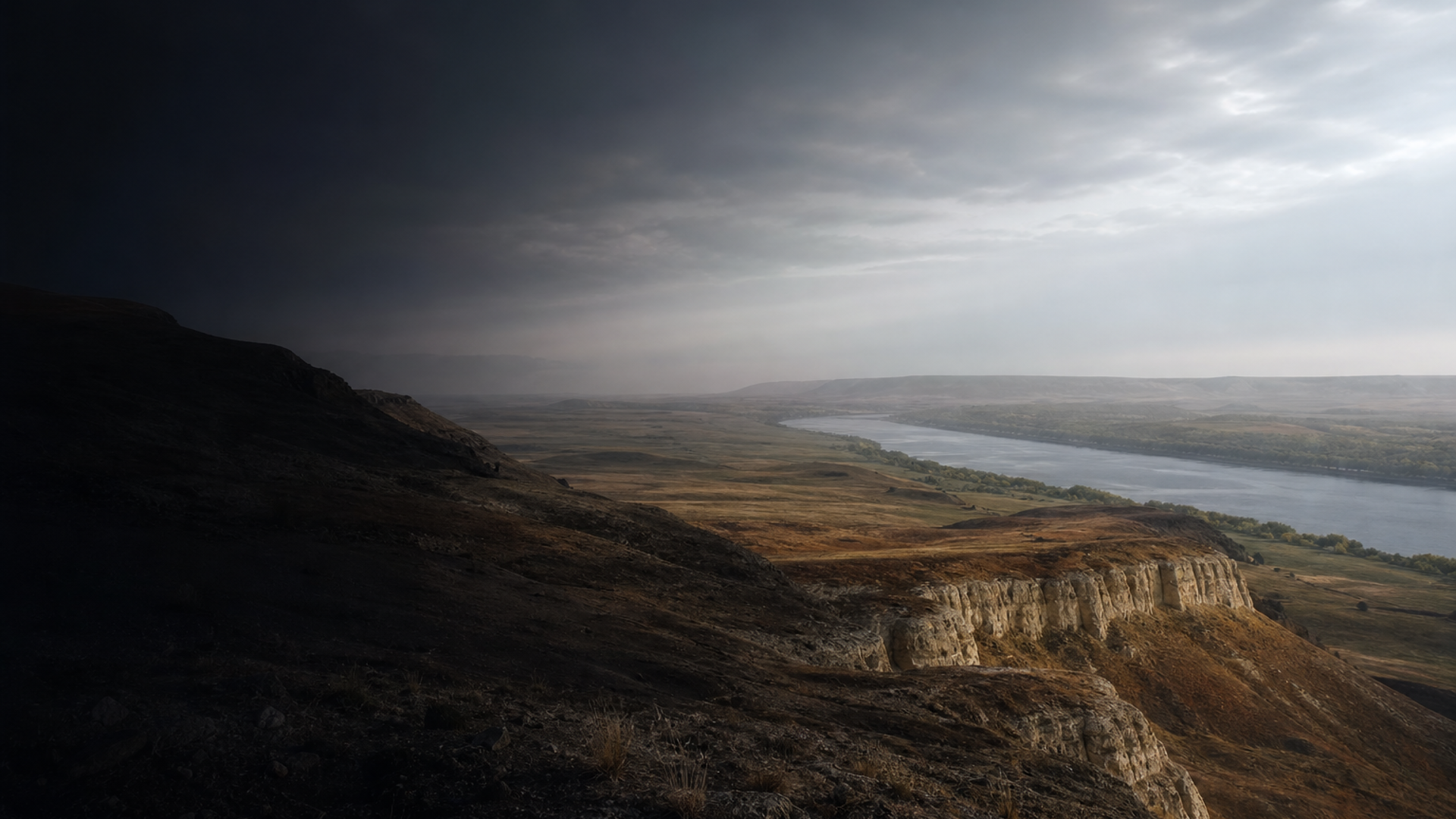
The Potapovka horizon emerges in the mid–to–late 3rd millennium BCE along the forest-steppe interface of the middle Volga, a landscape of braided rivers and loess ridges. Archaeological data indicates funerary mounds (kurgans) and richly furnished burials at sites such as Grachevka (Sok River) and Utyevka VI (Samara River).

In the archaeological record, Potapovka graves often contain metalwork, horse-related gear, and indicators of mobile pastoral lifeways. These material signatures place Potapovka within a broader constellation of late Eneolithic–Early Bronze Age steppe cultures often grouped with Sintashta-related phenomena. Limited evidence suggests interactions — both cultural and biological — between local hunter-fisher-herder groups and incoming steppe populations, producing hybrid burial rites and new social expressions.

Chronologically, the sampled individuals fall between 2468 and 1900 BCE, a period of dynamic social reorganization across the Pontic–Caspian and Urals regions. Archaeological interpretation stresses networks of exchange along river corridors and seasonal mobility; kurgans served as visible markers of lineage and territorial claim. While material culture ties link Potapovka to neighboring complexes, the precise pathways of emergence remain partly conjectural pending broader datasets.

  • Kurgan burials at Grachevka and Utyevka VI anchor the Potapovka horizon.
  • Material culture shows links to Sintashta–steppe networks.
  • Emergence dated to mid–late 3rd millennium BCE along the Volga.
Capítulo IV

Daily Life & Society

Archaeological traces evoke a world of seasonal herds, riverine fishing, and metallurgical craft. Potapovka communities occupied the Volga floodplain and adjacent steppe, exploiting rich pastures and river resources. Graves sometimes include horse harness fittings, bronze tools, and ornamental beads — objects that suggest both mobile pastoralism and long-distance exchange.

Settlements are less well preserved than burial monuments, but the funerary record implies social differentiation: some kurgans are modest, others elaborate, hinting at emerging hierarchies or warrior lineages. The placement of mounds on river terraces created a theatrical landscape of memory and territorial signaling, visible from approaches used by herds and human groups alike.

Trade and interaction likely connected Potapovka peoples to metal sources, raw materials, and ideas across the steppe corridor. Archaeobotanical and zooarchaeological data remain limited for these specific sites, but regional analogies point to mixed economies of herding, hunting, and seasonal cultivation. The daily life of these communities was shaped by mobility, riverine navigation, and the rhythms of Bronze Age pastoralism.

  • Mixed pastoral and riverine subsistence in the Volga floodplain.
  • Kurgans indicate social differentiation and long-distance exchange.
Capítulo V

Genetic Profile

Genetic sampling from three Potapovka-associated burials (Grachevka; Utyevka VI) provides a small but informative window into population history. Two male individuals carry broad haplogroup R on the paternal line, while mitochondrial lineages include U (two individuals) and C1 (one individual). These results are preliminary but resonate with broader patterns documented in Bronze Age steppe contexts.

Paternal R lineages are commonly associated with steppe male ancestry in multiple Bronze Age assemblages; their presence here is consistent with archaeological inferences of steppe-derived social networks and possibly male-biased mobility. Maternal U haplogroups are frequent in European and steppe-associated populations and may reflect continuity of local or regional maternal lines. The single C1 maternal lineage is notable because C lineages are more often found to the east; its occurrence could indicate contact with eastern populations or retention of an older maternal heritage along a crossroads of movement.

Crucially, with only three samples the genetic picture is incomplete. Archaeological data indicates Potapovka sat at an intersection of cultural influences; the limited genetic evidence supports connections to steppe demographic processes but cannot resolve fine-scale ancestry shifts, admixture dates, or population structure. Future sampling will be necessary to test hypotheses about male-driven migration, maternal diversity, and links to Sintashta, Andronovo, and later populations.

  • Two males carry paternal haplogroup R, consistent with steppe-associated lineages.
  • Mitochondrial diversity (U, C1) suggests mixed maternal heritage; sample size (n=3) is small.
Capítulo VI

Legacy & Modern Connections

Potapovka occupies a dramatic chapter in the story of Bronze Age steppe transformations. Archaeologically, it contributes to the sequence of kurgan-building societies that restructured social landscapes across the Eurasian steppe. Genetically, even limited data tie Potapovka individuals into broader steppe ancestries that later shaped populations across Eurasia.

Direct lines from Potapovka to modern groups cannot be asserted from three samples alone. Yet the combination of Y-lineage R and maternal U/C1 echoes the mixed, mobile ancestries that underpin later Sintashta and Andronovo horizons — cultures implicated in long-range movements of people, animals, and technologies. For contemporary descendants, the legacy is one of layered ancestries formed by mobility, exchange, and frontier life on the Volga rivers.

Archaeologists and geneticists continue to weave material culture and DNA into a more complete tapestry; Potapovka is a luminous but still partially obscured thread in that story.

  • Contributes to the Bronze Age steppe sequence linked to Sintashta–Andronovo developments.
  • Modern genetic connections remain tentative pending larger sample sets.
Con IA

Asistente de IA

Haz preguntas sobre la cultura Potapovka of the Volga Steppe

Asistente de IA por DNAGENICS

Desbloquear esta función
Pregunta sobre la cultura Potapovka of the Volga Steppe. El asistente con IA puede explicar hallazgos genéticos, contexto histórico, pruebas arqueológicas y conexiones modernas, con sus límites de interpretación.
Ejemplo de análisis con IA

La cultura Potapovka of the Volga Steppe representa un capítulo de la historia humana...

El análisis genético permite estudiar similitudes con poblaciones anteriores y posibles adaptaciones. Las muestras de ADN antiguo aportan información para investigar patrones migratorios y relaciones entre poblaciones, con límites que dependen del estudio y del contexto arqueológico.

Esta es una vista previa del análisis con IA. Accede al asistente completo para explorar información sobre:

  • Composición y similitud genética
  • Patrones migratorios y orígenes
  • Vida cotidiana y prácticas culturales
  • Contexto genético moderno

Explora más culturas antiguas

Descubre la historia de civilizaciones de distintas partes del mundo antiguo