Saltar para o conteúdo principal
mtDNA · Materno linaje

J1C6

mtDNA Haplogroup J1C6

Um perfil de referência de um ramo de linhagem. Compartilhar haplogrupos não demonstra uma relação familiar ou uma identidade cultural.

Perfil de Referência

Contexto do ramo

Contexto histórico de la rama de linaje mtDNA J1C6

Origins and Evolution

mtDNA haplogroup J1C6 is a subclade nested within J1C, itself a branch of haplogroup J. Given the parent clade J1C's inferred diversification in the Near East / Caucasus around the onset of the Holocene (~12 kya), J1C6 most plausibly arose later during the early to mid-Holocene (we estimate ~6 kya). Its origin in the Near East/Caucasus region is consistent with the broader pattern for many J sublineages that expanded with post‑glacial demographic growth and the spread of early farming populations.

The evolution of J1C6 should be understood in the context of maternal lineages that diversified as human groups stabilized and expanded after the Last Glacial Maximum. Mutations defining J1C6 mark a relatively shallow branch of the J phylogeny, implying a Holocene origin and regional expansions rather than a deeply ancient refugial lineage.

Subclades (if applicable)

At present, J1C6 is treated as a fine-scale terminal or near-terminal branch beneath J1C in published and community-curated phylogenies. Depending on sampling density, small internal substructure may exist (local variants defined by additional private mutations), but no widely recognized major downstream subclade has been established in the literature as of current sampling. Continued high-resolution sequencing in the Near East, Mediterranean and Europe may reveal further sublineages that clarify migration routes and local expansions.

Geographical Distribution

Modern distribution: J1C6 appears at low to moderate frequencies across the Mediterranean and adjacent regions. It is most reliably reported in Southern European populations (e.g., Iberia, Italy, the Balkans), in Western Europe at lower frequencies, and in the Near East and Caucasus where the parent clade is common. Occurrences have also been documented in North Africa and sporadically in Central Asia. The haplogroup is present in some Jewish communities (both Ashkenazi and Sephardi), consistent with historical connections between the Levant, Mediterranean, and diasporic communities.

Ancient DNA evidence: J1C6 (or closely related J1C lineages) has been observed in a small number of archaeological samples—your database indicates six identifications—supporting a Holocene presence in archaeological contexts. These occurrences are compatible with a scenario of early farmer dispersal and subsequent localized continuity and movement during later periods (Bronze Age, Iron Age, historic migrations).

Historical and Cultural Significance

Because J1C6 is nested in a maternal clade strongly associated with Neolithic and post‑Neolithic expansions, its cultural associations largely reflect the demographic processes of the Holocene:

  • Neolithic farming expansions: J lineages in general are frequently associated with the spread of early agriculturalists from the Near East into Europe and the Mediterranean. J1C6 may have been carried by maritime and inland Neolithic communities (e.g., Cardial/Impressed‑Ware and Linearbandkeramik related networks) and later integrated into regional gene pools.
  • Bronze Age and later movements: The Holocene demographic history of the Near East and Europe saw multiple population movements (trade, colonization, steppe interactions, and classical‑period mobility). J1C6’s patchy distribution is consistent with both Neolithic dispersal and later, more localized transmissions during Bronze Age and historic times.
  • Diasporic and regional continuity: Detection in Jewish populations and continuity in Mediterranean locales suggests the lineage was integrated into networks of long‑distance contact (trade, migration) and local maternal continuity.

While J1C6 is not typically a high‑frequency diagnostic marker for any single archaeological culture, its presence across Neolithic and later contexts makes it a useful signal of Near Eastern maternal ancestry moving into and persisting within Europe and the Mediterranean.

Conclusion

mtDNA J1C6 represents a Holocene maternal sublineage of J1C that originated in the Near East / Caucasus and subsequently contributed to the maternal genetic landscape of the Mediterranean, parts of Europe, North Africa and adjacent regions. Its modest but geographically widespread presence—supported by modern sampling and a handful of ancient DNA hits—reflects the complex tapestry of Neolithic expansion, later demographic shifts, and historical movements linking the Near East with Europe and North Africa. Increased sampling and full mitogenome sequencing in undersampled regions will refine the phylogeny and clarify the timing and routes of J1C6 dispersal.

Pontos- Chave

  • Origins and Evolution
  • Subclades (if applicable)
  • Geographical Distribution
  • Historical and Cultural Significance
  • Conclusion
Perfil de Referência

Árvore e relações

Contexto filogenético e subclasse

Trajectória evolutiva

Sigue las ramas superiores registradas hasta J1C6. Las fechas son estimaciones y pueden cambiar al revisarse los datos de referencia.

Passos Haplogrupo Antiguidade estimada Época arqueológica Tempo decorrido Subclasses imediatas Portadores modernos analisados Referências antigas
1 J1C6 Actual ~6,000 years ago Chalcolithic 6,000 years 1 4 0
2 J1C ~12,000 years ago Neolithic 12,000 years 15 732 319
3 J1 ~30,000 years ago Paleolithic 30,000 years 4 1,751 55
4 J ~45,000 years ago Paleolithic 45,000 years 2 2,144 16
5 JT ~40,000 years ago Paleolithic 40,000 years 2 4,094 1
6 R2'JT - - - 2 4,133 0
7 R ~55,000 years ago Paleolithic 55,000 years 17 22,830 57
8 NA - - - 1 22,830 0
9 N ~60,000 years ago Paleolithic 60,000 years 16 26,150 13
10 L3 ~70,000 years ago Paleolithic 70,000 years 7 30,162 6
11 L3'4 - - - 2 30,212 0
12 L3'4'6 - - - 2 30,216 0
13 L2'3'4'6 - - - 2 31,333 0
14 L2'3'4'5'6'7 - - - 2 31,349 0
15 L1'2'3'4'5'6'7 - - - 2 31,852 0
16 L ~160,000 years ago Paleolithic 160,000 years 2 32,236 5
Perfil de Referência

No mundo

Distribuição geográfica e presença moderna

Origem registada

Near East / Caucasus

Distribuição moderna

The populations where MTDNA haplogroup J1C6 is found include:

  1. Southern European populations (e.g., Iberia, Italy, Balkans)
  2. Western European populations (at lower frequencies)
  3. Middle Eastern populations (Near East / Caucasus)
  4. North African populations (Mediterranean North Africa)
  5. Some Central Asian populations (sporadic occurrences)
  6. Jewish populations (Ashkenazi and Sephardi communities)
Contexto Histórico

Uma ramificação através do tempo

Formação estimada em uma cronologia histórica ampla. Os marcadores temporais contribuem contexto e não implicam relação com culturas concretas.

  1. ~10k años de antigüedad

    Revolução neolítica

    Início da agricultura e formação de comunidades sedentárias

  2. ~6k años de antigüedad

    Haplogrupo J1C6

    Formação estimada deste ramo mtDNA; as datas e localizações são estimativas de referência.

    Este ramo
  3. ~5k años de antigüedad

    Idade do Bronze

    Metalurgia, escrita e primeiras civilizações

  4. ~3k años de antigüedad

    Idade do Ferro

    Ferramentas de ferro e ampliação de redes comerciais

  5. ~2.5k años de antigüedad

    Antiguidades clássicas

    Desenvolvimento das civilizações grega e romana

  6. Actualidad

    Actualidad

    Idade moderna

Perfil de Referência

Contexto arqueológico

Asociaciones arqueológicas registradas para la rama mtDNA J1C6

Associações registradas

Esses rótulos descrevem os contextos arqueológicos registrados para as amostras de referência vinculadas a J1C6. Uma associação não demonstra que todos os portadores pertenceram a uma cultura ou seguiram uma rota migratória específica.

Anatolian Neolithic British Neolithic Irish Middle Neolithic Körös Culture Linear Pottery Culture Malak Preslavets Culture Sălcuța Starčevo Culture Tisza Viking
As atribuições culturais baseiam-se no contexto arqueológico das amostras de DNA antigo e podem representar associações regionais de períodos concretos.
Perfil de Referência

Catálogo de amostras

6 portadores directos y 3 portadores de subclados del haplogrupo J1C6

9 mostradas 9 amostras correspondentes

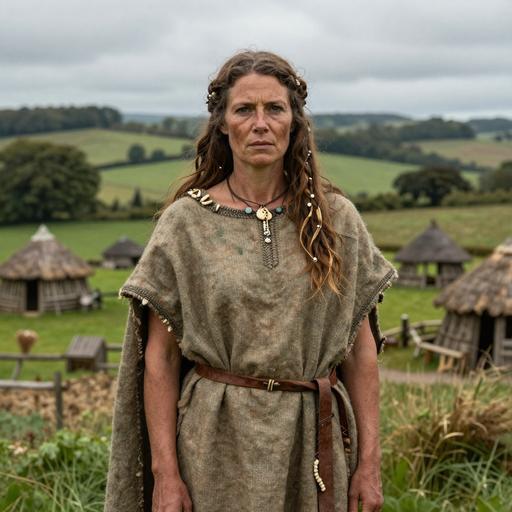
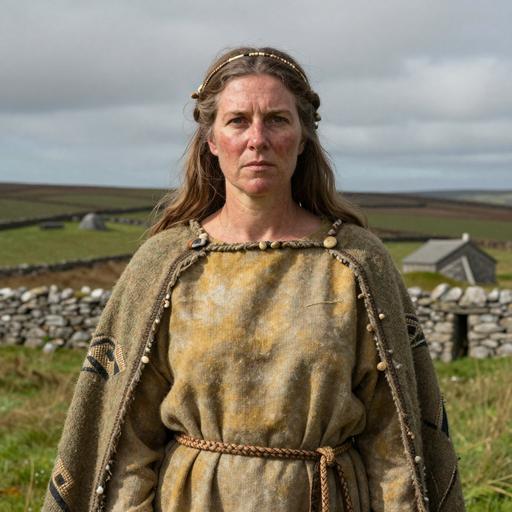
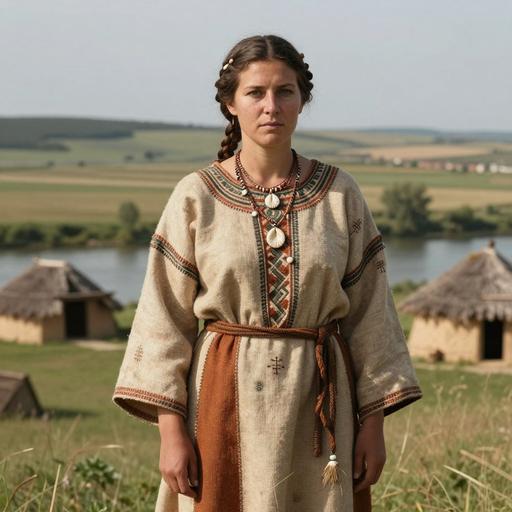
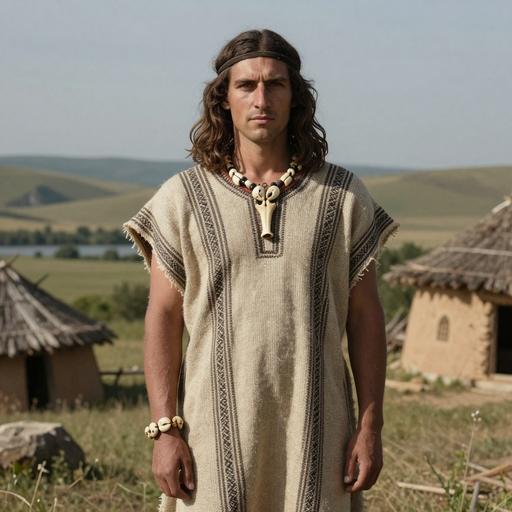
Os retratos são ilustrações geradas com IA. As etiquetas de amostra e os identificadores de acesso identificam os registros de referência.

Retrato Mostrar País Época Data Cultura mtDNA Corresponder
Retrato ilustrativo de Norse individual, Gotland. Frojel, Sweden (900-1,050 CE) gerado com IA
Identificador de amostra: VK57
Sweden Sweden Viking 900 CE - 1050 CE Viking J1c6 Direct
Retrato ilustrativo de Viking individual, Gotland. Frojel, Sweden (900-1,050 CE) gerado com IA
Identificador de amostra: VK57
Sweden The Viking Age 900 CE - 1050 CE J1c6 Direct
Retrato ilustrativo de England N individual, England. Eton Rowing Course, United Kingdom (3,516-3,368 BCE) gerado com IA
Identificador de amostra: I2605
United Kingdom England N 3516-3368 calBCE (4658±31 BP) [R_combine: (4710±35 BP, Poz-83483), (4500±60 BP, BM-3173)] British Neolithic J1c6 Direct
Retrato ilustrativo de MN individual, Ireland. Clare. Parknabinnia, Ireland (3,642-3,377 BCE) gerado com IA
Identificador de amostra: PB1794
Ireland Ireland MN 3642-3377 calBCE (4764±54 BP, UBA-39197) Irish Middle Neolithic J1c6 Direct
Retrato ilustrativo de MN Tisza individual, Gorzsa Cukormajor (Csongrád-Csanád County, Hódmezővásárhely), Hungary (4,938-4,610 BCE) gerado com IA
Identificador de amostra: NEO147
Hungary Hungary MN Tisza 4938-4610 calBCE (5897±62 BP, UBA-39970) Tisza J1c6 Direct
Retrato ilustrativo de Dillingen Steinheim EN LBK individual, Bavaria. Dillingen-Steinheim, Germany (5,286-5,050 BCE) gerado com IA
Identificador de amostra: Dil16_new
Germany Early Neolithic Linear Pottery Culture in Germany 5286-5050 calBCE (6200±25 BP, MAMS-46039) Linear Pottery Culture J1c6 Direct
Retrato ilustrativo de Chalcolithic Europe individual, Urziceni, Romania (4,500-3,500 BCE) gerado com IA
Identificador de amostra: I18114
Romania Romania C Bodrogkeresztur 4500 BCE - 3500 BCE Bodrogkeresztur J1c6a Subclado
Retrato ilustrativo de Bodrogkeresztur individual, Urziceni, Romania (4,500-3,500 BCE) gerado com IA
Identificador de amostra: I15617
Romania Romania C Bodrogkeresztur 4400-3500 BCE Bodrogkeresztur J1c6a Subclado
Retrato ilustrativo de Romania C Bodrogkeresztur individual, Urziceni, Romania (4,500-3,500 BCE) gerado com IA
Identificador de amostra: I18114
Romania Romania C Bodrogkeresztur 4500 BCE - 3500 BCE Bodrogkeresztur J1c6a Subclado
MATERNAL LINHAGEM · DNA ANTIGO

Mapa de testes de linhagems antigos

Siga os clados superiores até este ramo e explora onde se encontraram portadores antigos.

A carregar as observações antigas...

Os marcadores são locais de achados arqueológicos. Uma linha de descontínua representa uma transição geográfica proposta e incerta entre ramos consecutivos, apoiada em várias observações fechadas; não é uma rota de viagem exata, um local de nascimento ou um teste de descendência direta. As amostras do clado parental podem pertencer a outros ramos descendentes. As datas das amostras são distintas das datas de formação dos haplogrupos são mantidas.

Perfil de Referência

Mapa de distribuição de portadores

Distribuição geográfica das amostras de DNA antigo (9), portadores directos ou de subclasses de J1C6

Portador directo Portador de um subclasse
Filtro de Período Temporária
Todos os períodos
Mostrar todas as amostras
Perfil de Referência

Distribuição temporária

Distribuição de portadores por períodos arqueológicos

Perfil de Referência

Distribuição geográfica

Recuentos por país registrado das amostras. Reflejam a seleção de referência disponível, não frequências de população.

Perfil de Referência

Distribuição por país e época

Compare as contagens de amostras registadas por países e períodos arqueológicos. Selecione uma célula com dados para examinar uma amostra.

Dados

Dados e proveniência

Informações sobre fontes e qualidade dos dados

Última actualização 2026-02-16
Pontuação de confiança 50/100
Cobertura Low

Fonte de Dados

A classificação, as datas estimadas e o contexto geográfico refletem os dados de referência registrados e podem mudar ao revisar os testes. A cobertura de amostras é desigual; os locais registrados e as associações arqueológicas não estabelecem a origem pessoal nem a identidade cultural.