A preparar o relatório

A carregar as informações e as referências disponíveis

Consultando el registro arqueológico...

Recopilando registros antiguos

Saltar para o conteúdo principal
Echoes of Eleuthera
Cultura de destaque

Echoes of Eleuthera

A lone genome illuminates Taino presence in Eleuthera's Preacher's Cave, 892–1022 CE

892 CE - 1022 CE
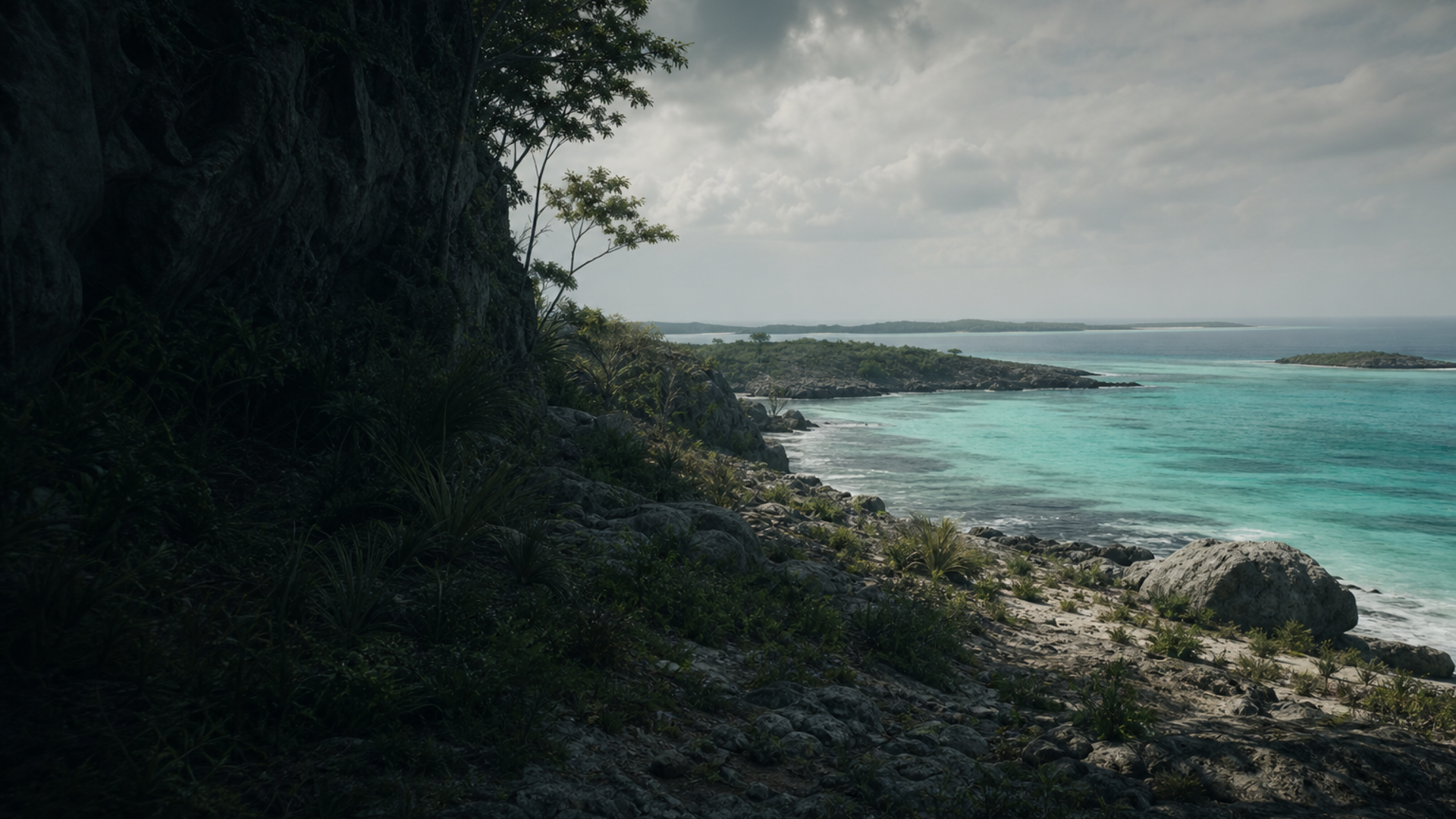
Eleuthera, Bahamas (Preacher's Cave)
1 Amostras antigas
Desplázate para começar
Capítulo I

A História

Comprender la cultura Echoes of Eleuthera

Archaeological evidence from Preacher's Cave (Eleuthera, Bahamas) dated 892–1022 CE aligns with Taino cultural patterns. A single ancient mtDNA B2 sample hints at Indigenous American lineages; conclusions remain preliminary until more genomes are recovered.

Time Period

892–1022 CE (radiocarbon)

Region

Eleuthera, Bahamas (Preacher's Cave)

Common Y-DNA

No Y-DNA recovered / data absent

Common mtDNA

B2 (1 sample)

Capítulo II

Cronologia

Momentos-chave da história desta cultura

2500 BCE

Initial peopling of the Caribbean islands

Early movements of ceramic-producing peoples from northern South America begin to populate the Greater Antilles and Bahamas, laying foundations for later Taino cultures.

Capítulo III

Origins & Emergence

The human presence captured at Preacher's Cave on Eleuthera belongs to the broader Taino cultural horizon that dominated parts of the Greater Antilles and the Bahamas in the late first millennium CE. Archaeological data—ceramics with Arawakan stylistic traits, shell middens, and coastal settlement forms—indicate maritime adaptation and connections to populations originating from northern South America and the Lesser Antilles. Radiocarbon dating from the cave places the sampled individual between 892 and 1022 CE, a period when Taino social complexity and regional exchange were well established.

Limited evidence suggests that the Bahamas were populated by groups broadly related to Saladoid-derived and Ostionoid traditions that evolved into classic Taino lifeways. Preacher's Cave yields material traces of domestic life and ritual practice consistent with these traditions, but the island record is patchy. The arrival and local development of Taino culture likely involved multiple migration and interaction events across centuries, rather than a single founding moment. Given the single recovered genome from this site, interpretations about population origins and demographic processes remain provisional; more samples are needed to resolve migration routes and the timing of cultural change.

  • Preacher's Cave (Eleuthera) dated 892–1022 CE
  • Material culture aligns with late Ostionoid/Taino traditions
  • Regional roots traceable to northern South America/Arawakan speakers
Capítulo IV

Daily Life & Society

Life on Eleuthera during the Taino period unfolded along shorelines, where coral-sand soils shaped settlement patterns and subsistence choices. Archaeological deposits in Preacher's Cave and nearby loci preserve shellfish middens, fish bones, groundstone tools, and ceramic sherds—evidence of a mixed economy blending fishing, coastal foraging, and horticulture (manioc, sweet potato) introduced from mainland traditions. Houses were often lightweight, raised on platforms or simple cleared areas; communal plazas and ritual objects point to social hierarchies and ceremonial practice.

Material remains suggest woven baskets, netting, and carved wooden implements that rarely survive archaeologically but are inferred from use-wear and ethnographic analogy. Artistic expression—zoomorphic and geometric motifs on pottery and carved objects—reflects shared iconography across the Taino world, signaling long-distance social networks. Yet island life could be precarious: resource limits, seasonal storms, and inter-island mobility required flexible settlement strategies. Preacher's Cave itself may have served episodic domestic, defensive, or ritual roles over centuries, but the precise pattern of occupation is still under study.

  • Coastal economy: fishing, shellfish, horticulture
  • Ceramics, groundstone tools, and middens document daily activities
Capítulo V

Genetic Profile

Genetic data from Preacher's Cave are extremely limited: a single mitochondrial genome (mtDNA haplogroup B2) was recovered and radiocarbon-dated to 892–1022 CE. Haplogroup B2 is one of the founding Native American maternal lineages and is broadly distributed across South, Central, and parts of North America as well as the Caribbean in ancient and modern samples. This maternal signal is consistent with archaeological hypotheses linking Taino populations to Arawakan-speaking groups migrating northward from northern South America.

No Y‑chromosome data were recovered from this individual, and the single-sample size (<10) requires caution. While mtDNA B2 supports Indigenous American ancestry in the Bahamas, it cannot by itself resolve questions of population structure, admixture, or precise migratory routes. Genome-wide nuclear data from multiple individuals would be necessary to test hypotheses about gene flow between the Greater Antilles, the Bahamas, and mainland South America, to estimate effective population sizes, or to detect later contact and admixture. Until more genomes are obtained, genetic interpretations for the Bahamas_Taino remain provisional and best framed as complementary to the archaeological record.

  • mtDNA B2 recovered (1 sample) — aligns with Indigenous American maternal lineages
  • No Y-DNA recovered; single-sample limits demographic conclusions
Capítulo VI

Legacy & Modern Connections

The human echoes in Eleuthera connect past lifeways to present conversations about Indigenous Caribbean heritage. Material culture and the recovered mtDNA B2 emphasize continuity with broader Native American lineages and underscore the Bahamas' role in pan-Caribbean networks. Contemporary descendant communities and scholars use archaeological and genetic evidence to trace ancestries, revive cultural memory, and correct historical erasures.

Because genetic sampling is sparse, it is premature to draw wide-reaching conclusions about modern Bahamian ancestry from this single ancient genome. Nevertheless, the finding provides a concrete anchor linking the island's pre-Columbian occupants to Indigenous American maternal lineages, and it demonstrates the promise of collaborative archaeogenetic research to enrich understandings of Caribbean pasts.

  • mtDNA evidence supports Indigenous American maternal continuity
  • Single-sample status highlights need for more collaborative research
Capítulo VII

Catálogo de amostras

1 amostras de DNA antigo associadas à cultura Echoes of Eleuthera fornecem dados de referência sobre as populações desse período.

1 / 1 amostras
Retrato Mostrar País Época Data Cultura Sexo DNA-Y ADNmt
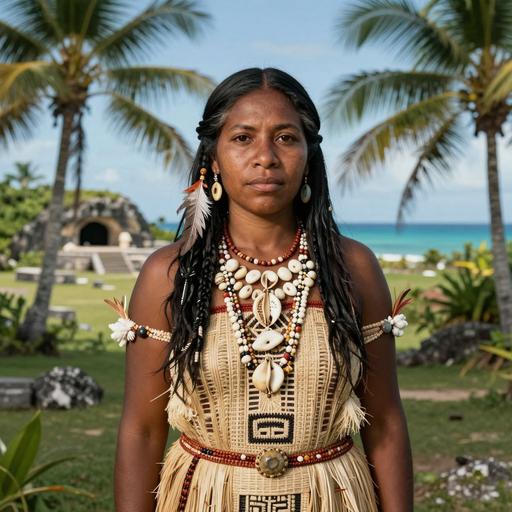
Retrato reconstruído de Arawak individual, Bahamas
Arawak individual, Bahamas
Bahamas Bahamas_Taino 892 CE Arawak F - B2
Com IA

Assistente de IA

Haz preguntas sobre la cultura Echoes of Eleuthera

Assistente de IA por DNAGENICS

Desbloquear esta função
Pregunta sobre la cultura Echoes of Eleuthera. El asistente con IA puede explicar hallazgos genéticos, contexto histórico, pruebas arqueológicas y conexiones modernas, con sus límites de interpretación.
Exemplo de análise com IA

La cultura Echoes of Eleuthera representa un capítulo de la historia humana...

A análise genética permite estudar semelhanças com populações anteriores e possíveis adaptações. As amostras de DNA antigo fornecem informações para investigar padrões migratórios e relações entre populações, com limites que dependem do estudo e do contexto arqueológico.

Esta é uma antevisão da análise com IA. Aceder ao assistente completo para explorar informações sobre:

  • Composição e similaridade genética
  • Padrões migratórios e origens
  • Vida cotidiana e práticas culturais
  • Contexto genético moderno

Explore mais culturas antigas

Descubra a história de civilizações de diferentes partes do mundo antigo