A preparar o relatório

A carregar as informações e as referências disponíveis

Consultando el registro arqueológico...

Recopilando registros antiguos

Saltar para o conteúdo principal
Lima Coast Echoes
Cultura de destaque

Lima Coast Echoes

Huaca Pucllana and the genetic traces of the Early Intermediate Lima people

100 CE - 860 CE
Lima, Peru (Huaca Pucllana)
Desplázate para começar
Capítulo I

A História

Comprender la cultura Lima Coast Echoes

Archaeological and ancient DNA evidence from three individuals at Huaca Pucllana (Lima, Peru) illuminates coastal Early Intermediate Period lifeways (100–860 CE). Limited samples suggest continuity with Native American founding lineages (Y Q; mtDNA B2, C1b) but conclusions remain preliminary.

Time Period

100–860 CE (Early Intermediate)

Region

Lima, Peru (Huaca Pucllana)

Common Y-DNA

Q (observed in 2 of 3 samples)

Common mtDNA

B2 (2), C1b (1)

Capítulo II

Cronologia

Momentos-chave da história desta cultura

200 CE

Monumental building at Huaca Pucllana

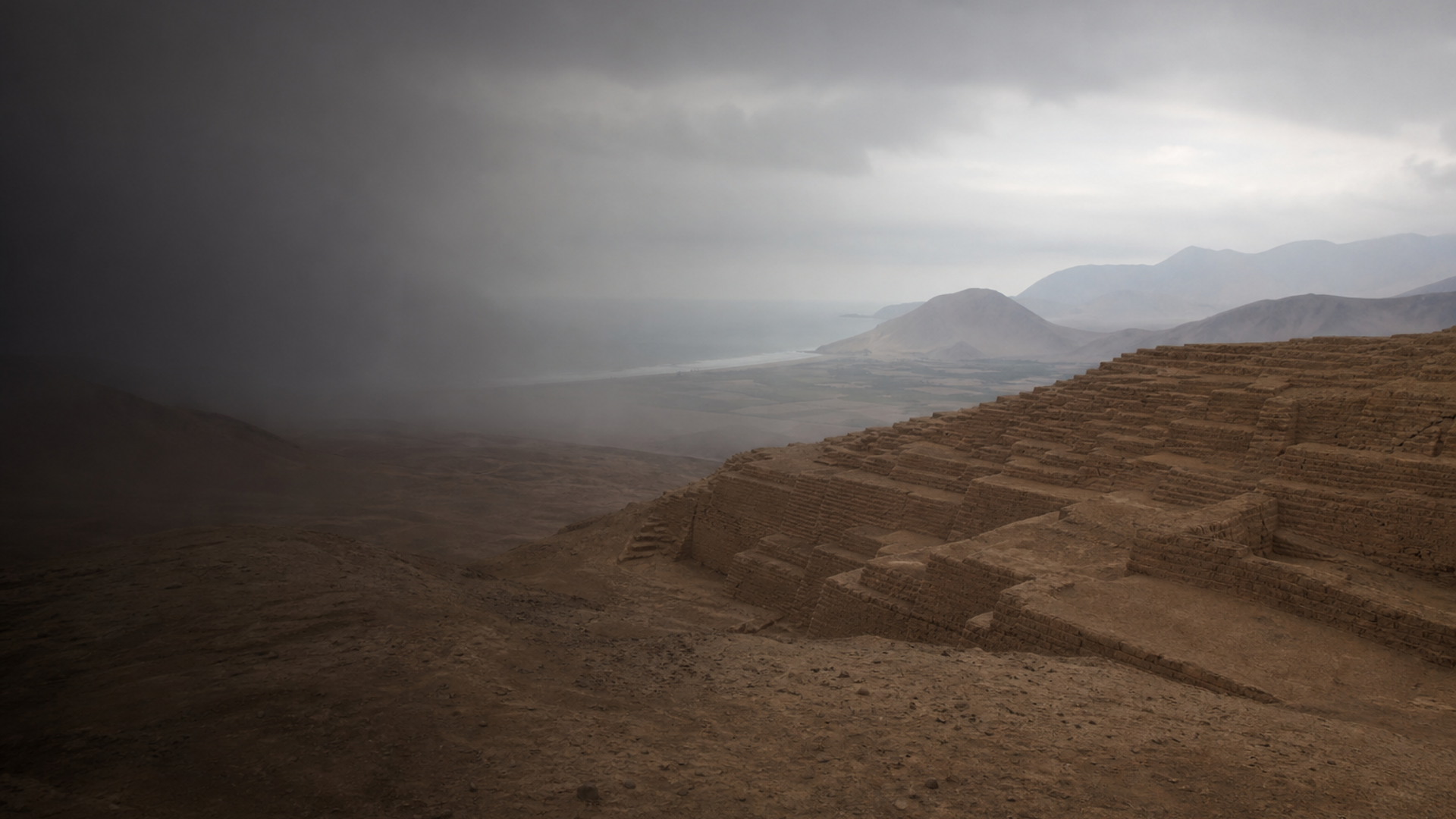
Construction and use of adobe platforms and plazas at Huaca Pucllana reflect ceremonial and administrative growth in the Lima coastal polity.

Capítulo III

Origins & Emergence

The Lima cultural expression arose along Peru’s central coast during the Early Intermediate Period, a time of dramatic regional differentiation across Andean societies. At Huaca Pucllana — an imposing adobe ceremonial and administrative complex in the modern Miraflores district of Lima — stratified architecture, plazas and burial contexts record a densely inhabited and organized coastal polity between roughly 100 and 860 CE. Archaeological data indicates that the Lima people developed distinctive ceramic styles, textile motifs and construction techniques adapted to arid coastal ecology and maritime resources.

Genetic data from three individuals recovered at Huaca Pucllana provides a narrow but valuable window into population origins. Two male samples carry Y-chromosome haplogroup Q, a lineage widespread among Indigenous peoples of the Americas and consistent with deep pre-Columbian paternal ancestry in the region. Maternal lineages observed (B2 and C1b) are likewise part of the broader pan-American mtDNA repertoire associated with early peopling events. Limited evidence suggests continuity between these coastal Early Intermediate inhabitants and larger Native American genetic foundations, but the very small sample size (n = 3) makes such inferences preliminary. Archaeology and genetics together point to a coastal population shaped by longtime local occupation, maritime economy and interaction with neighboring highland and northern cultures, yet many questions about migration, admixture and social origins remain open.

  • Lima culture flourished on the central Peruvian coast during the Early Intermediate Period
  • Huaca Pucllana served ceremonial, administrative and mortuary functions
  • Genetic signatures align with broad Native American founding lineages, though data are limited
Capítulo IV

Daily Life & Society

The coastal environment framed daily existence: fog-choked deserts yielded to a narrow strip of productive marine shelf, where fishing and shellfish gathering complemented irrigated horticulture. At Huaca Pucllana, the interplay of plaza space, stepped-platform mounds and surrounding residential compounds suggests a society organized around ritual centers that coordinated labor, storage and feasting. Archaeological deposits include domestic debris, craft production areas and burials placed in and around monumental architecture, indicating close ties between communal ritual and everyday life.

Material culture — pottery shapes, painted motifs and woven textiles — signals both local innovation and exchange with neighboring Early Intermediate polities. Trade in marine products, fish-salting, and specialized craft production likely supported elites who managed surplus and organized labor for construction. Osteological indicators from comparable coastal cemeteries often show diets rich in marine protein with occasional nutritional stress, hinting at seasonal variability and social differentiation in access to resources. While Huaca Pucllana offers vivid architectural evidence, direct bioarchaeological sampling here remains limited; interpretations of status, diet and mobility should be read as provisional until larger, regionally representative datasets are analyzed.

  • Economy blended marine resources with irrigated agriculture and craft specialization
  • Monumental architecture at Huaca Pucllana anchored ritual, administrative and residential life
Capítulo V

Genetic Profile

Ancient DNA from three individuals excavated at Huaca Pucllana offers a cautious genetic snapshot of Lima coast inhabitants in the Early Intermediate Period. Two male individuals share Y-chromosome haplogroup Q, a lineage common across Indigenous American populations and linked to ancestral migrations into the hemisphere. The mitochondrial results show B2 in two individuals and C1b in one — both mtDNA clades are widespread among Native American groups and part of the established pan-American maternal heritage.

These genetic markers do not indicate sudden non-local influxes; instead, they are consistent with long-standing indigenous ancestry on the Peruvian coast. However, with only three samples, population structure, sex-biased migration, and local admixture dynamics cannot be robustly resolved. If future sampling expands, patterns such as differential male or female mobility, gene flow with highland populations, or micro-regional continuity could be tested. For now, the genetic evidence corroborates archaeological inferences of deep Native American roots among Lima-period coastal residents, while underscoring the preliminary nature of conclusions drawn from small sample counts.


  • Y haplogroup Q present in 2 of 3 samples, consistent with Indigenous American paternal ancestry
  • mtDNA B2 and C1b support pan-American maternal lineages; small sample size limits population conclusions
Capítulo VI

Legacy & Modern Connections

The echoes of the Early Intermediate Lima communities persist in Lima’s modern cityscape: adobe mounds like Huaca Pucllana remain visible monuments that tie contemporary inhabitants to centuries of coastal occupation. Genetic continuity in broad haplogroup terms suggests that many modern Andean and coastal populations retain threads of these ancient lineages, although centuries of movement, colonization and admixture have reshaped regional genomes. Archaeogenetics paired with archaeology can illuminate how ritual architecture, craft traditions and maritime economies contributed to cultural resilience along the central Peruvian coast.

Given the limited ancient DNA sample size from Huaca Pucllana, any claims about direct ancestry to present-day groups are tentative. Expanded sampling across more burials, neighborhoods and contemporaneous sites would strengthen connections between archaeological lifeways and modern genetic landscapes. Nevertheless, the combined material and molecular evidence offers a cinematic portrait: a coastal people building monumental adobe, harvesting the sea, and leaving genetic traces that continue to contribute to Peru’s rich biological and cultural tapestry.

  • Huaca Pucllana remains a visible cultural landmark linking past and present Lima
  • Genetic signals suggest continuity with Indigenous American lineages but require broader sampling
Com IA

Assistente de IA

Haz preguntas sobre la cultura Lima Coast Echoes

Assistente de IA por DNAGENICS

Desbloquear esta função
Pregunta sobre la cultura Lima Coast Echoes. El asistente con IA puede explicar hallazgos genéticos, contexto histórico, pruebas arqueológicas y conexiones modernas, con sus límites de interpretación.
Exemplo de análise com IA

La cultura Lima Coast Echoes representa un capítulo de la historia humana...

A análise genética permite estudar semelhanças com populações anteriores e possíveis adaptações. As amostras de DNA antigo fornecem informações para investigar padrões migratórios e relações entre populações, com limites que dependem do estudo e do contexto arqueológico.

Esta é uma antevisão da análise com IA. Aceder ao assistente completo para explorar informações sobre:

  • Composição e similaridade genética
  • Padrões migratórios e origens
  • Vida cotidiana e práticas culturais
  • Contexto genético moderno

Explore mais culturas antigas

Descubra a história de civilizações de diferentes partes do mundo antigo