A preparar o relatório

A carregar as informações e as referências disponíveis

Consultando el registro arqueológico...

Recopilando registros antiguos

Saltar para o conteúdo principal
Marmara Ottoman Burials
Cultura de destaque

Marmara Ottoman Burials

Three Early Modern Anatolian genomes from Zeytinliada and Yenişehirkapı

1479 CE - 1652 CE
Marmara region, Anatolia (Turkey)
Desplázate para começar
Capítulo I

A História

Comprender la cultura Marmara Ottoman Burials

Ancient DNA from three human remains dated 1479–1652 CE in the Marmara region (Zeytinliada, Erdek; Yenişehirkapı, İznik) offers a preliminary glimpse into Ottoman-era genetic diversity. Limited sample size means results are tentative but align with West Eurasian maternal lineages.

Time Period

1479–1652 CE

Region

Marmara region, Anatolia (Turkey)

Common Y-DNA

Undetermined (no clear pattern — low sample count)

Common mtDNA

H (1), U (1), T (1)

Capítulo II

Cronologia

Momentos-chave da história desta cultura

1453 CE

Fall of Constantinople

Ottoman capture of Constantinople (1453) reshaped political and economic life in the Marmara region, increasing imperial integration across Anatolia.

1479 CE

Earliest sampled burial

Oldest directly dated individual in this dataset, recovered from the Marmara region (Zeytinliada/Yenişehirkapı contexts).

1652 CE

Latest sampled burial

Most recent individual in the current set, showing continuity of occupation in the Marmara across the Early Modern period.

Capítulo III

Origins & Emergence

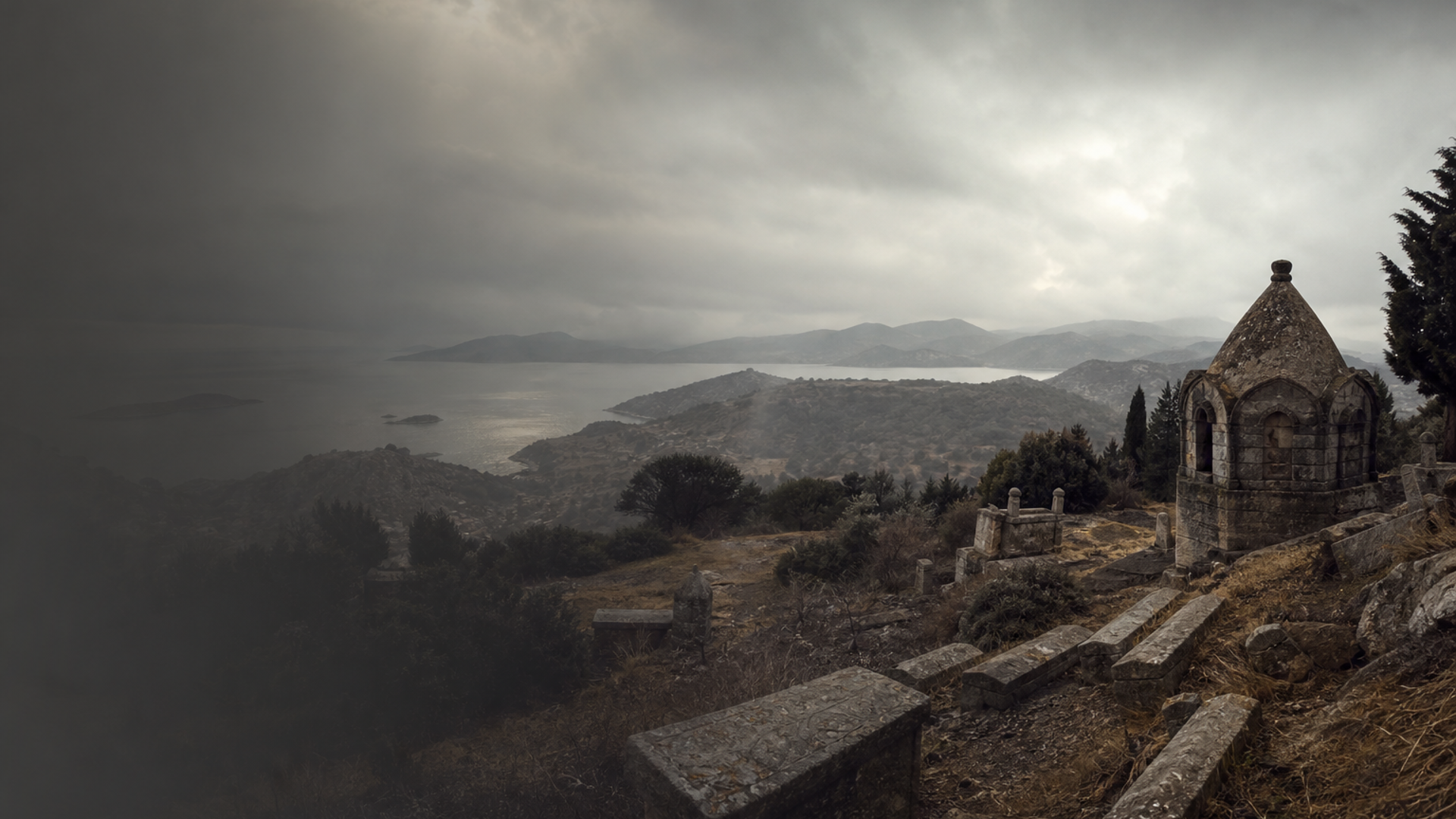
The human remains sampled from Zeytinliada (Marmara. Balikesir. Erdek) and Yenişehirkapı (Marmara. İznik) come from a transformative chapter in Anatolian history: the consolidation of Ottoman rule across the Marmara basin during the late 15th to 17th centuries. Archaeological context places these individuals in a landscape shaped by maritime trade, imperial administration, and long-standing regional settlement patterns.

Archaeological data indicates continuity of occupation in the Marmara littoral after the 1453 fall of Constantinople, with towns like İznik (historic Nicaea) remaining nodes of religious, artisanal, and commercial life. Limited evidence suggests burial contexts at Zeytinliada and Yenişehirkapı reflect local community practices rather than elite imperial monuments. Genetic sampling from these sites is sparse (three individuals), so any reconstruction of population origins or mobility must be framed as preliminary.

Cinematically, one can imagine lantern-lit harbors and caravans of goods moving across the Sea of Marmara — pathways that also carried genes. Ancient DNA from these burials offers a first, cautious view into the maternal lineages present in this coastal Anatolian milieu during the Early Modern Ottoman era, but larger datasets are needed to resolve finer-scale migration and admixture events.

  • Samples originate from Zeytinliada (Erdek) and Yenişehirkapı (İznik) in the Marmara region
  • Dates span 1479–1652 CE, within the Ottoman Turkey era
  • Small sample size (n=3) means origin hypotheses remain provisional
Capítulo IV

Daily Life & Society

The Ottoman-era Marmara world was a mosaic of urban centers, rural villages, and island communities. Archaeological evidence across the region documents bustling ports, craft workshops, and markets that linked Anatolia to the Balkans, Aegean islands, and the Black Sea. Although the three sampled individuals represent only fragments of that human tapestry, their provenance from coastal and lakeside locations (Erdek and İznik) highlights the maritime and inland waterways that structured daily life.

Material culture from contemporary Ottoman contexts typically includes ceramics, metalwork, textiles, and architectural traces of mosques, baths, and caravanserais; such finds testify to a society with layered social roles — merchants, artisans, sailors, farmers, and religious communities. Burial practices varied by faith and locality; the excavated human remains in this dataset were suitable for DNA analysis, indicating reasonably preserved skeletal contexts. Isotopic and aDNA studies elsewhere in Ottoman-period sites have revealed mobility driven by trade, military service, and pilgrimage, and these processes likely influenced the lifeways of people in the Marmara.

Because of the sparse genetic sample, we cannot robustly link specific social statuses or occupations to the individuals sampled, but the archaeological setting suggests they lived within a region of active exchange and cultural interaction.

  • Regional economy shaped by maritime trade and inland waterways
  • Material culture points to diverse urban and artisanal activities; burial contexts preserved DNA
Capítulo V

Genetic Profile

The genetic dataset from these Ottoman-period burials is small (n=3) and therefore provides only a tentative snapshot. Mitochondrial DNA results record three distinct maternal haplogroups: H, U, and T (one individual each). These clades are broadly distributed across West Eurasia: haplogroup H is common throughout Europe and parts of western Asia; U has deep Paleolithic and Neolithic roots in Europe and the Near East; T is less common but present in Anatolia and parts of Europe and the Near East. These mitochondrial signatures are consistent with a West Eurasian maternal ancestry profile for the sampled individuals.

No consistent Y-chromosome pattern emerges from the dataset (common Y-DNA entry is undetermined) — this may reflect limited preservation, absence of male samples, or simply the tiny sample size. Because maternal lineages represent only a single ancestral line per individual, they cannot capture the full complexity of ancestry; autosomal DNA is required for finer-resolution insights into admixture between Anatolian, Balkan, Caucasian, and Near Eastern gene pools that characterized the Ottoman realm.

Archaeogenetic interpretation must therefore remain cautious: limited mtDNA diversity here neither proves homogeneity across Ottoman populations nor excludes substantial regional admixture. Future sampling across more burial sites and integration with autosomal data will be essential to test hypotheses of mobility, sex-biased migration, and continuity between late medieval and modern Anatolian populations.

  • mtDNA haplogroups: H (1), U (1), T (1) — consistent with West Eurasian maternal ancestry
  • Y-DNA pattern undetermined due to low sample count; conclusions are preliminary
Capítulo VI

Legacy & Modern Connections

These three genomes from the Marmara add cautious brushstrokes to the long portrait of Anatolian population history. The maternal lineages observed mirror haplogroups commonly found in modern Turkey and neighboring regions, suggesting elements of continuity in female-line ancestry, but the small sample size prohibits broad inferences. The Ottoman Empire’s historical role as a bridge between continents implies that present-day genetic diversity in Turkey reflects centuries of movement, trade, and intermarriage.

For contemporary descendants and anyone following their ancestry to the Marmara, these results highlight the promise of ancient DNA: when scaled up, such datasets can map migration corridors, reveal patterns of long-term continuity, and identify episodes of demographic change. Until larger, well-contextualized samples are analyzed, however, interpretations must remain humble and framed as hypotheses to be tested.

  • Observed maternal haplogroups align with patterns in modern West Eurasian populations
  • More samples and autosomal data are needed to connect these burials to present-day genetic diversity
Com IA

Assistente de IA

Haz preguntas sobre la cultura Marmara Ottoman Burials

Assistente de IA por DNAGENICS

Desbloquear esta função
Pregunta sobre la cultura Marmara Ottoman Burials. El asistente con IA puede explicar hallazgos genéticos, contexto histórico, pruebas arqueológicas y conexiones modernas, con sus límites de interpretación.

Exemplo de análise com IA

La cultura Marmara Ottoman Burials representa un capítulo de la historia humana...

A análise genética permite estudar semelhanças com populações anteriores e possíveis adaptações. As amostras de DNA antigo fornecem informações para investigar padrões migratórios e relações entre populações, com limites que dependem do estudo e do contexto arqueológico.

Esta é uma antevisão da análise com IA. Aceder ao assistente completo para explorar informações sobre:

  • Composição e similaridade genética
  • Padrões migratórios e origens
  • Vida cotidiana e práticas culturais
  • Contexto genético moderno

Explore mais culturas antigas

Descubra a história de civilizações de diferentes partes do mundo antigo