A preparar o relatório

A carregar as informações e as referências disponíveis

Consultando el registro arqueológico...

Recopilando registros antiguos

Saltar para o conteúdo principal
Voices of Lithuania's Late Neolithic
Cultura de destaque

Voices of Lithuania's Late Neolithic

Four ancient genomes from Lithuania illuminate Late Neolithic life and preliminary ancestry links.

3264 CE - 1749 BCE
Lithuania (Plinkaigalis, Spiginas, Gyvakarai)
Desplázate para começar
Capítulo I

A História

Comprender la cultura Voices of Lithuania's Late Neolithic

Genomes from Plinkaigalis, Spiginas and Gyvakarai (3264–1749 BCE) offer a preliminary window into Late Neolithic Lithuania. Archaeological contexts and DNA hint at a tapestry of local hunter‑gatherer and incoming ancestries; conclusions remain cautious given only four samples.

Time Period

3264–1749 BCE (Late Neolithic)

Region

Lithuania (Plinkaigalis, Spiginas, Gyvakarai)

Common Y-DNA

R (2 of 4)

Common mtDNA

I2, W6a, I4a, K (each observed)

Capítulo II

Cronologia

Momentos-chave da história desta cultura

2500 BCE

Region of rising interaction

Around 2500 BCE, archaeological and preliminary genetic signals suggest growing contact between local forager communities and incoming groups in the Lithuanian landscape.

Capítulo III

Origins & Emergence

The bones and pottery fragments recovered at Plinkaigalis, Spiginas and Gyvakarai whisper of a landscape in transition. Radiocarbon dates spanning roughly 3264–1749 BCE place these individuals in the Late Neolithic horizon of Lithuania, a time when local hunter‑gatherer traditions intersected with wider social and technological changes across northeastern Europe.

Archaeological data indicates continued use of lakeside settlements, seasonal camps and burial places in the region. Material culture trends show continuity with earlier Mesolithic patterns alongside new ceramic forms and exchange networks that suggest increasing contact with neighboring communities. The small set of human remains analyzed here were recovered from contexts consistent with Late Neolithic mortuary practices, although preservation and excavation histories vary by site.

Genetically, the picture is tentative but evocative: the presence of Y‑chromosome R haplogroups in half the sampled males aligns with broader patterns of steppe‑related ancestry entering many parts of Europe during the 3rd millennium BCE. At the same time, maternal lineages include haplogroups often associated with local hunter‑gatherer and early farmer populations. Taken together, archaeological and genetic signals suggest a mosaic process of interaction rather than a single sweeping replacement — but with only four genomes, these patterns must be treated as provisional.

  • Radiocarbon range: 3264–1749 BCE, Late Neolithic Lithuania
  • Sites: Plinkaigalis, Spiginas, Gyvakarai
  • Evidence points to interaction between local traditions and wider networks
Capítulo IV

Daily Life & Society

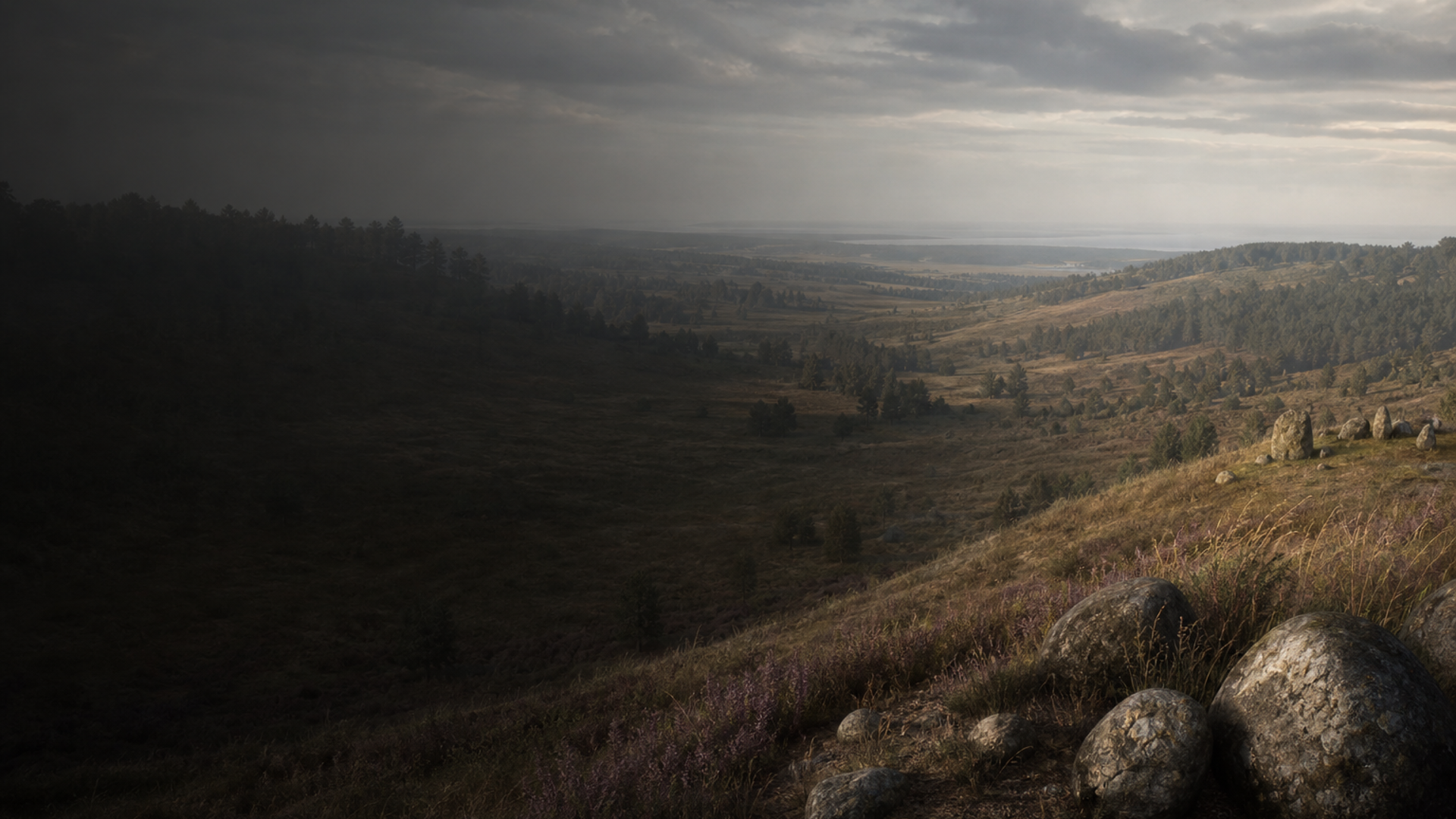
Imagine a shoreline morning on a Lithuanian lake: reed beds stir, flint tools flash, and pots are heated over small hearths. Archaeological remains from the region imply economies based on a mix of fishing, foraging, small‑scale cultivation and craft production. Woodland resources and waterways structured movement and seasonality.

Settlement traces and burial deposits suggest communities were small and mobile enough to exploit varied microenvironments, yet tied together by exchange of goods and ideas. Craftsmanship in ceramics and polished stone points to durable traditions, while new styles and raw materials hint at long‑distance contacts. Social life was likely organized in kin groups or small communities; mortuary variability indicates differences in status or ritual practice, but the limited dataset precludes firm social reconstructions.

Material culture and landscape use reflect resilience: people adapted to shifting climates and resource distributions, maintaining local knowledge while integrating new influences. The archaeological record here is fragmentary but rich in implication—when combined with genetic data, it helps reconstruct the lived world behind each genome.

  • Mixed subsistence: fishing, foraging, small-scale cultivation
  • Small communities with regional exchange networks
Capítulo V

Genetic Profile

The genetic evidence from these four individuals is sparse but informative. Two male individuals carried Y‑chromosome R haplogroups, a lineage frequently associated in broader European studies with steppe‑related populations that expanded during the late 4th–3rd millennia BCE. Maternal lineages are diverse—mtDNA I2, W6a, I4a and K appear among the four samples—reflecting a mixture of ancestries known from northern and central Europe.

Archaeogenetic interpretation must be cautious: with only four genomes, statistical power is low and population‑level inferences are preliminary. Nonetheless, the combination of R on the paternal side and a variety of maternal haplogroups is consistent with a scenario where incoming groups carrying steppe‑associated ancestry interacted and admixed with local hunter‑gatherers and Neolithic farmer‑descended communities. This mosaic is visible across many parts of Europe in the 3rd millennium BCE.

Where archaeological contexts are secure, genetic data can refine models of mobility, kinship and sex‑biased admixture (e.g., more incoming Y‑lineages with varied maternal origins). Future sampling at Plinkaigalis, Spiginas and Gyvakarai — and neighboring sites — will be necessary to test these early signals and move from intriguing snapshots to robust demographic narratives.

  • Y haplogroups: R observed in 2 of 4 males, suggesting steppe-related input
  • mtDNA diversity: I2, W6a, I4a, K—indicative of mixed maternal ancestries
Capítulo VI

Legacy & Modern Connections

The genetic threads woven in Late Neolithic Lithuania contribute to the deep-time ancestry of the Baltic region. Modern populations in the Baltic may carry echoes of these ancestral components, but direct lineage continuity cannot be assumed from four samples alone. Archaeological continuity in settlement patterns, combined with genetic admixture signals, points toward long‑term local persistence punctuated by episodes of migration and exchange.

These genomes serve as cinematic snapshots: each individual brings a face to the archaeological record and a strand to the genetic tapestry. They remind us that modern genetic landscapes are palimpsests of repeated interactions. Expanding the dataset will clarify how these Late Neolithic communities fed into Bronze Age transformations and ultimately shaped genetic variation seen today.

  • Contributes to the ancestral mosaic of the Baltic region
  • Current conclusions are provisional until larger sample sets are analyzed
Com IA

Assistente de IA

Haz preguntas sobre la cultura Voices of Lithuania's Late Neolithic

Assistente de IA por DNAGENICS

Desbloquear esta função
Pregunta sobre la cultura Voices of Lithuania's Late Neolithic. El asistente con IA puede explicar hallazgos genéticos, contexto histórico, pruebas arqueológicas y conexiones modernas, con sus límites de interpretación.
Exemplo de análise com IA

La cultura Voices of Lithuania's Late Neolithic representa un capítulo de la historia humana...

A análise genética permite estudar semelhanças com populações anteriores e possíveis adaptações. As amostras de DNA antigo fornecem informações para investigar padrões migratórios e relações entre populações, com limites que dependem do estudo e do contexto arqueológico.

Esta é uma antevisão da análise com IA. Aceder ao assistente completo para explorar informações sobre:

  • Composição e similaridade genética
  • Padrões migratórios e origens
  • Vida cotidiana e práticas culturais
  • Contexto genético moderno

Explore mais culturas antigas

Descubra a história de civilizações de diferentes partes do mundo antigo