A preparar o relatório

A carregar as informações e as referências disponíveis

Consultando el registro arqueológico...

Recopilando registros antiguos

Saltar para o conteúdo principal
West Liao River Bronze Echoes
Cultura de destaque

West Liao River Bronze Echoes

Longtoushan lives in the long grasses of Inner Mongolia — fragments of bronze, bone, and DNA

1050 CE - 350 BCE
Inner Mongolia (Chifeng, Hexigten) — Longtoushan
Desplázate para começar
Capítulo I

A História

Comprender la cultura West Liao River Bronze Echoes

Archaeological and genetic glimpses from Longtoushan (Hexigten, Chifeng) connect Bronze Age West Liao River communities (1050–350 BCE) to northern East Asian lineages. Limited samples (n=3) suggest paternal NO and C, maternal D and B — preliminary but evocative evidence of regional continuity.

Time Period

c. 1050–350 BCE

Region

Inner Mongolia (Chifeng, Hexigten) — Longtoushan

Common Y-DNA

NO (1), C (1)

Common mtDNA

D (2), B (1)

Capítulo II

Cronologia

Momentos-chave da história desta cultura

900 BCE

Longtoushan occupation (approximate)

Archaeological contexts at Longtoushan date to the early first millennium BCE, within the West Liao River Bronze Age horizon.

Capítulo III

Origins & Emergence

The Longtoushan assemblage sits at the eastern margins of the Bronze Age West Liao River cultural sphere, dated roughly to 1050–350 BCE. Archaeological data indicates settlement traces, hearths, and artifact scatters at Longtoushan in Hexigten (Chifeng) that reflect a mixed local tradition shaped by contact across northern China and the steppe fringe. Material culture shows continuity with earlier Neolithic and Bronze Age patterns in the West Liao River basin: ceramic forms and metallurgical residues speak to communities adapting bronze technologies while maintaining long-established subsistence strategies.

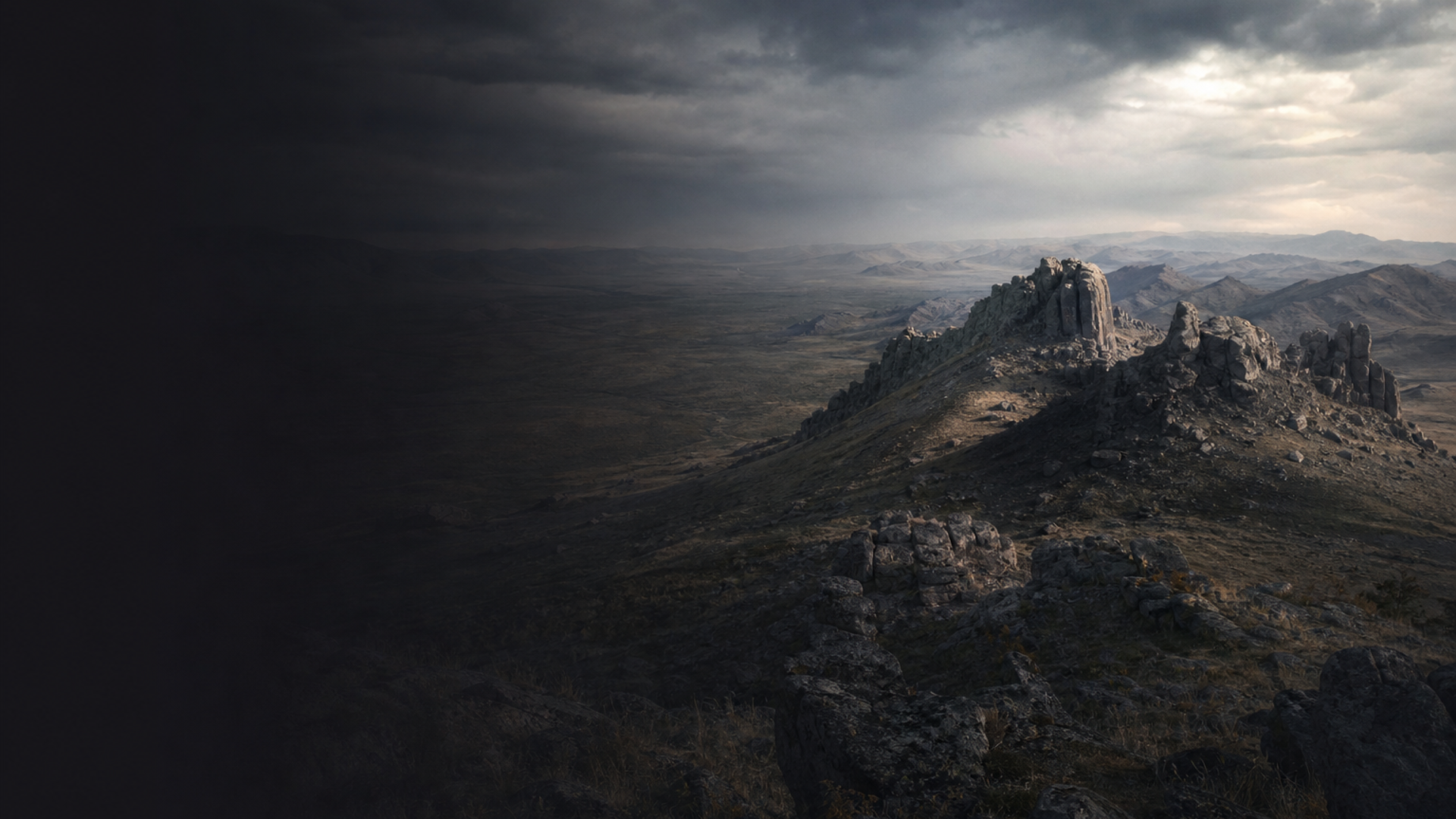
Limited evidence suggests that population trajectories here were complex — neither a simple arrival nor wholesale replacement. Instead, the region appears to have hosted networks of exchange, seasonal movement, and cultural blending. Environmental reconstructions point to grassland and riverine ecotones that would have supported millet cultivation alongside animal herding, creating a resilient frontier of villages, seasonal camps, and ritual places. Longtoushan’s deposits are cinematic in their preservation: stone and metal glints, midden layers, and burial traces that hint at social differentiation. Yet the archaeological record remains spotty; many narratives remain provisional until more sites and well-dated contexts are sampled.

  • Located in Hexigten, Chifeng — part of the West Liao River Bronze Age horizon
  • Material culture shows local continuity with Bronze Age traditions
  • Environmental setting favored mixed farming and herd mobility
Capítulo IV

Daily Life & Society

Archaeological indications from the West Liao River context suggest daily life at Longtoushan balanced agriculture, animal use, craft, and ritual. Pottery fragments, grinding stones, and storage pits point to millet and other small-grain processing, while faunal remains and hoofed-animal evidence imply managed herds and hunting played roles in diet and economy. The landscape — river terraces and grasslands — would have encouraged seasonal movements between permanent dwellings and satellite pastures.

Craft specialists likely worked bronze and bone, producing items used in everyday tasks as well as in display. Burials and mortuary deposits hint at social differentiation: some inhumations contain personal ornaments or tools, while others are modest, indicating emerging hierarchies or differences in wealth and status. Community life was shaped by networks of trade and marriage that connected Longtoushan to neighboring valleys and uplands; archaeobotanical and lithic exchange traces reinforce this image of an interconnected frontier. However, precise social structures, such as household organization or political authority, remain tentative given the limited excavated contexts for this site.

  • Mixed agro-pastoral economy: millet processing and managed herds
  • Craft production including metalworking and bone tools, with signs of social differentiation
Capítulo V

Genetic Profile

Ancient DNA from Longtoushan offers slender but meaningful threads into population history. Among the three analyzed individuals (1050–350 BCE), Y-chromosome haplogroups include NO (1) and C (1); mitochondrial lineages are dominated by D (2) with one B (1). These markers sit comfortably within a broader tapestry of northern and eastern Asian genetic variation: mtDNA D and B are common across East Asia and the Americas, reflecting deep maternal lineages in the region, while haplogroup NO is widespread in modern northern East Asian populations and C is frequently observed among northern and eastern Eurasian groups.

Because the dataset is very small (n=3), any population-level inference must be cautious. Limited evidence suggests continuity with local northern East Asian gene pools that characterize other Bronze Age West Liao River samples, but the observed mix could also reflect admixture, patrilineal founder effects, or sampling bias. Archaeogenomic patterns here hint at a landscape of mobility — where male and female lines could travel different routes through marriage, trade, or seasonal movement — but robust conclusions about kinship systems or demographic shifts will require larger sample sizes and broader geographic sampling. For now, these genomes are promising signposts pointing toward regional continuity and subtle influxes that shaped the genetic make-up of northeastern China.

  • Y-DNA: NO and C present — consistent with northern East Asian paternal lines
  • mtDNA: Dominated by D and B — common maternal lineages across East Asia
Capítulo VI

Legacy & Modern Connections

The genetic and archaeological signals from Longtoushan weave into the living tapestry of Northeast Asia. mtDNA haplogroups D and B persist widely in modern East Asian populations, and Y-haplogroup NO is a major component of many contemporary northern East Asian male lineages; haplogroup C also remains frequent in several regional groups. These continuities suggest that the Bronze Age residents of the West Liao River basin contributed to the ancestry of later populations in Inner Mongolia, northeastern China, and beyond.

Caution is essential: with only three ancient genomes, statements about continuity or migration are provisional. Nevertheless, when paired with archaeology — settlement traces, toolkits, and subsistence evidence — the genetic data support a picture of long-term local presence punctuated by episodes of connection across the steppe and river corridors. Future sampling from neighboring sites and time slices will clarify how Longtoushan fits into the broader story of population movement, cultural transmission, and the making of modern Northeast Asian genetic landscapes.

  • Maternal and paternal haplogroups found here persist in many modern East Asian groups
  • Current conclusions are preliminary; additional sampling is required to confirm continuity
Com IA

Assistente de IA

Haz preguntas sobre la cultura West Liao River Bronze Echoes

Assistente de IA por DNAGENICS

Desbloquear esta função
Pregunta sobre la cultura West Liao River Bronze Echoes. El asistente con IA puede explicar hallazgos genéticos, contexto histórico, pruebas arqueológicas y conexiones modernas, con sus límites de interpretación.
Exemplo de análise com IA

La cultura West Liao River Bronze Echoes representa un capítulo de la historia humana...

A análise genética permite estudar semelhanças com populações anteriores e possíveis adaptações. As amostras de DNA antigo fornecem informações para investigar padrões migratórios e relações entre populações, com limites que dependem do estudo e do contexto arqueológico.

Esta é uma antevisão da análise com IA. Aceder ao assistente completo para explorar informações sobre:

  • Composição e similaridade genética
  • Padrões migratórios e origens
  • Vida cotidiana e práticas culturais
  • Contexto genético moderno

Explore mais culturas antigas

Descubra a história de civilizações de diferentes partes do mundo antigo