Menu
Store
Blog
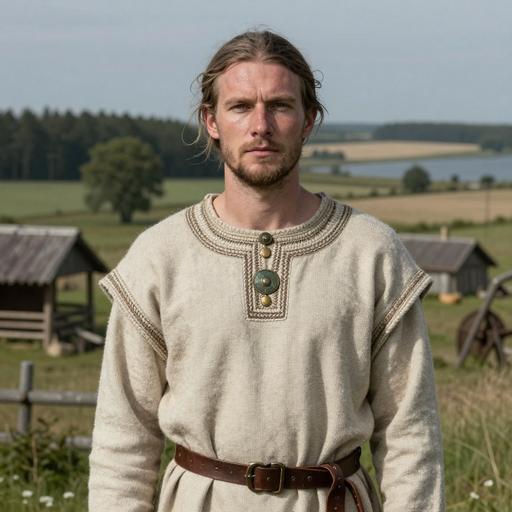
Portrait reconstruction of RISE276
Ancient Individual

A man buried in Denmark in the Late Bronze Age era

RISE276
789 BCE - 546 BCE
Male
Late Bronze Age Denmark
Denmark
Scroll to begin
Chapter I

Identity

The biological and cultural markers that define this ancient individual

Sample ID

RISE276

Date Range

789 BCE - 546 BCE

Biological Sex

Male

mtDNA Haplogroup

T2b

Y-DNA Haplogroup

R-P310

Cultural Period

Late Bronze Age Denmark

Chapter II

Place

Where this individual was discovered

Country Denmark
Locality Trundholm II
Coordinates 55.9140, 11.5650
Chapter III

Time

When this individual lived in the broader context of human history

RISE276 789 BCE - 546 BCE
Chapter IV

Story

The narrative of this ancient life

The Late Bronze Age in Denmark, which is part of the broader Nordic Bronze Age, is a period roughly spanning from 1100 BCE to 500 BCE. This era is marked by a significant transformation in societal structures, technological advancements, and cultural expression in what is now modern-day Denmark and parts of southern Scandinavia.

Geography and Environment

Denmark's geography during the Late Bronze Age included rich, fertile lands with numerous water sources, including the Baltic Sea to the east and the North Sea to the west. The climate was milder and wetter than today, contributing to lush landscapes of dense forests interspersed with open meadows and marshlands. This environment provided ample resources for sustenance and facilitated the growth of settled farming communities.

Society and Settlement

The society of Late Bronze Age Denmark was characterized by relatively complex social structures. Settlements were organized into small communities, often consisting of single-family homesteads. These were typically small villages or farmsteads built from wood and thatch.

Social hierarchies began to emerge during this time, likely influenced by wealth disparities based on land ownership and control over trade resources. Chiefs or chieftains often led communities, and there might have been a warrior elite evidenced by the richly adorned graves discovered from this era.

Economy and Agriculture

Agriculture was central to the economy, with a focus on growing crops like barley and wheat, as well as raising livestock such as cattle, sheep, and pigs. The Late Bronze Age also witnessed technological innovations, particularly in metalworking. Bronze, an alloy of copper and tin, was extensively used for tools, weapons, and ornaments, showcasing advanced metallurgy skills.

Trade networks expanded significantly during this time, with Denmark playing a pivotal role in the exchange of goods like amber, furs, metals, and crafted items with other regions in Europe.

Religion and Rituals

The spiritual life of Late Bronze Age Denmark was rich with rituals and practices tied to nature. Many archaeological findings, like rock carvings and grave offerings, suggest that the people revered the sun, water bodies, and certain animals. Sun symbolism, in particular, was prevalent, indicating solar worship, which might have related to agricultural cycles and fertility.

The burial practices of this period include both inhumations and cremations. The famous oak coffins from this time, such as those found at Borum Eshøj, reflect elaborate burial traditions, often with goods buried alongside the deceased, indicating a belief in an afterlife.

Art and Culture

Artistic expression flourished during the Late Bronze Age. This is reflected in the intricate designs of bronze artifacts, including swords, shields, and personal ornaments, often depicting religious or symbolic motifs. Tools and weapons were not only utilitarian but also highly decorated, showing a blend of artistry and function.

Musical instruments like the lur, a type of horn, illustrate the importance of music and possibly ritual sound in society. These instruments are often found in pairs and are intricately designed, suggesting their significance in ceremonial or historically significant events.

Technological and Cultural Innovation

In terms of technological progress, the Late Bronze Age Denmark saw continuous improvement in bronze working techniques, leading to more durable and effective tools and weapons. This period also witnessed cultural diffusion through extensive trade, which facilitated the exchange of ideas and artistic styles across different regions of Europe.

Stone and wooden constructions, like the abundant burial mounds and possible early megalithic structures, reflect the architectural innovations and communal efforts of this era.

Conclusion

The Late Bronze Age in Denmark was a time of significant cultural and societal development, marked by technological innovation, expanding trade networks, complex social structures, and rich religious and artistic life. These advancements laid the groundwork for future cultural evolutions in Scandinavia and reflected the interconnectedness of prehistoric Europe.

Chapter V

Genetics

The genetic ancestry of this ancient individual

Ancient Genetic Admixture

This analysis compares the DNA profile of RISE276 with ancient reference populations, showing the genetic composition in terms of prehistoric ancestral groups.

Western Steppe Pastoralists 39.1%
European Hunter-Gatherers 37.0%
Neolithic Farmers 19.6%
Ancient Asians 4.4%

Modern Genetic Admixture

This analysis compares the DNA profile with present-day reference populations, showing what percentage of genetic makeup resembles modern populations from different regions.

Europe 77.0%
Northwestern European 77.0%
Northwestern European 33.6%
English 21.7%
Finnish 14.0%
Scandinavian 7.8%
Asia 22.3%
Northern West Asian 21.4%
Cypriot 11.1%
Anatolian 10.3%
Chinese & Southeast Asian 0.9%
Indonesian Khmer Thai Myanma 0.9%
Africa 0.8%
African Hunter-Gatherer 0.8%

Closest Modern Populations

These are the modern populations showing the closest statistical alignment to A man buried in Denmark in the Late Bronze Age era, ranked by genetic distance. Lower distance values indicate closer statistical similarity.

1
Afrikaner
3.0046
2
Dutch
3.0710
3
Scottish
3.1220
4
Shetlandic
3.1419
5
Orcadian
3.1472
6
German
3.1932
7
Irish
3.2554
8
French Seine Maritime
3.3794
9
English
3.3835
10
German Hamburg
3.4003
Chapter VI

Context

Other ancient individuals connected to this sample

Sources

References

Scientific publications and genetic data

Scientific Publication

Population genomics of Bronze Age Eurasia

Authors Allentoft ME, Sikora M, Sjögren KG
Abstract

The Bronze Age of Eurasia (around 3000-1000 BC) was a period of major cultural changes. However, there is debate about whether these changes resulted from the circulation of ideas or from human migrations, potentially also facilitating the spread of languages and certain phenotypic traits. We investigated this by using new, improved methods to sequence low-coverage genomes from 101 ancient humans from across Eurasia. We show that the Bronze Age was a highly dynamic period involving large-scale population migrations and replacements, responsible for shaping major parts of present-day demographic structure in both Europe and Asia. Our findings are consistent with the hypothesized spread of Indo-European languages during the Early Bronze Age. We also demonstrate that light skin pigmentation in Europeans was already present at high frequency in the Bronze Age, but not lactose tolerance, indicating a more recent onset of positive selection on lactose tolerance than previously thought.

G25 Coordinates

The G25 coordinates for sample RISE276 can be used for detailed admixture analysis in our G25 Studio tool.

RISE276,0.12875698,0.12323814,0.04650032,0.04205606,0.02772926,0.02057138,0.0038353,0.00182268,-0.00575744,-0.00957272,-0.00726,0.00744972,-0.0064752,-0.00921174,0.01609134,-0.00366548,-0.00983182,-4.14E-06,-0.00120686,0.00255226,0.00533972,0.00228088,-0.00120248,0.0102905,-0.00302095
Analyze in G25 Studio
Use code for 40% off Expires Feb 26