Menu
Store
Blog
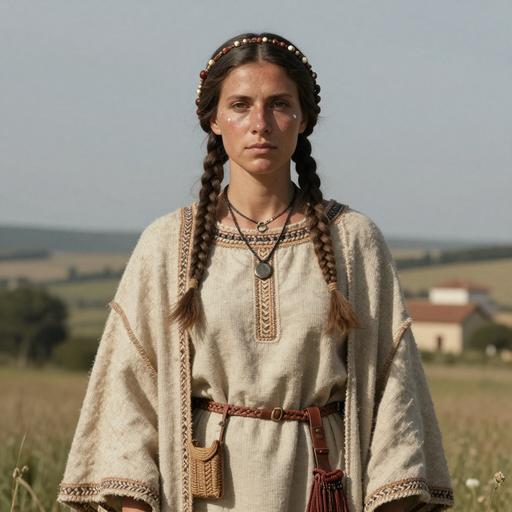
Portrait reconstruction of RISE371
Ancient Individual

A woman buried in Hungary in the Early Bronze Age era

RISE371
2137 BCE - 1939 BCE
Female
Early Bronze Age Maros Culture, Hungary
Hungary
Scroll to begin
Chapter I

Identity

The biological and cultural markers that define this ancient individual

Sample ID

RISE371

Date Range

2137 BCE - 1939 BCE

Biological Sex

Female

mtDNA Haplogroup

U5a2b

Cultural Period

Early Bronze Age Maros Culture, Hungary

Chapter II

Place

Where this individual was discovered

Country Hungary
Locality Szöreg-C (Sziv Utca)
Coordinates 46.2200, 20.1990
Chapter III

Time

When this individual lived in the broader context of human history

RISE371 2137 BCE - 1939 BCE
Chapter IV

Story

The narrative of this ancient life

The Maros Culture, also known as the Mureș Culture, is part of the broader Early Bronze Age landscape of Central and Southeastern Europe. Emerging around 2700-1500 BCE, this culture developed primarily in the Carpathian Basin, which is modern-day Hungary, parts of Romania, and Serbia. Recognizing its significance allows us to appreciate the cultural and societal advancements that characterized this period.

Geographic and Environmental Context

The Maros Culture flourished in the fertile plains along the Mureș River (known as Maros in Hungarian), which provided ample resources for agriculture, animal husbandry, and trade. The proximity to the river allowed the Maros people to cultivate crops like barley and wheat and rear livestock such as cattle, sheep, and goats. The rich natural environment not only supported a stable economy but also facilitated the exchange of goods and ideas with neighboring cultures.

Social Organization and Settlement Patterns

The Maros Culture demonstrated a complex social organization, as evidenced by distinct settlement patterns. Villages were typically located on elevated terrains near water sources, which provided strategic advantages for defense and trade. Settlements were characterized by rectangular or oval houses with wattle and daub construction, indicating a semi-permanent residency. Such stable settlements imply a degree of social organization and community planning.

Burial practices in the Maros Culture provide insights into their social hierarchy. The dead were often interred in flat graves or barrows, with distinctions in grave goods suggesting variations in social status. More elaborate burials consisted of items like pottery, ornaments, and tools made from bronze, revealing the existence of a stratified society with chieftains or elite classes.

Material Culture and Technology

The Early Bronze Age witnessed significant technological innovations, and the Maros Culture was no exception. The people were adept metallurgists, skillfully crafting tools and weapons from bronze, which marked a departure from the earlier Stone Age practices. Bronze daggers, axes, and ornaments were prevalent, reflecting both functional uses and social or ritual significance.

Pottery from this culture is notable for its craftsmanship and decoration. Maros pottery often featured intricate designs and was typically made with a high level of skill, indicative of specialized potters within the community. The motifs and styles of Maros ceramics provide essential data for understanding cultural influences and interactions with neighboring groups.

Trade and Cultural Interactions

The strategic position of the Maros Culture in Central Europe facilitated extensive trade networks. There is evidence of trade in raw materials like flint, obsidian, and salt, as well as finished products like bronze items and pottery. These networks linked the Maros people to other contemporaneous cultures such as the Únětice Culture to the north and the Vučedol Culture to the south, promoting cultural exchanges that enriched the social and material complexity of the society.

Religion and Ritual

Although definitive evidence of religious practices in the Maros Culture is scarce, the burial customs and ritualistic objects found in graves suggest a belief system that honored ancestors and possibly deities associated with life, death, and nature. The presence of figurines and decorated pottery in certain burial contexts may imply rituals connected to fertility, protection, or the afterlife.

Linguistic and Ethnic Considerations

While the Maros Culture was undoubtedly influenced by Indo-European migrations, pinpointing a specific linguistic or ethnic identity is challenging due to the lack of written records. However, the spread of Indo-European languages likely influenced cultural assimilation, bringing together diverse groups under shared cultural practices.

Legacy and Influence

The Maros Culture left a lasting impact on the region's subsequent cultural developments. As part of the broader Early Bronze Age transformations, it contributed to the foundation of complex societies in Central Europe, influencing later cultural entities and the evolution of European prehistoric societies.

In summary, the Maros Culture represents a dynamic period in Central Europe's prehistory, showcasing advancements in social organization, metallurgy, trade, and cultural interactions. Its legacy is a testament to the intricate web of human society during the Early Bronze Age, laying the groundwork for the future civilizations of the region.

Chapter V

Genetics

The genetic ancestry of this ancient individual

Ancient Genetic Admixture

This analysis compares the DNA profile of RISE371 with ancient reference populations, showing the genetic composition in terms of prehistoric ancestral groups.

Western Steppe Pastoralists 42.7%
Neolithic Farmers 28.5%
European Hunter-Gatherers 24.3%
Ancient Asians 4.6%

Modern Genetic Admixture

This analysis compares the DNA profile with present-day reference populations, showing what percentage of genetic makeup resembles modern populations from different regions.

Europe 92.8%
Northwestern European 54.1%
English 34.8%
Scandinavian 16.5%
Northwestern European 2.8%
Southern European 38.6%
Italian 19.5%
Balkan 16.7%
Sardinian 2.4%
Africa 4.6%
North African 4.6%
Egyptian 4.6%
Asia 2.6%
Chinese & Southeast Asian 2.6%
Chinese 2.6%

Closest Modern Populations

These are the modern populations showing the closest statistical alignment to A woman buried in Hungary in the Early Bronze Age era, ranked by genetic distance. Lower distance values indicate closer statistical similarity.

1
Welsh
1.8346
2
English Cornwall
1.9228
3
French Brittany
1.9595
4
English
2.0055
5
Belgiana
2.0199
6
Orcadian
2.0614
7
Dutch
2.0682
8
German
2.1103
9
Scottish
2.2306
10
German Hamburg
2.3849
Chapter VI

Context

Other ancient individuals connected to this sample

Sources

References

Scientific publications and genetic data

Scientific Publication

Population genomics of Bronze Age Eurasia

Authors Allentoft ME, Sikora M, Sjögren KG
Abstract

The Bronze Age of Eurasia (around 3000-1000 BC) was a period of major cultural changes. However, there is debate about whether these changes resulted from the circulation of ideas or from human migrations, potentially also facilitating the spread of languages and certain phenotypic traits. We investigated this by using new, improved methods to sequence low-coverage genomes from 101 ancient humans from across Eurasia. We show that the Bronze Age was a highly dynamic period involving large-scale population migrations and replacements, responsible for shaping major parts of present-day demographic structure in both Europe and Asia. Our findings are consistent with the hypothesized spread of Indo-European languages during the Early Bronze Age. We also demonstrate that light skin pigmentation in Europeans was already present at high frequency in the Bronze Age, but not lactose tolerance, indicating a more recent onset of positive selection on lactose tolerance than previously thought.

G25 Coordinates

The G25 coordinates for sample RISE371 can be used for detailed admixture analysis in our G25 Studio tool.

RISE371,0.1300581,0.13738168,0.062681,0.04233572,0.0427767,0.02011516,0.004157,0.00705402,0.01300292,0.00811168,-0.0054407,0.00559028,-0.00843196,-0.00233536,0.01601708,0.00402732,-0.01264976,0.00402936,0.00061502,0.0022354,0.00379872,0.00038622,0.0021184,0.00245346,0.00367635
Analyze in G25 Studio
Use code for 40% off Expires Feb 26