Menu
Store
Blog
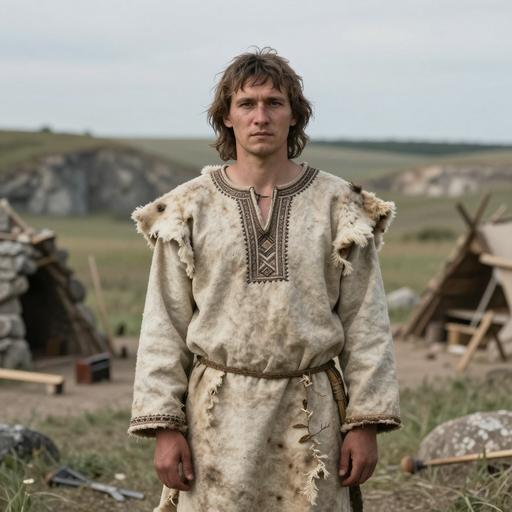
Portrait reconstruction of RISE555
Ancient Individual

A man buried in Russia in the Early Bronze Age era

RISE555
2853 BCE - 2495 BCE
Male
Early Bronze Age Russia
Russia
Scroll to begin
Chapter I

Identity

The biological and cultural markers that define this ancient individual

Sample ID

RISE555

Date Range

2853 BCE - 2495 BCE

Biological Sex

Male

mtDNA Haplogroup

N1a1a-a

Y-DNA Haplogroup

R-Z2106

Cultural Period

Early Bronze Age Russia

Chapter II

Place

Where this individual was discovered

Country Russia
Locality Stalingrad Quarry
Coordinates 48.7160, 44.5000
Chapter III

Time

When this individual lived in the broader context of human history

RISE555 2853 BCE - 2495 BCE
Chapter IV

Story

The narrative of this ancient life

The Early Bronze Age in Russia, particularly in the context of Indo-European cultures, refers to a period that spans roughly from the 3rd millennium BCE to the early 2nd millennium BCE. This era is characterized by significant cultural, technological, and social changes that laid the groundwork for later civilizations in the region. The Early Bronze Age in Russia is particularly associated with the Yamnaya culture, a proto-Indo-European people, and other related cultures like the Catacomb and Poltavka cultures.

Geography and Environment

The Early Bronze Age in Russia was predominantly centered around the Pontic-Caspian Steppe, a vast expanse of grasslands stretching from the Ural Mountains in the east to the Dniester River in the west. This region's geography, characterized by open plains and river systems like the Volga and Don, influenced the lifestyles and societal organization of the people. The climate was moderately continental, with warm summers and cold winters, supporting pastoralism as a primary economic activity.

Cultural and Technological Developments

  1. Cattle and Horse Domestication: A hallmark of Indo-European cultures during this period was the emphasis on animal husbandry. The Yamnaya people domesticated cattle, sheep, and horses. The domestication of the horse particularly revolutionized their way of life by enhancing mobility for herding, trade, and warfare.

  2. Burial Practices: The Yamnaya culture is noted for its distinctive burial practices. They used kurgans (burial mounds) which often contained single or multiple burials. The deceased were interred in a supine position, covered with ochre, and accompanied by grave goods that included pottery, tools, and ornaments, indicating social status and beliefs in an afterlife.

  3. Metalworking: This era witnessed the advent of metallurgy, with bronze becoming a crucial material for tools and weapons. The ability to work with metals like copper and tin to produce bronze reflected significant technological advancements and contributed to economic and societal changes.

  4. Settlements and Economy: While primarily nomadic, some semi-permanent settlements arose along rivers. The economy was mixed, with a strong reliance on pastoralism, supplemented by limited agriculture and the collection of wild resources. Exchange networks facilitated the trade of goods such as metals, pottery, and possibly textiles.

Language and Society

The Indo-European linguistic influence is a significant legacy of the Early Bronze Age in Russia. The region is considered a potential homeland of the Proto-Indo-European language, which later diversified into multiple branches spoken across Europe and Asia. Social structure likely included a hierarchical system with chieftains and tribal leaders, indicative of early forms of socio-political organization.

Interaction with Neighboring Cultures

Indo-European groups in Russia had interactions with neighboring cultures, as evidenced by shared technological and cultural traits. These interactions sometimes led to the exchange of goods and ideas, facilitating cultural syncretism, while at other times, they resulted in conflicts and migrations.

Impact and Legacy

The Early Bronze Age in Russia was a formative period that significantly influenced the genetic, cultural, and linguistic makeup of Europe and Asia. The mobility and expansion of Indo-European groups from this region played a crucial role in the spread of Indo-European languages. The technological innovations and social structures established during this time laid foundational elements for subsequent cultural developments across Eurasia.

In conclusion, Early Bronze Age Russia, particularly among the Indo-European cultures, was a time of dynamic change and innovation that contributed profoundly to the shaping of historical trajectories in Europe and beyond. The era serves as a key focal point in understanding the origins and dispersal of Indo-European peoples and their enduring impacts on linguistic and cultural landscapes.

Chapter V

Genetics

The genetic ancestry of this ancient individual

Ancient Genetic Admixture

This analysis compares the DNA profile of RISE555 with ancient reference populations, showing the genetic composition in terms of prehistoric ancestral groups.

Western Steppe Pastoralists 51.1%
European Hunter-Gatherers 33.1%
Neolithic Farmers 9.1%
Ancient Native Americans 3.7%
Ancient Africans 3.1%

Modern Genetic Admixture

This analysis compares the DNA profile with present-day reference populations, showing what percentage of genetic makeup resembles modern populations from different regions.

Europe 68.2%
Northwestern European 44.2%
English 19.9%
Scandinavian 17.0%
Finnish 4.2%
Northwestern European 3.1%
Eastern European 24.0%
Asia 28.2%
Northern West Asian 23.9%
Caucasian 23.9%
Central Asian, Northern Indian & Pakistani 4.2%
Pakistan 4.2%
America 2.2%
America 2.2%
Native American 2.2%
Africa 1.5%
Congolese & Southern East African 1.4%
South East African 1.4%

Closest Modern Populations

These are the modern populations showing the closest statistical alignment to A man buried in Russia in the Early Bronze Age era, ranked by genetic distance. Lower distance values indicate closer statistical similarity.

1
Tatar Mishar
5.5558
2
Moksha
5.9717
3
Mordovian
6.1233
4
Erzya
6.2488
5
Russian Kostroma
6.7440
6
Turkish Deliorman
6.8757
7
Russian Krasnoborsky
7.0212
8
Moldovan O
7.0564
9
Russian Ryazan
7.3167
10
Tatar Kazan
7.4795
Chapter VI

Context

Other ancient individuals connected to this sample

Sources

References

Scientific publications and genetic data

Scientific Publication

Population genomics of Bronze Age Eurasia

Authors Allentoft ME, Sikora M, Sjögren KG
Abstract

The Bronze Age of Eurasia (around 3000-1000 BC) was a period of major cultural changes. However, there is debate about whether these changes resulted from the circulation of ideas or from human migrations, potentially also facilitating the spread of languages and certain phenotypic traits. We investigated this by using new, improved methods to sequence low-coverage genomes from 101 ancient humans from across Eurasia. We show that the Bronze Age was a highly dynamic period involving large-scale population migrations and replacements, responsible for shaping major parts of present-day demographic structure in both Europe and Asia. Our findings are consistent with the hypothesized spread of Indo-European languages during the Early Bronze Age. We also demonstrate that light skin pigmentation in Europeans was already present at high frequency in the Bronze Age, but not lactose tolerance, indicating a more recent onset of positive selection on lactose tolerance than previously thought.

G25 Coordinates

The G25 coordinates for sample RISE555 can be used for detailed admixture analysis in our G25 Studio tool.

RISE555,0.11824952,0.0773001,0.0404454,0.0425407,-0.00054682,0.01546968,0.00761646,0.0044741,-0.0194798,-0.0278527,0.00241532,-0.0008099,0.00540854,-0.0042498,0.0005003,-0.00415428,-0.00615588,-0.00058138,-0.00399462,-0.00548296,0.0012459,0.00296674,-0.00459584,0.0087233,-0.00198414
Analyze in G25 Studio
Use code for 40% off Expires Feb 26