Menu
Currency
Main
Store
Blog

Loading Report

Preparing your ancestry journey

Connecting to ancient matches...

Preparing your report

Skip to main content
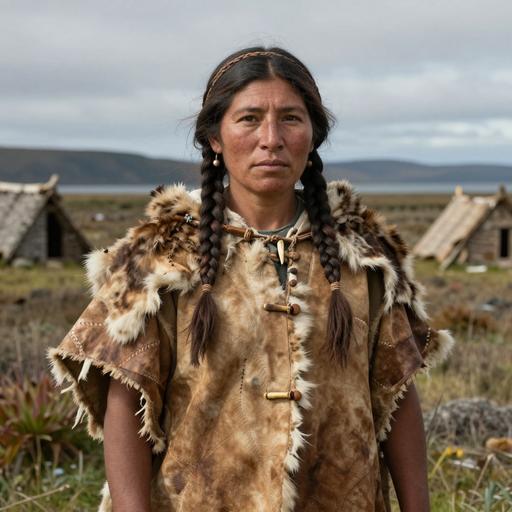
Portrait reconstruction of A woman buried in Argentina in the Ancient South America era
Ancient Individual

A woman buried in Argentina in the Ancient South America era

A woman buried in Argentina during the North Tierra del Fuego La Arcillosa 2 Site 5800 Years Ago

A fragment of the ancient world, preserved across millennia in strands of DNA.

I12362
4040 BCE - 3710 BCE
Female
Argentina
Scroll to begin
Chapter I

Identity

The biological and cultural markers that define this ancient individual

Sample ID

I12362

Date Range

4040 BCE - 3710 BCE

Cultural Period

North Tierra del Fuego La Arcillosa 2 Site 5800 Years Ago

Biological Sex

Female

mtDNA Haplogroup

C

Y-DNA Haplogroup

N/A (Female)

Chapter II

Place

Where this individual was discovered

Country Argentina
Locality Tierra del Fuego (North). La Arcillosa 2
Chapter III

Time

When this individual lived in the broader context of human history

I12362 4040 BCE - 3710 BCE
Chapter IV

Story

The narrative of this ancient life

The North Tierra del Fuego region, and specifically the La Arcillosa 2 archaeological site, offers a fascinating glimpse into the life and culture of indigenous peoples living approximately 5800 years before present (BP) in southernmost South America. This area, located at the southern tip of the continent, is characterized by its harsh climatic conditions and diverse ecological zones, which played a crucial role in shaping the survival strategies and cultural practices of its ancient inhabitants.

Environmental Context

During this period, the climate in Tierra del Fuego was characterized by a cold-temperate regime, with strong winds and considerable seasonal variations. The landscape featured a mix of open steppes, forested areas, and extensive coastal environments, which provided a variety of resources for local populations. The cold waters of the surrounding oceans were rich in marine fauna, including fish, seals, and sea birds, which were integral to the subsistence patterns of the indigenous groups.

Subsistence Strategies

The inhabitants of the La Arcillosa 2 site were primarily hunter-gatherers, relying on the diverse resources available in their environment. The presence of marine resources suggests a mixed economy that included fishing, hunting, and gathering. Evidence points to sophisticated techniques for exploiting these resources, such as the use of harpoons, nets, and possibly early forms of watercraft. Terrestrial hunting focused on guanacos and other medium-sized mammals, while plant gathering included a variety of edible tubers, seeds, and fruits.

Material Culture

The material culture of the site is indicative of a society adept at adapting to its environment. Stone tools, particularly scrapers, projectile points, and cutting implements, were fashioned from locally available lithic materials. The tools show a high degree of skill in flaking and reveal insights into the technological adaptations necessary for survival in a challenging landscape. Bone tools and other organic materials suggest a flexible approach to tool-making, utilizing available resources efficiently.

Settlement Patterns

Settlement strategies in North Tierra del Fuego during this era were likely characterized by seasonal movement, with temporary camps established close to resource-rich areas. The La Arcillosa 2 site may have served as a strategic location for accessing both marine and terrestrial resources, as well as a gathering place for social or ceremonial activities. Shelters were probably constructed from locally sourced materials such as wood, bone, and skins, designed to offer protection against the elements.

Social and Cultural Aspects

While direct evidence of social structures is sparse, the diversity of artifacts suggests a community capable of relatively complex social organization. The presence of decorative items, such as beads or carved objects, could imply the existence of symbolic or status-driven behavior. The interactions with neighboring groups are inferred through similarities in artifact styles and materials, indicating a level of communication or trade across the region.

Challenges and Adaptations

The inhabitants of La Arcillosa 2 faced numerous challenges, from fluctuating climate conditions to the logistical difficulties of subsisting in a remote landscape. Their adaptations reflect a detailed ecological knowledge and a capacity for innovation. Sophisticated seasonal planning and resource management strategies would have been essential for ensuring community resilience and continuity.

Legacy and Significance

The study of the La Arcillosa 2 site deepens our understanding of the ways in which early human populations adapted to and thrived in extreme environments. The cultural and technological adaptations observed at this site contribute valuable insights into the broader narrative of human occupation in Tierra del Fuego and the Southern Cone of South America, highlighting the resilience and ingenuity of its ancient peoples.

In summary, the North Tierra del Fuego La Arcillosa 2 site, dating back 5800 years BP, is an emblematic example of the adaptability and resourcefulness of indigenous cultures in prehistoric South America. It stands as a testament to the enduring human spirit and the complex interplay between people and their environment.

Context

Related Samples

This individual exists within a broader network of ancient samples. No ancient genome stands alone.

Sample ID Culture/Period Date Location Action
I8575 Southern Continent Aonikenk Culture, Chile 400 Years Ago 141 CE Southern Continent. Magallanes. Cerro Johnny, Chile View
I8576 North Tierra del Fuego Selknam Culture, Chile 100 Years Ago 1800 CE North of Tierra del Fuego. Faro Méndez, Chile View
I12364 North Tierra del Fuego Selknam Culture 500 Years Ago 1040 CE Tierra del Fuego (North). Margen Sur, Argentina View
I12366 North Tierra del Fuego Selknam Culture 500 Years Ago 1670 CE Tierra del Fuego (North). Pozo Tierra del Fuego 1, Argentina View
I12357 Mitre Peninsula Haush Culture 400 Years Ago 1470 CE Tierra del Fuego. Mitre Peninusula. Caleta Falsa, Argentina View
I12365 North Tierra del Fuego Selknam Culture 500 Years Ago 1150 CE Tierra del Fuego (North). Margen Sur, Argentina View
I12359 Mitre Peninsula Haush Culture 400 Years Ago 1280 CE Tierra del Fuego. Mitre Peninusula. Caleta Falsa, Argentina View
I12361 Mitre Peninsula Haush Culture 400 Years Ago 1450 CE Tierra del Fuego. Mitre Peninusula. Río Policarpo, Argentina View
I12355 Beagle Channel Yamana Culture 1500 Years Ago 260 CE Beagle Channel. Tierra del Fuego. Río Pipo, Argentina View
I12376 Laguna Toro Site 2400 Years Ago 740 BCE Southwest of Buenos Aires. Laguna Toro, Argentina View
I12360 Mitre Peninsula Haush Culture 400 Years Ago 1460 CE Tierra del Fuego. Mitre Peninusula. Caleta Falsa, Argentina View
I12363 North Tierra del Fuego Selknam Culture 500 Years Ago 1490 CE Tierra del Fuego (North). Puesto Pescador, Argentina View
I12367 North Tierra del Fuego Selknam Culture 500 Years Ago 1200 CE Tierra del Fuego (North). Margen Sur, Argentina View
I12941 Beagle Channel Yamana Culture 100 Years Ago 1560 CE Beagle Channel. Tierra del Fuego. Almanza, Argentina View
I12943 Beagle Channel Yamana Culture 100 Years Ago 1550 CE Beagle Channel. Tierra del Fuego. Almanza, Argentina View
I12942 Beagle Channel Yamana Culture 100 Years Ago 1810 CE Beagle Channel. Tierra del Fuego. Acatushún, Argentina View
I12356 Mitre Peninsula Haush Culture 400 Years Ago 1450 CE Tierra del Fuego. Mitre Peninusula. Caleta Falsa, Argentina View
I12362 North Tierra del Fuego La Arcillosa 2 Site 5800 Years Ago 4040 BCE Tierra del Fuego (North). La Arcillosa 2, Argentina View
I12354 North Tierra del Fuego Selknam Culture 500 Years Ago 1420 CE Tierra del Fuego (North). Río Grande, Argentina View
I12358 Mitre Peninsula Haush Culture 400 Years Ago 1330 CE Tierra del Fuego. Mitre Peninusula. Caleta Falsa, Argentina View
Sample ID Culture/Period Date Location Action
I12362 North Tierra del Fuego La Arcillosa 2 Site 5800 Years Ago 4040 BCE Tierra del Fuego (North). La Arcillosa 2, Argentina View
Sources

References

Scientific publications and genetic data that inform this profile.

Scientific Publication

Ancient genomes in South Patagonia reveal population movements associated with technological shifts and geography

Authors Nakatsuka N, Luisi P, Motti JMB, Salemme M, Santiago F et al.
Abstract

Archaeological research documents major technological shifts among people who have lived in the southern tip of South America (South Patagonia) during the last thirteen millennia, including the development of marine-based economies and changes in tools and raw materials. It has been proposed that movements of people spreading culture and technology propelled some of these shifts, but these hypotheses have not been tested with ancient DNA. Here we report genome-wide data from 20 ancient individuals, and co-analyze it with previously reported data. We reveal that immigration does not explain the appearance of marine adaptations in South Patagonia. We describe partial genetic continuity since ~6600 BP and two later gene flows correlated with technological changes: one between 4700-2000 BP that affected primarily marine-based groups, and a later one impacting all <2000 BP groups. From ~2200-1200 BP, mixture among neighbors resulted in a cline correlated to geographic ordering along the coast.

Use code for 25% off Expires Jul 12