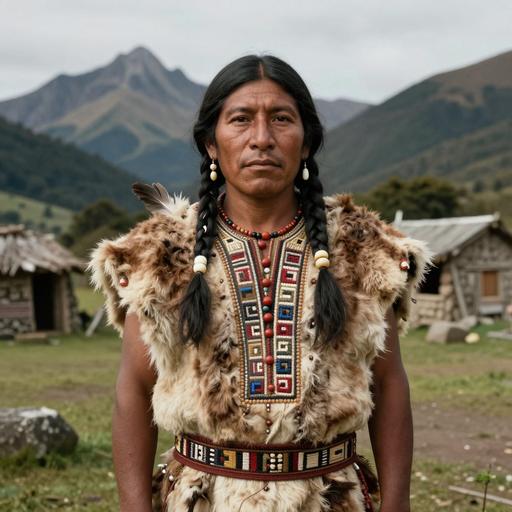
The Aonikenk, also known as the Southern Tehuelche, were an indigenous people who historically inhabited the southern regions of present-day Chile and Argentina. Four hundred years ago, during the early 17th century, the Aonikenk lived a nomadic lifestyle, mainly in the Patagonia region, which includes the vast plains and rugged terrain of southern Chile. Understanding their culture involves exploring various aspects such as their social structure, economy, spiritual beliefs, and interactions with other groups.
Social Structure and Lifestyle
The Aonikenk were organized into bands, which were social units made up of extended families. These bands were relatively egalitarian, with leadership often based on merit, wisdom, and experience rather than hierarchical power. Leaders, often chosen from among the more experienced hunters or elders, held authority based on respect rather than hereditary status, guiding their people in decision-making processes and in negotiations with other groups.
Their society placed a high emphasis on kinship ties and communal living. Group cohesion and cooperation were essential for survival in the harsh Patagonian environment. The Aonikenk were skilled in living off the land, and their nomadic lifestyle was adapted to the seasonal availability of resources.
Economy and Subsistence
The Aonikenk economy was primarily based on hunting and gathering. They were expert hunters, relying heavily on the guanaco, a relative of the llama, for meat, hides, and bones. Guanaco provided crucial resources for clothing, shelter, and tools. The Aonikenk also hunted rheas and smaller animals and gathered wild fruits, roots, and seeds to supplement their diet.
They employed tools such as bolas—a throwing weapon made of weights on the ends of interconnected cords—to hunt fast-moving game. The Aonikenk's deep understanding of their environment was reflected in their knowledge of animal behavior and plant cycles, allowing them to effectively utilize the diverse Patagonian landscape.
Spiritual Beliefs and Practices
The spiritual life of the Aonikenk was rich and closely linked to their environment. They practiced animism, believing in the spiritual interconnectedness of all living and non-living elements of the world. Natural features like mountains, rivers, and specific animals held spiritual significance and were often revered or considered sacred.
Shamans played an important role within their communities, serving as intermediaries between the physical and spiritual worlds. These spiritual leaders performed rituals, provided healing, and offered guidance on matters related to hunting, weather, and social issues.
Art and Oral Tradition
The Aonikenk valued oral tradition as a vital component of cultural transmission. Storytelling was a way to pass down knowledge of history, cosmology, and morality. Their art, which included body painting, rock art, and ornamentation of everyday items, reflected their close relationship with the natural world. Using natural pigments, they decorated themselves and created symbolic expressions that represented their beliefs and experiences.
Interactions with Other Groups
The Aonikenk interacted with neighboring indigenous groups, such as the Selk'nam to the south and other Tehuelche groups to the north. These interactions were marked by both trade and occasional conflict. Goods such as tools, clothing, and food products were exchanged, facilitating cultural exchange and mutual adaptation.
The arrival of European explorers and settlers in the early 17th century began to alter Aonikenk life significantly, introducing new goods, animals, and challenges. These encounters would eventually lead to profound and often detrimental changes in their socio-cultural dynamics.
Conclusion
Four hundred years ago, the Aonikenk of southern Chile exemplified a culture deeply adapted to the challenges of the Patagonian environment. Their nomadic lifestyle, reliance on the land, rich spiritual beliefs, and social organization highlight the resilience and adaptability of the Aonikenk people. Despite facing increasing pressures from European colonization, the legacy of their culture remains integral to the history and identity of the region.