Menu
Currency
Main
Store
Blog

Loading Report

Preparing your ancestry journey

Connecting to ancient matches...

Preparing your report

Skip to main content
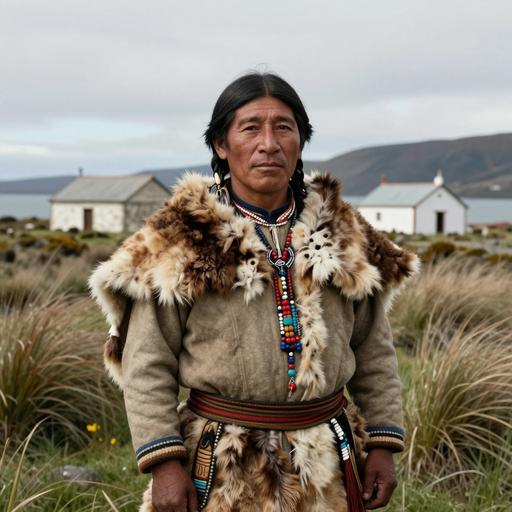
Portrait reconstruction of A man buried in Chile in the Pre-Columbian South America era
Ancient Individual

A man buried in Chile in the Pre-Columbian South America era

A man buried in Chile during the North Tierra del Fuego Selknam Culture, Chile 100 Years Ago

A fragment of the ancient world, preserved across millennia in strands of DNA.

I8576
1800 CE - 1900 CE
Male
Chile
Scroll to begin
Chapter I

Identity

The biological and cultural markers that define this ancient individual

Sample ID

I8576

Date Range

1800 CE - 1900 CE

Cultural Period

North Tierra del Fuego Selknam Culture, Chile 100 Years Ago

Biological Sex

Male

mtDNA Haplogroup

D1g-a

Y-DNA Haplogroup

Q-M3

Chapter II

Place

Where this individual was discovered

Country Chile
Locality North of Tierra del Fuego. Faro Méndez
Chapter III

Time

When this individual lived in the broader context of human history

I8576 1800 CE - 1900 CE
Chapter IV

Story

The narrative of this ancient life

The Selknam, often referred to as the Ona, were an indigenous people who inhabited the northern part of Tierra del Fuego in South America. This region, which is now part of modern-day Chile and Argentina, is characterized by harsh climatic conditions, including cold temperatures, strong winds, and rugged terrain. The mention of \100BP" (Before Present) suggests a focus on their culture as it might have existed around the early 20th century.

Social Structure and Lifestyle

The Selknam were traditionally semi-nomadic hunter-gatherers. Their social organization was structured around small, kin-based groups known as bands. Each band was relatively autonomous, consisting of a few families who moved seasonally to exploit different resources across their territory. These movements were guided by the availability of game and other necessities.

Economy and Subsistence:

  • Hunting: The Selknam were skilled hunters and relied heavily on guanacos (a wild camelid), which provided them with food, clothing, and tools. Hunting was primarily a male activity, often involving elaborate strategies and the use of bows, arrows, and spears.
  • Gathering: Women played a crucial role in gathering plant foods, such as berries, seeds, and roots, which supplemented their diet.

Tools and Technology:

Their tools were crafted mainly from stone, wood, and bone. They developed a range of implements for hunting, processing food, and making clothing. Their clothing, often made from guanaco hides, was designed to withstand the cold and windy climate.

Cultural Practices

The cultural and spiritual life of the Selknam was rich and complex, with many aspects woven into their daily activities and social interactions.

Spiritual Beliefs:

  • Mythology and Cosmology: The Selknam had a deep connection to their land and its ecology, which was reflected in their myths and oral traditions. They believed in a pantheon of spirits and deities that governed natural and supernatural phenomena.
  • Selknam Initiation Ritual (Hain): One of the most important cultural ceremonies was the Hain, a rite of passage for young men that involved elaborate body painting and costuming. This initiation was a dramatic expression of their mythology, involving stories and enactments that symbolized the universe's creation and the moral code of society.

Art and Body Adornment:

Body painting and adornment played a significant role in Selknam culture, particularly during rituals. They used natural pigments to create intricate designs on their bodies, each pattern holding specific meanings and serving to convey social and spiritual messages.

Language

The Selknam spoke the Selknam language, which is part of the Chonan language family. Like many indigenous languages, it was an essential part of their cultural identity and worldview, encapsulating their unique history, traditions, and relationship with their environment.

Impact of Colonization

By the early 20th century, the Selknam culture was in decline due to the onslaught of European colonization. The introduction of sheep farming and land claims by European settlers drastically disrupted their traditional lifestyle, leading to violent conflicts and a dramatic reduction in population.

Cultural Disruption:

  • Diseases and Displacement: The Selknam, like many indigenous peoples, suffered from diseases brought by Europeans to which they had no immunity. Additionally, the encroachment of settlers led to displacement and loss of access to traditional hunting grounds.
  • Marginalization and Assimilation: Many Selknam were forcibly assimilated or lived in marginal conditions compared to their traditional lifestyle. Christian missionary efforts also aimed to convert them and discourage indigenous practices.

Legacy

Today, the Selknam are often remembered through efforts to revitalize and preserve their cultural heritage. While the population and distinct lifestyle have largely diminished, their stories, myths, and artistic expressions continue to be significant to the cultural tapestry of Tierra del Fuego and the broader narrative of indigenous resilience and adaptation in the face of external pressures."

Context

Related Samples

This individual exists within a broader network of ancient samples. No ancient genome stands alone.

Sample ID Culture/Period Date Location Action
I8575 Southern Continent Aonikenk Culture, Chile 400 Years Ago 141 CE Southern Continent. Magallanes. Cerro Johnny, Chile View
I8576 North Tierra del Fuego Selknam Culture, Chile 100 Years Ago 1800 CE North of Tierra del Fuego. Faro Méndez, Chile View
I12364 North Tierra del Fuego Selknam Culture 500 Years Ago 1040 CE Tierra del Fuego (North). Margen Sur, Argentina View
I12366 North Tierra del Fuego Selknam Culture 500 Years Ago 1670 CE Tierra del Fuego (North). Pozo Tierra del Fuego 1, Argentina View
I12357 Mitre Peninsula Haush Culture 400 Years Ago 1470 CE Tierra del Fuego. Mitre Peninusula. Caleta Falsa, Argentina View
I12365 North Tierra del Fuego Selknam Culture 500 Years Ago 1150 CE Tierra del Fuego (North). Margen Sur, Argentina View
I12359 Mitre Peninsula Haush Culture 400 Years Ago 1280 CE Tierra del Fuego. Mitre Peninusula. Caleta Falsa, Argentina View
I12361 Mitre Peninsula Haush Culture 400 Years Ago 1450 CE Tierra del Fuego. Mitre Peninusula. Río Policarpo, Argentina View
I12355 Beagle Channel Yamana Culture 1500 Years Ago 260 CE Beagle Channel. Tierra del Fuego. Río Pipo, Argentina View
I12376 Laguna Toro Site 2400 Years Ago 740 BCE Southwest of Buenos Aires. Laguna Toro, Argentina View
I12360 Mitre Peninsula Haush Culture 400 Years Ago 1460 CE Tierra del Fuego. Mitre Peninusula. Caleta Falsa, Argentina View
I12363 North Tierra del Fuego Selknam Culture 500 Years Ago 1490 CE Tierra del Fuego (North). Puesto Pescador, Argentina View
I12367 North Tierra del Fuego Selknam Culture 500 Years Ago 1200 CE Tierra del Fuego (North). Margen Sur, Argentina View
I12941 Beagle Channel Yamana Culture 100 Years Ago 1560 CE Beagle Channel. Tierra del Fuego. Almanza, Argentina View
I12943 Beagle Channel Yamana Culture 100 Years Ago 1550 CE Beagle Channel. Tierra del Fuego. Almanza, Argentina View
I12942 Beagle Channel Yamana Culture 100 Years Ago 1810 CE Beagle Channel. Tierra del Fuego. Acatushún, Argentina View
I12356 Mitre Peninsula Haush Culture 400 Years Ago 1450 CE Tierra del Fuego. Mitre Peninusula. Caleta Falsa, Argentina View
I12362 North Tierra del Fuego La Arcillosa 2 Site 5800 Years Ago 4040 BCE Tierra del Fuego (North). La Arcillosa 2, Argentina View
I12354 North Tierra del Fuego Selknam Culture 500 Years Ago 1420 CE Tierra del Fuego (North). Río Grande, Argentina View
I12358 Mitre Peninsula Haush Culture 400 Years Ago 1330 CE Tierra del Fuego. Mitre Peninusula. Caleta Falsa, Argentina View
Sample ID Culture/Period Date Location Action
I8576 North Tierra del Fuego Selknam Culture, Chile 100 Years Ago 1800 CE North of Tierra del Fuego. Faro Méndez, Chile View
Sources

References

Scientific publications and genetic data that inform this profile.

Scientific Publication

Ancient genomes in South Patagonia reveal population movements associated with technological shifts and geography

Authors Nakatsuka N, Luisi P, Motti JMB, Salemme M, Santiago F et al.
Abstract

Archaeological research documents major technological shifts among people who have lived in the southern tip of South America (South Patagonia) during the last thirteen millennia, including the development of marine-based economies and changes in tools and raw materials. It has been proposed that movements of people spreading culture and technology propelled some of these shifts, but these hypotheses have not been tested with ancient DNA. Here we report genome-wide data from 20 ancient individuals, and co-analyze it with previously reported data. We reveal that immigration does not explain the appearance of marine adaptations in South Patagonia. We describe partial genetic continuity since ~6600 BP and two later gene flows correlated with technological changes: one between 4700-2000 BP that affected primarily marine-based groups, and a later one impacting all <2000 BP groups. From ~2200-1200 BP, mixture among neighbors resulted in a cline correlated to geographic ordering along the coast.

Use code for 25% off Expires Jul 12