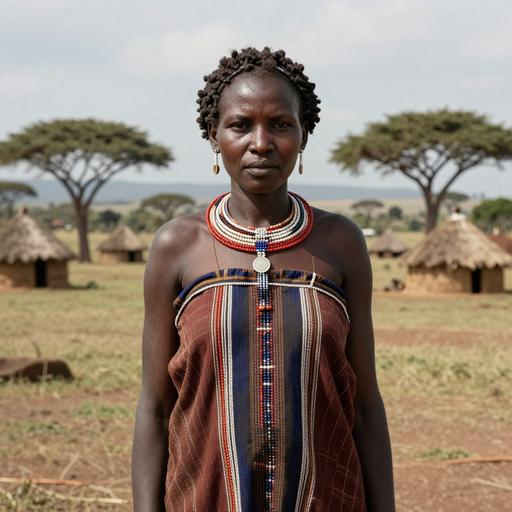
The Makwasinyi community is part of the broader Bantu ethnic groups that inhabit Kenya, primarily known for their rich cultural heritage and historical significance. Located in the Taita-Taveta County, in the southeastern region of Kenya, the Makwasinyi people are a sub-group of the Taita, who are themselves a part of the larger Bantu-speaking population that dominates much of Sub-Saharan Africa.
Geography and Environment
Makwasinyi is situated in a picturesque landscape characterized by rolling hills, lush vegetation, and a tropical climate, bounded by the Tsavo National Park to the north and east. This environment not only provides a backdrop for their livelihoods but also influences their cultural practices. The fertile land supports agriculture, which is a primary occupation for the Makwasinyi, providing sustenance and a basis for their economy.
Social Structure and Community Life
The social organization of the Makwasinyi community is typical of many Bantu cultures, featuring a clan-based system. Families are typically large and extended, with a strong emphasis on kinship. Elders play a pivotal role within the community, acting as custodians of culture and tradition, and they are often involved in mediating disputes, offering guidance, and making decisions on behalf of the community.
Women in the Makwasinyi culture traditionally take on roles related to the household and agriculture, while men are typically involved in herding, farming, and community leadership. However, with modernization and increased access to education, gender roles are gradually evolving.
Language and Communication
The primary language spoken by the Makwasinyi people is Taita, also known as Kidawida, which is a Bantu language. Taita is used in daily communication, storytelling, and cultural traditions, while Swahili and English, as national languages of Kenya, are also spoken and used for broader communication outside the community.
Cultural Practices and Traditions
The Makwasinyi people are deeply connected to their ancestral roots and traditions. Ceremonies and rituals are integral, particularly those related to life stages such as birth, initiation, marriage, and death. Traditional music and dance play significant roles in these ceremonies, often characterized by vibrant rhythms and expressive movements that serve both entertainment and spiritual purposes.
Initiation rites or circumcision ceremonies are particularly important, marking the transition from childhood to adulthood. These rites often involve periods of seclusion, learning, and various tests of endurance, culminating in communal celebrations.
Religion and Spirituality
The Makwasinyi community traditionally practices a form of African spirituality connected to their environment and ancestry. They believe in a supreme being and a pantheon of spirits associated with natural elements. Ancestral worship is a cornerstone of their religious practices, with rituals conducted to honor and appease ancestors, seeking their guidance and protection.
Christianity, introduced during colonial times, has made significant inroads in the region, and many Makwasinyi people are now practicing Christians, incorporating Christian beliefs and practices into their traditional spiritual framework.
Economy and Livelihoods
The economy of the Makwasinyi is largely agrarian, with farming being the main source of livelihood. The community grows a variety of crops such as maize, beans, bananas, and vegetables, both for subsistence and for sale in local markets. Livestock keeping, particularly cattle, goats, and chickens, also plays a critical role in their economic structure, providing both food and income.
Trade is an essential component of the Makwasinyi economy, with local markets serving as hubs for the exchange of goods and social interaction. In recent years, increased access to education and technology has led some community members to pursue careers in business, education, and public service beyond their traditional agricultural roles.
Challenges and Modern Influences
Like many indigenous communities, the Makwasinyi face challenges related to modernization, including land pressures, cultural erosion, and the impacts of climate change. Efforts to preserve and promote their cultural heritage are ongoing, often through education and cultural festivals.
The integration of modern technology and education has brought about significant changes, offering new opportunities while also posing threats to traditional ways of life. Balancing these influences with the preservation of their cultural identity is a primary concern for the Makwasinyi today.
In summary, the Makwasinyi of Kenya embody the rich, complex tapestry of Bantu culture, maintaining a strong connection to their roots while navigating the challenges and opportunities of the modern world. Through their traditions, language, and social structures, they continue to sustain a unique cultural legacy that contributes to the diverse mosaic of Kenyan society.